How the Middle Corridor is transforming Central Asia into a global trade powerhouse


For decades, Central Asia was often viewed as a geographically isolated region trapped between larger powers and dependent on limited export routes. Today, however, a major geopolitical and economic transformation is underway.
The rapid development of the Middle Corridor, officially known as the Trans Caspian International Transport Route, is reshaping trade, logistics, investment, and regional cooperation across Eurasia.
RECOMMENDED STORIES
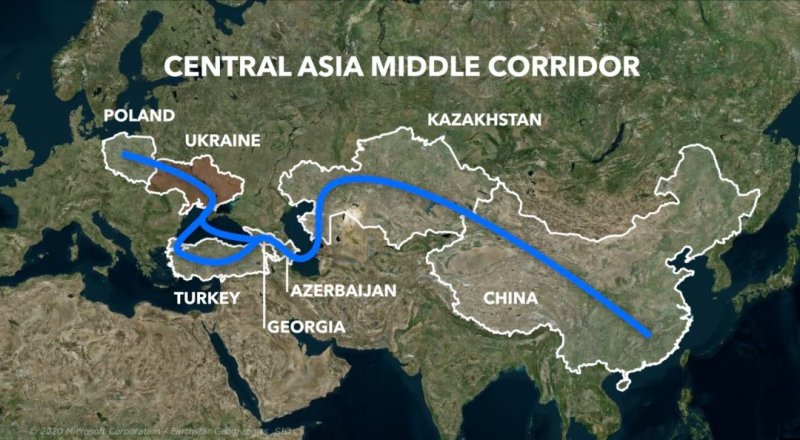
Stretching from China through Kazakhstan, the Caspian Sea, Azerbaijan, Georgia, and onward to Türkiye and Europe, the Middle Corridor is increasingly becoming one of the most strategically important trade routes in the world.
The corridor has gained momentum amid changing geopolitical realities, supply chain disruptions, sanctions against Russia, and growing competition between global powers for influence over trade and infrastructure. Governments and investors now see the route not only as a transport corridor, but also as a foundation for economic diversification, industrial growth, energy exports, and long term geopolitical influence.
Below is a detailed FAQ explainer examining why the Middle Corridor matters, how it works, which countries benefit most, and what challenges still remain.
What is the Middle Corridor?
The Middle Corridor is a major Eurasian trade and transport network connecting Asia and Europe through Central Asia and the South Caucasus.
The route generally begins in western China and crosses Kazakhstan via rail infrastructure before reaching ports on the Caspian Sea. Cargo is then transported across the sea to Azerbaijan, continues through Georgia, and enters Türkiye before reaching European markets.
The corridor includes railways, ports, logistics hubs, customs systems, highways, and maritime transport infrastructure. It functions as a multimodal transport route, meaning goods move through several forms of transportation during a single journey.
The route is officially called the Trans Caspian International Transport Route, but it is widely known internationally as the Middle Corridor because it lies between the northern trade route through Russia and the southern maritime routes through the Suez Canal.
Why has the Middle Corridor become so important recently?
Several global developments have dramatically increased international interest in the route.
The first major factor was the COVID 19 pandemic, which exposed vulnerabilities in global supply chains and highlighted the dangers of over dependence on a limited number of transport corridors.
The second major factor was the Russia Ukraine war. Western sanctions against Russia and rising geopolitical tensions forced many companies and governments to search for alternative trade routes connecting Europe and Asia.
The Northern Corridor through Russia had previously dominated rail trade between China and Europe. However, geopolitical uncertainty accelerated efforts to expand alternative corridors that bypass Russian territory.
At the same time, China’s Belt and Road Initiative continued encouraging infrastructure investments across Eurasia, including in Central Asia and the South Caucasus.
As a result, the Middle Corridor moved from being a secondary trade route into a strategic global logistics network.
Which countries benefit the most from the corridor?
Several countries stand to gain economically and geopolitically.
Kazakhstan plays a central role because of its geographic position and extensive railway network. The country serves as the main land bridge between China and the Caspian Sea.
Azerbaijan has emerged as one of the corridor’s most important logistics hubs thanks to the strategic position of the Port of Alat near Baku and the Baku Tbilisi Kars railway.
Georgia benefits through transit revenues, port development, and increased trade integration with Europe.
Türkiye sees the corridor as part of its broader ambition to become a major Eurasian logistics and energy hub connecting Asia with European markets.
Meanwhile, Uzbekistan increasingly views the corridor as an opportunity to reduce dependence on traditional export routes and expand international trade access.
China and European countries also benefit because the corridor provides alternative trade connectivity and supply chain diversification.
How important is Azerbaijan in the Middle Corridor?
Azerbaijan occupies one of the most strategically valuable positions in the entire corridor.
The country acts as the gateway between Central Asia and the South Caucasus through the Caspian Sea crossing. Cargo arriving from Kazakhstan or Turkmenistan enters Azerbaijan via maritime transport and then moves westward toward Georgia, Türkiye, and Europe.
The Port of Alat has become a major logistics center capable of handling large cargo volumes and facilitating multimodal transportation.
Azerbaijan has also heavily invested in railway modernization, digital customs systems, and logistics infrastructure. The Baku Tbilisi Kars railway, launched in 2017, significantly strengthened east west trade connectivity.
Beyond infrastructure, Azerbaijan is positioning itself diplomatically as a bridge linking Central Asia, the South Caucasus, and Europe. This has increased the country’s strategic importance in international economic discussions.
What role does Kazakhstan play in the route?
Kazakhstan is arguably the backbone of the Middle Corridor within Central Asia.
The country shares a long border with China and possesses one of the region’s largest railway networks. Massive cargo volumes from China transit through Kazakhstan before reaching the Caspian Sea.
Kazakhstan has invested heavily in dry ports, rail modernization, container logistics, and maritime infrastructure along the Caspian coast.
The Khorgos dry port on the China Kazakhstan border has become one of Eurasia’s most important logistics hubs. The country also continues expanding the Aktau and Kuryk ports to support increasing cargo volumes.
For Kazakhstan, the corridor represents far more than transit revenues. It is central to the country’s long term economic diversification strategy aimed at reducing excessive dependence on oil exports.
How does the Middle Corridor compare with the Northern Corridor through Russia?
Historically, the Northern Corridor was faster, cheaper, and more developed.
The Russian route benefited from established railway systems, unified customs procedures, and larger cargo capacities. Before the Ukraine war, most China Europe rail trade traveled through Russian territory.
However, geopolitical tensions significantly altered calculations for international companies.
The Middle Corridor offers several advantages. It reduces geopolitical risks associated with sanctions and political instability. It also diversifies global trade networks and strengthens supply chain resilience.
Nevertheless, challenges remain. The Middle Corridor is still more expensive in some cases due to multiple border crossings and maritime transfers across the Caspian Sea.
Infrastructure bottlenecks also continue limiting efficiency. However, rapid investment and political coordination are gradually improving competitiveness.
Why is Europe increasingly interested in Central Asia?
Europe’s interest in Central Asia has expanded dramatically in recent years.
One major reason is energy security. European countries are seeking alternative energy suppliers and transport routes after reducing dependence on Russian energy resources.
Central Asia possesses enormous reserves of oil, gas, uranium, and critical minerals. The Middle Corridor provides Europe with a direct logistical connection to these resources.
Another factor is trade diversification. European governments increasingly support resilient supply chains that avoid over dependence on single geopolitical actors.
Additionally, the European Union views stronger engagement with Central Asia as strategically important in balancing growing Chinese and Russian influence in Eurasia.
As a result, European investment in infrastructure, transport connectivity, digitalization, and renewable energy projects across Central Asia has increased substantially.
What role does China play in the corridor?
China remains one of the corridor’s most influential stakeholders.
The Middle Corridor aligns closely with China’s Belt and Road Initiative, which aims to improve global connectivity through infrastructure and trade investments.
Chinese manufacturers and exporters benefit from shorter land transport routes to Europe compared with maritime shipping through the Suez Canal.
China has invested in railways, ports, logistics hubs, industrial zones, and customs cooperation projects across Eurasia.
At the same time, Beijing views Central Asia as strategically vital for economic security and regional influence.
However, some regional governments are also trying to balance Chinese influence by strengthening ties with Europe, Türkiye, and Gulf countries.
Can the Middle Corridor challenge maritime shipping routes?
The corridor is unlikely to fully replace maritime shipping because sea transport remains cheaper for large cargo volumes.
However, the Middle Corridor offers significant advantages for certain sectors.
Rail transport is generally faster than maritime shipping. This makes the route attractive for high value goods, electronics, automotive components, industrial equipment, and time sensitive products.
For many companies, speed and reliability can outweigh higher transport costs.
The corridor also provides strategic redundancy. Global trade disruptions such as port congestion, military conflicts, or sanctions can severely affect maritime routes. Land based alternatives therefore become increasingly valuable.
Rather than replacing maritime trade, the Middle Corridor is expected to complement existing global shipping networks.
What infrastructure projects are driving the corridor’s expansion?
Several major infrastructure projects are reshaping regional connectivity.
The Baku Tbilisi Kars railway remains one of the corridor’s flagship projects. It connects Azerbaijan, Georgia, and Türkiye through a direct rail link.
Kazakhstan continues modernizing railways and expanding Caspian ports such as Aktau and Kuryk.
Azerbaijan is expanding the Port of Alat and investing in logistics free zones.
Georgia aims to improve port infrastructure and transportation connectivity to Black Sea markets.
Central Asian governments are also developing digital customs systems to reduce border delays and improve trade efficiency.
New industrial zones, logistics centers, and container terminals are emerging across the corridor.
How does the corridor affect regional geopolitics?
The Middle Corridor is not merely an economic project. It is also reshaping geopolitical influence across Eurasia.
Countries controlling strategic transit routes gain diplomatic leverage, economic influence, and international partnerships.
The corridor has increased cooperation among Central Asian states, Türkiye, Azerbaijan, and European partners.
At the same time, competition among major powers has intensified.
Russia seeks to preserve influence in Eurasian trade networks. China aims to strengthen long term connectivity under the Belt and Road Initiative. Europe wants diversified trade and energy access. Türkiye seeks regional leadership as a transport hub.
This geopolitical competition is turning Central Asia into one of the world’s most strategically important regions.
Can the corridor accelerate industrialization in Central Asia?
Yes. Many experts believe the corridor could transform Central Asia from a transit region into a manufacturing and industrial hub.
Improved logistics reduce export costs and increase market access. This encourages industrial investment and economic diversification.
Governments increasingly hope to attract manufacturing industries, logistics companies, warehousing operations, and technology investments.
Special economic zones and industrial parks are being developed along transport routes.
Countries such as Kazakhstan and Uzbekistan are particularly focused on using improved connectivity to expand non resource exports and strengthen domestic industries.
If managed effectively, the corridor could help create jobs, increase regional integration, and reduce economic dependence on raw materials.
What challenges still threaten the corridor’s development?
Despite enormous potential, significant obstacles remain.
One major challenge is infrastructure capacity. Some ports, rail systems, and border facilities still lack sufficient capacity to handle rapidly increasing cargo volumes.
The Caspian Sea crossing also creates logistical complexity because cargo must transfer between rail and maritime transport.
Customs procedures and regulatory systems differ across countries, creating delays and administrative inefficiencies.
Political instability or regional tensions could also threaten long term development.
Financing remains another major issue. Large scale infrastructure modernization requires billions of dollars in investment.
Competition from alternative trade routes also remains strong.
Finally, environmental challenges, including climate change and declining Caspian Sea water levels, could affect port operations and regional infrastructure.
Why is Türkiye strategically important for the corridor?
Türkiye serves as the gateway connecting the Middle Corridor to European markets.
The country possesses extensive transport infrastructure, including railways, highways, ports, and logistics centers.
Ankara has actively promoted east west trade connectivity for years as part of its broader geopolitical and economic strategy.
Türkiye also views the corridor as strengthening economic ties with Turkic states across Central Asia and the South Caucasus.
Projects such as the Marmaray tunnel under the Bosphorus enhance rail connectivity between Asia and Europe, further increasing Türkiye’s strategic value.
As cargo volumes grow, Türkiye could become one of Eurasia’s largest logistics and trade hubs.
How important is the Caspian Sea in this process?
The Caspian Sea is one of the corridor’s most critical components.
It connects Central Asia with the South Caucasus through maritime transport.
Ports in Kazakhstan and Turkmenistan send cargo across the sea to Azerbaijan before shipments continue toward Europe.
Without efficient Caspian shipping infrastructure, the corridor cannot function effectively.
As cargo volumes increase, countries are investing heavily in new ferries, cargo vessels, port modernization, and digital logistics systems.
However, environmental concerns regarding declining water levels in the Caspian Sea are becoming increasingly serious and could eventually impact shipping operations.
What role do digital technologies play in the corridor?
Digitalization is becoming increasingly important for improving efficiency.
Countries along the route are implementing electronic customs systems, cargo tracking technologies, automated logistics management, and digital trade platforms.
Reducing bureaucratic delays is essential because even small border inefficiencies can significantly affect transport times.
Artificial intelligence, blockchain systems, and integrated customs databases may eventually play larger roles in streamlining trade flows.
Digital connectivity is therefore becoming almost as important as physical infrastructure.
Can the Middle Corridor reshape global supply chains?
Many analysts believe it already is.
Global supply chains are increasingly prioritizing resilience, diversification, and geopolitical security.
The Middle Corridor provides companies with an alternative to routes vulnerable to sanctions, geopolitical tensions, or maritime disruptions.
As infrastructure improves and costs decline, more businesses are expected to shift cargo toward the corridor.
The route could become particularly important for industries requiring faster delivery times and diversified transport options.
Over time, the corridor may help create a more multipolar global trade system where Eurasian connectivity no longer depends overwhelmingly on a single route.
What does the future of the Middle Corridor look like?
The corridor’s long term prospects appear highly promising.
Cargo volumes are expected to continue growing as infrastructure investments expand and political cooperation deepens.
Central Asian countries increasingly recognize that regional cooperation is essential for maximizing economic benefits.
International financial institutions, Gulf investors, China, Europe, and Türkiye are all expected to continue supporting infrastructure modernization projects.
The corridor may eventually evolve beyond a transport network into a broader economic ecosystem involving industrial production, energy exports, digital trade, logistics services, and manufacturing integration.
For Central Asia, the stakes are enormous.
A region once considered geographically isolated now stands at the center of one of the world’s most important economic transformations.
The Middle Corridor is not simply about trains, ports, or containers. It represents a historic shift in how Eurasia connects, trades, and competes in the 21st century.
As geopolitical competition intensifies and global trade patterns evolve, the countries that successfully position themselves along this corridor could emerge as some of the most influential economic players of the coming decades.
By Faig Mahmudov


Similar news