Which Central Asian countries are leading the green energy transition?


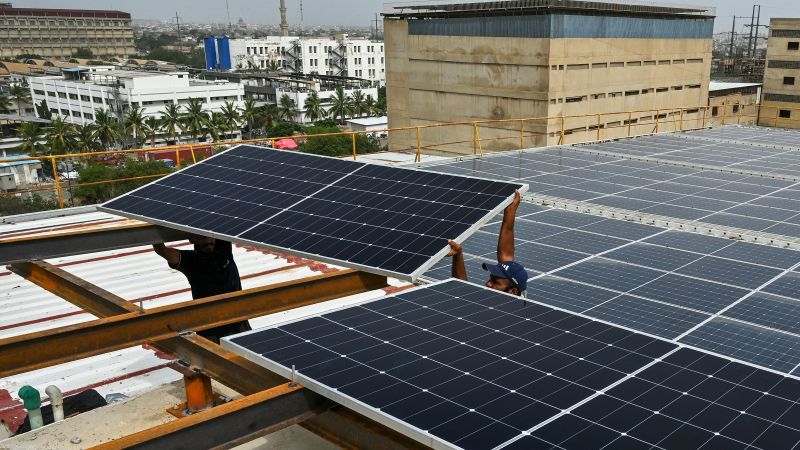
As the world accelerates its transition away from fossil fuels, a new geopolitical and economic competition is emerging around renewable energy, green hydrogen, electricity exports, and critical clean technology infrastructure.
In this rapidly changing landscape, Central Asia is increasingly attracting global attention as one of the most promising future centers of green energy development.
RECOMMENDED STORIES
For decades, the economies of many Central Asian states relied heavily on oil, natural gas, coal, and raw material exports. However, the region is now undergoing a major transformation driven by climate pressures, economic diversification goals, international investment, and growing energy demand from Europe and Asia.
Governments across Kazakhstan, Uzbekistan, Kyrgyzstan, and Tajikistan are investing billions of dollars into solar energy, wind farms, hydropower projects, smart grids, and green hydrogen initiatives. International investors from China, the Gulf region, Europe, and international financial institutions are also increasing their involvement.
Supporters believe Central Asia could eventually become a major supplier of clean energy to neighboring regions and global markets. Critics, however, argue that infrastructure limitations, water shortages, political risks, and economic dependence on hydrocarbons remain serious obstacles.
Below is a detailed FAQ explainer examining whether Central Asia can truly become a global green energy powerhouse.
Why is Central Asia suddenly attracting attention in green energy?
Several major factors are driving international interest in the region.
First, Central Asia possesses enormous renewable energy potential. The region has vast open landscapes, high solar radiation levels, strong wind corridors, and significant hydropower resources.
Second, governments are increasingly trying to diversify economies historically dependent on fossil fuels and raw material exports.
Third, global demand for clean energy is rising rapidly as countries seek to reduce carbon emissions and strengthen energy security.
Another major factor is geopolitics. Europe, China, Gulf countries, and other major economies are all searching for reliable partners in renewable energy and green hydrogen production.
At the same time, climate change is forcing regional governments to rethink long term energy and water management strategies.
As a result, Central Asia is gradually transforming from a fossil fuel focused region into a potential renewable energy frontier.
Which Central Asian countries are leading the green energy transition?
Kazakhstan and Uzbekistan are currently leading the region’s renewable energy expansion.
Kazakhstan possesses enormous wind and solar energy potential due to its geography and large land area. The government has launched multiple renewable energy auctions and attracted major foreign investors.
Uzbekistan has rapidly accelerated solar and wind projects in recent years while pursuing broader economic reforms and modernization efforts.
Meanwhile, Kyrgyzstan and Tajikistan remain heavily focused on hydropower because of their mountainous terrain and extensive river systems.
Turkmenistan still relies heavily on natural gas exports but is also beginning to explore renewable energy opportunities.
Each country has different strengths and challenges depending on geography, infrastructure, and economic structure.
Why is Kazakhstan considered a renewable energy giant in waiting?
Kazakhstan is often viewed as the region’s most promising renewable energy market.
The country has some of the world’s strongest wind corridors, especially in the central and northern regions. It also receives high levels of solar radiation suitable for large scale solar farms.
Kazakhstan’s enormous territory provides vast space for renewable energy infrastructure development.
The government has set ambitious targets for increasing the share of renewables in the national energy mix and reducing carbon emissions.
International companies from Europe, China, and the Middle East have invested heavily in Kazakhstan’s wind and solar sectors.
The country also benefits from relatively developed transport infrastructure and growing cooperation with international financial institutions.
However, Kazakhstan still faces challenges due to its heavy economic dependence on oil, gas, and coal production.
What role is Uzbekistan playing in the energy transition?
Uzbekistan has emerged as one of the fastest growing renewable energy markets in the region.
The government has aggressively pursued foreign investment in solar and wind energy projects as part of broader economic reforms.
International energy companies from the Gulf region, Europe, and Asia are participating in major projects across the country.
Uzbekistan’s leadership views renewable energy not only as an environmental necessity but also as a strategic economic opportunity.
The country aims to reduce pressure on domestic natural gas supplies, improve electricity reliability, and support industrial growth.
Rapid population growth and increasing electricity demand have also pushed authorities to accelerate energy sector modernization.
Uzbekistan is increasingly positioning itself as a regional energy and logistics hub connecting Central Asia with neighboring markets.
Why is hydropower so important for Kyrgyzstan and Tajikistan?
Kyrgyzstan and Tajikistan possess some of Central Asia’s largest hydropower resources.
Their mountainous geography and river systems create ideal conditions for electricity generation.
Hydropower already provides the majority of electricity in both countries.
Governments see hydropower exports as a major source of future economic growth and regional influence.
Projects such as large dams and regional electricity transmission networks are central to national development strategies.
However, hydropower also creates geopolitical tensions because downstream countries depend on shared water resources for agriculture and industry.
Climate change and glacier melting are adding further uncertainty to long term water availability.
What is green hydrogen and why does Central Asia matter?
Green hydrogen is produced using renewable electricity to split water into hydrogen and oxygen without carbon emissions.
Many experts believe green hydrogen could become a crucial fuel for industries that are difficult to decarbonize, including steel, chemicals, aviation, and heavy transportation.
Central Asia has attracted interest because of its combination of renewable energy potential, large land areas, and proximity to Europe and Asia.
Countries such as Kazakhstan and Uzbekistan are exploring large scale green hydrogen production projects aimed at future export markets.
European governments especially see green hydrogen partnerships as important for long term energy diversification.
However, the sector remains expensive and technologically challenging.
Large scale hydrogen production requires massive renewable electricity capacity, water resources, transport infrastructure, and long term international demand commitments.
Why are Gulf countries investing in Central Asian renewables?
Investors from the Gulf region have become some of the largest participants in Central Asia’s renewable energy boom.
Companies from the United Arab Emirates and Saudi Arabia are financing major solar and wind projects across Kazakhstan and Uzbekistan.
Several factors explain this trend.
First, Gulf states are trying to diversify their own economies beyond oil dependence.
Second, renewable energy investments align with their growing international economic influence strategies.
Third, Central Asia offers relatively untapped renewable energy markets with strong growth potential.
Many Gulf companies also possess significant expertise in large scale renewable infrastructure development.
As a result, Gulf investment is becoming increasingly important for the region’s energy transformation.
How does climate change affect Central Asia’s energy future?
Climate change is simultaneously creating opportunities and risks for the region.
On one hand, rising global concern about emissions is increasing investment in renewable energy.
On the other hand, Central Asia remains highly vulnerable to climate related challenges.
Glacier melting threatens long term water supplies critical for hydropower and agriculture.
Extreme heat, droughts, and desertification could create economic and social pressures.
Water disputes between upstream and downstream countries may intensify.
Governments therefore increasingly view renewable energy and climate adaptation as interconnected strategic priorities.
Many experts argue that successful energy transition policies will be essential for long term regional stability.
Can Central Asia export green electricity to Europe?
The idea is increasingly being discussed, although major technical and political challenges remain.
European countries are actively searching for diversified energy suppliers and clean electricity partnerships.
Projects involving electricity transmission through the Caspian region and the South Caucasus are attracting attention.
Azerbaijan is also becoming increasingly important in discussions surrounding regional green energy connectivity.
Potential future electricity corridors linking Central Asia to Europe through the Caspian Sea, the South Caucasus, and Türkiye are being explored.
However, such projects would require enormous investment in transmission infrastructure, regional coordination, and political stability.
While exports may grow gradually, fully integrated electricity trade networks could take many years to develop.
How important is China in Central Asia’s renewable energy sector?
China plays a massive role.
Chinese companies dominate many global renewable energy supply chains, including solar panels, batteries, and energy infrastructure equipment.
Beijing’s Belt and Road Initiative has already financed infrastructure projects throughout Central Asia.
Chinese firms are participating in solar, wind, transmission, and industrial modernization projects across the region.
China also views Central Asia as strategically important for regional stability, energy cooperation, and long term economic connectivity.
At the same time, some governments seek to avoid excessive dependence on any single external power by balancing partnerships with Europe, Gulf states, and international financial institutions.
Can renewables reduce Central Asia’s dependence on fossil fuels?
Potentially yes, but the transition will likely be gradual.
Several Central Asian economies remain deeply tied to oil, gas, and coal exports.
Hydrocarbon revenues continue playing critical roles in government budgets, employment, and foreign currency earnings.
Renewable energy alone cannot immediately replace these industries.
However, renewables can help diversify economies, improve domestic energy security, reduce emissions, and attract new industries.
Over time, countries may gradually reduce domestic fossil fuel consumption while increasing renewable generation.
Success will depend heavily on economic reforms, infrastructure investment, and political commitment.
What role do international financial institutions play?
International organizations are heavily involved in financing and supporting renewable energy development.
Institutions such as the World Bank, the Asian Development Bank, and the European Bank for Reconstruction and Development are funding infrastructure, technical assistance, and energy reforms.
These institutions often help governments improve regulatory frameworks, attract private investors, and modernize electricity systems.
International financing is especially important because many renewable energy projects require enormous upfront investment.
Without foreign capital and technical expertise, large scale transition efforts would be far more difficult.
What are the biggest obstacles to renewable energy expansion?
Several major barriers remain.
Infrastructure is one of the largest challenges. Many electricity grids require modernization to handle large volumes of intermittent renewable energy.
Financing risks and political uncertainty can also discourage investors.
Some countries still lack stable regulatory systems and transparent energy markets.
Water shortages and climate risks threaten hydropower development.
Energy storage technology remains expensive, creating challenges for balancing electricity supply and demand.
In some regions, fossil fuel industries also retain significant political and economic influence.
Additionally, regional cooperation remains inconsistent despite improving relations among Central Asian governments.
Could Central Asia become a major clean manufacturing center?
Many governments hope so.
Renewable energy development could support new industries such as battery production, green hydrogen processing, industrial manufacturing, and data centers.
Cheap renewable electricity can attract energy intensive industries seeking lower emissions and operating costs.
Some countries are also trying to move beyond raw material exports toward higher value industrial production.
Critical minerals such as uranium, copper, and rare earth elements could support clean technology supply chains.
If successful, renewable energy could become the foundation for broader industrial transformation.
However, this would require major improvements in education, technology, infrastructure, and investment environments.
How does the energy transition affect geopolitics in Central Asia?
The transition is reshaping regional and global power dynamics.
Countries capable of producing renewable electricity, green hydrogen, or critical minerals may gain greater geopolitical influence.
Competition among Europe, China, Gulf states, Russia, and Türkiye for influence in Central Asia is intensifying.
Energy partnerships increasingly overlap with trade routes, infrastructure projects, and diplomatic alliances.
Regional cooperation on electricity trade and water management is also becoming more important.
In many ways, the green energy transition is creating a new geopolitical map across Eurasia.
Can Central Asia truly become a global green energy powerhouse?
The region certainly possesses enormous potential.
Central Asia combines vast renewable resources, strategic geography, growing international investment, and rising geopolitical importance.
Governments increasingly recognize that renewable energy could drive long term economic diversification and regional modernization.
However, success is far from guaranteed.
Infrastructure gaps, political risks, water shortages, climate pressures, and economic dependence on hydrocarbons remain serious obstacles.
The transition will likely require decades of investment, reforms, technological development, and international cooperation.
Still, momentum is clearly accelerating.
What was once viewed primarily as a fossil fuel and commodity exporting region is gradually emerging as a possible future center of renewable energy production and clean industrial growth.
For Central Asia, the stakes go far beyond electricity generation.
The outcome could determine the region’s economic model, geopolitical influence, industrial competitiveness, and environmental stability for generations to come.
By Faig Mahmudov


Similar news