Why Central Asia faces one of the world’s most dangerous environmental challenges


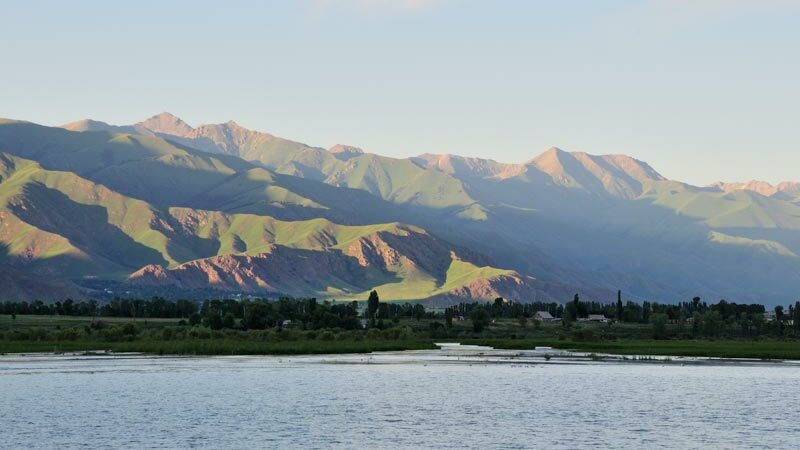
For decades, discussions about Central Asia focused largely on oil, natural gas, trade corridors, and geopolitics. Today, however, another issue is rapidly emerging as one of the greatest long term threats to the region’s economic stability and national security: water.
Climate change, glacier melting, droughts, rising temperatures, population growth, and aging infrastructure are placing enormous pressure on Central Asia’s already fragile water systems.
RECOMMENDED STORIES
Experts increasingly warn that the region could become one of the world’s most vulnerable areas to climate related economic disruption in the coming decades.
The stakes are extremely high.
Water is directly connected to agriculture, electricity production, food security, industrial output, energy exports, and public health. Millions of people across Kazakhstan, Uzbekistan, Kyrgyzstan, Tajikistan, and Turkmenistan depend on rivers originating in mountain glaciers that are now shrinking at alarming rates.
At the same time, governments are attempting to balance economic growth, industrial expansion, agricultural production, and energy development while facing increasing environmental stress.
Some analysts believe climate pressures could become the defining geopolitical and economic challenge for Central Asia in the 21st century.
Below is a detailed FAQ explainer examining how water and climate change are reshaping the region’s economy, politics, and future stability.
Why is water such a critical issue in Central Asia?
Water is essential to nearly every major sector of Central Asia’s economy.
Agriculture remains one of the region’s largest employers and depends heavily on irrigation systems fed by rivers and reservoirs.
Hydropower generation in countries such as Kyrgyzstan and Tajikistan relies directly on river flows and glacier meltwater.
Urban populations, industrial operations, mining projects, and energy systems also require reliable water supplies.
However, Central Asia is naturally a dry region with uneven water distribution.
Most water resources originate in mountainous upstream countries while major agricultural and population centers are located downstream.
This imbalance has historically created regional tensions and complicated economic planning.
Climate change is now intensifying these pressures dramatically.
Which rivers are most important for the region?
The two most important river systems are the Amu Darya and Syr Darya rivers.
These rivers originate primarily in the mountains of Kyrgyzstan and Tajikistan before flowing downstream into Uzbekistan, Kazakhstan, and Turkmenistan.
For decades, these rivers have supported agriculture, hydropower generation, industry, and urban development across the region.
Large irrigation systems built during the Soviet era transformed Central Asia into a major cotton producing region.
However, inefficient water management and excessive irrigation severely damaged ecosystems and contributed to environmental disasters such as the shrinking of the Aral Sea.
Today, these same river systems are under growing pressure from climate change and rising demand.
How is climate change affecting Central Asia?
Climate change is already having visible effects across the region.
Temperatures are rising faster than the global average in many parts of Central Asia.
Glaciers are melting rapidly in mountain regions, threatening long term water availability.
Droughts are becoming more frequent and severe.
Extreme weather events including heatwaves, floods, and desertification are increasing.
Agricultural productivity is becoming more vulnerable to climate variability.
At the same time, population growth and economic development are increasing water demand.
Experts warn that climate pressures could eventually undermine food security, energy stability, and economic growth if adaptation efforts remain insufficient.
Why are glaciers so important for Central Asia?
Glaciers function as natural water reservoirs.
During warmer months, melting glaciers supply rivers that millions of people depend on for drinking water, agriculture, and electricity generation.
Countries such as Kyrgyzstan and Tajikistan possess thousands of glaciers in mountainous regions.
However, rising temperatures are accelerating glacier retreat.
Initially, increased glacier melting may temporarily boost river flows. Over time, however, shrinking glaciers could dramatically reduce long term water availability.
This creates serious concerns for future economic stability and regional cooperation.
Many scientists warn that glacier loss could become one of Central Asia’s greatest environmental threats over the coming decades.
Why is the Aral Sea often mentioned in discussions about Central Asia’s environmental crisis?
The Aral Sea disaster is considered one of the world’s worst environmental catastrophes.
During the Soviet period, massive irrigation projects diverted water from the Amu Darya and Syr Darya rivers to support cotton farming.
As a result, the Aral Sea began shrinking rapidly.
Large sections eventually dried up completely, devastating fisheries, local economies, ecosystems, and public health.
The exposed seabed created toxic dust storms carrying salt and pollutants across surrounding regions.
The disaster became a global symbol of unsustainable water management.
Although partial recovery efforts have shown some success in northern areas, the broader environmental damage remains severe.
The Aral Sea crisis continues serving as a warning about the dangers of poor water governance and environmental mismanagement.
Which countries face the greatest water risks?
Every Central Asian country faces different types of water related vulnerabilities.
Uzbekistan is highly dependent on irrigation agriculture and faces major risks from declining river flows.
Turkmenistan also relies heavily on water intensive agriculture in an extremely arid environment.
Kazakhstan faces growing drought risks and pressure on agricultural production.
Meanwhile, upstream countries such as Kyrgyzstan and Tajikistan possess important water resources but remain vulnerable to glacier loss and hydropower instability.
Because water systems are interconnected, climate pressures in one country can affect the entire region.
How does water affect agriculture in Central Asia?
Agriculture remains heavily dependent on irrigation.
Cotton, wheat, fruits, vegetables, and other crops require substantial water supplies.
Many irrigation systems inherited from the Soviet era are outdated and inefficient, resulting in enormous water losses.
Climate change and droughts are increasing pressure on already stressed agricultural systems.
Reduced water availability could lower crop yields, increase food prices, reduce export revenues, and threaten rural livelihoods.
Some governments are now promoting more efficient irrigation technologies, crop diversification, and water conservation policies.
However, modernization remains expensive and progress varies across countries.
Can climate change threaten food security in the region?
Yes.
Declining water availability, rising temperatures, and more frequent droughts could significantly affect agricultural productivity.
Food imports may become more expensive due to global climate disruptions and geopolitical instability.
Rural communities dependent on farming are especially vulnerable.
Some experts warn that climate pressures could increase migration, unemployment, and social tensions if adaptation efforts fail.
Governments are therefore increasingly treating food security as both an economic and national security issue.
Why are hydropower projects controversial in Central Asia?
Hydropower plays a central role in upstream countries such as Kyrgyzstan and Tajikistan.
These countries rely heavily on dams and reservoirs for electricity generation and economic development.
However, downstream countries often worry that upstream water storage projects could reduce water availability for agriculture.
This creates recurring regional tensions over water management and energy policy.
Climate change further complicates the situation because future river flows may become less predictable.
Despite these challenges, regional cooperation has improved somewhat in recent years compared with earlier periods of tension.
Still, water sharing remains one of the region’s most sensitive geopolitical issues.
How does water scarcity affect energy security?
Water and energy are deeply interconnected in Central Asia.
Hydropower depends on reliable river flows.
Thermal power plants also require water for cooling.
Agriculture dependent economies often use large amounts of electricity for irrigation systems.
At the same time, energy shortages can affect water pumping and distribution infrastructure.
Climate change therefore creates a dangerous cycle where environmental pressures simultaneously threaten both water and energy systems.
Governments increasingly recognize the need for integrated water energy planning.
Can renewable energy reduce water related risks?
Renewable energy could help reduce some pressures.
Solar and wind energy generally require less water than traditional thermal power generation.
Countries such as Kazakhstan and Uzbekistan are rapidly expanding renewable energy investments partly to improve energy security and reduce environmental vulnerability.
However, renewable energy alone cannot solve broader water management challenges.
Agriculture, urbanization, industrial development, and population growth will continue placing major demands on water resources.
Successful adaptation will require comprehensive regional strategies rather than isolated projects.
How important is regional cooperation?
Regional cooperation is absolutely essential.
Most major rivers cross national borders, meaning unilateral policies often create tensions.
Water management, hydropower development, climate adaptation, and agricultural planning require cross border coordination.
Historically, political disagreements sometimes complicated regional cooperation.
However, relations among Central Asian governments have improved significantly in recent years.
Many leaders increasingly recognize that climate risks threaten all countries regardless of political differences.
International organizations are also encouraging regional cooperation through financing, technical assistance, and environmental programs.
What role do international organizations play?
International institutions are heavily involved in climate adaptation and water management efforts across Central Asia.
Organizations such as the World Bank, United Nations, and Asian Development Bank support infrastructure modernization, environmental programs, and regional coordination initiatives.
Climate financing is becoming increasingly important as governments seek resources for adaptation projects.
International expertise also helps improve water monitoring, agricultural efficiency, disaster preparedness, and environmental governance.
However, experts argue that funding and reforms still remain insufficient relative to the scale of future risks.
Could climate pressures trigger migration or social instability?
Some analysts believe climate related migration could increase significantly in the future.
Rural communities dependent on agriculture are especially vulnerable to droughts and declining water availability.
Economic disruptions could encourage migration toward urban areas or abroad.
Competition over water resources may also intensify local and regional tensions if shortages worsen.
While major conflict scenarios are not inevitable, many experts warn that climate change could amplify existing economic and social vulnerabilities.
Governments therefore increasingly view adaptation policies as important for long term political stability.
How are governments responding to these challenges?
Responses vary across the region.
Many governments are investing in irrigation modernization, reservoir management, renewable energy, and water conservation technologies.
Climate adaptation strategies are becoming more prominent in national development plans.
Some countries are introducing more efficient agricultural practices and reducing reliance on highly water intensive crops.
Regional environmental cooperation has also improved.
However, implementation challenges remain substantial due to financial limitations, institutional weaknesses, and competing economic priorities.
Many experts argue that adaptation efforts still lag behind the speed of climate change.
Can technology help solve Central Asia’s water problems?
Technology may play an increasingly important role.
Modern irrigation systems can significantly reduce water waste.
Satellite monitoring and artificial intelligence can improve water management and climate forecasting.
Digital systems can help optimize reservoir operations and agricultural planning.
Renewable energy expansion may reduce pressure on water intensive power generation.
Desalination and water recycling technologies could also become more relevant in the future.
However, technology alone cannot fully solve structural and political challenges surrounding water governance.
How does climate change affect economic growth in Central Asia?
Climate risks increasingly threaten long term economic development.
Agriculture, energy production, infrastructure, and industrial activity all depend on stable environmental conditions.
Extreme weather events can damage transport systems, reduce productivity, and increase economic costs.
Water shortages could eventually constrain industrial expansion and urban development.
At the same time, adaptation efforts require enormous investment.
Governments therefore face the dual challenge of sustaining economic growth while preparing for worsening climate pressures.
Could Central Asia become a global climate security hotspot?
Many experts believe the region is becoming increasingly important in global climate discussions.
Central Asia combines several major vulnerabilities including water scarcity, glacier dependence, arid geography, aging infrastructure, and geopolitical complexity.
Climate change may therefore have disproportionately severe economic and social consequences compared with some other regions.
At the same time, the region’s strategic location between Europe, China, Russia, and the Middle East increases its geopolitical significance.
International attention toward Central Asia’s environmental challenges is therefore likely to continue growing.
What does the future look like for the region?
The future remains uncertain but increasingly urgent.
Central Asia possesses enormous economic potential, natural resources, and strategic importance.
However, climate change and water scarcity may ultimately become the defining challenges shaping the region’s future development.
Success will depend heavily on regional cooperation, infrastructure modernization, environmental governance, technological innovation, and long term planning.
The region still has opportunities to strengthen resilience and adapt effectively.
But experts warn that delays in action could significantly increase future economic and environmental costs.
For Central Asia, the climate crisis is no longer a distant environmental issue.
It is becoming a central question of economic survival, regional stability, and long term geopolitical relevance in the 21st century.
By Faig Mahmudov


Similar news