INTERVIEW: COP29 to focus on emissions mitigation, climate finance


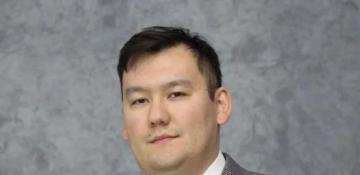
The analytical-information portal News.Az continues its series of articles, interviews and videos entitled "COP29 Baku". As part of this series, we will be posting interviews with and videos of prominent climate and environmental experts. Our guest today is Richard B. (Ricky) Rood, a professor of Climate and Space Sciences and Engineering at the University of Michigan in Ann Arbor.
- How do you see the main challenge in the current understanding of climate change, and which areas require further research?- Our understanding that Earth has warmed and will continue to warm is very solid. We know the primary causes of the warming, carbon dioxide and methane increases in the atmosphere. The primary cause of this increase is the burning and extraction of fossil fuels.
For me, the research priorities include what will happen in the next 10 - 50 years so that we are better informed about adaptation. We need targeted research on tipping points such as greenhouse gas release from melting permafrost and passing the point of no return with the melting of ice sheets. We need far more research on ocean circulation and how quickly it might change. Because we are increasingly talking about geoengineering as a treatment for our inability to manage carbon dioxide and methane, we need to know much more about the consequences of such decisions.
- How has your experience working at NASA influenced your current activities at the University of Michigan and your research in climate and space sciences?
- At NASA, we built big systems to address complex problems. My research and teaching at the University of Michigan evolved into teaching problem solving. I targeted practical skills in complicated political environments. The challenges of working with the interests of people, governments, and corporations are far more difficult than the science and technical challenges. My goal is to accelerate how soon students are effective in their professions.
- Which new technologies or methods do you consider most promising for predicting and mitigating the effects of climate change?
- I believe that we rely too much on the magic of new technology to address our bad behavior. We have known for years that we could use fossil fuels more efficiently and vastly reduce emissions, yet we do not do that. What is it in our behavior that keeps us from doing smart things that will, in fact, save us money? Even with new technology we will have behavioral challenges that we need to overcome.
The transition to renewable energy is encouraging as is the increasing electrification. We need more attention to batteries and battery technology. I personally believe that there is a lot of potential in
materials science and engineering. We have an urgent need to face issues in agricultural science that will make our crops more resilient.
In many parts of the world, primary challenges will be water scarcity and very high temperatures. Some of this might be addressed by technology, such as desalinization. However, more important, perhaps, is the development of regional approaches to water availability and management to get out in front of inevitable tensions and conflicts over water resources.
- Can you talk about some of your most significant academic publications and their impact on the scientific community?
- I have made contributions in several fields. I am perhaps best known for contributing to the computer codes that calculate the flow of air in several weather and climate models.
In am proud of my more recent work on how uncertainty is used and manipulated in problem solving. Namely, scientific uncertainty is often used as an excuse that keeps us from taking action. This is, in fact, fallacious reasoning and our knowledge of science is usually the most certain knowledge we have about the future. Uncertainty is easily manipulated to raise doubt and keep us stuck.
- What are your main expectations for COP29 in Baku, and what key outcomes do you hope to see?
- The Conferences of the Parties (COPs) are quite predictable. The major topics will be mitigation of carbon dioxide and methane emissions and climate finance. There will be some attention to adaptation.
The outcome of the U.S. presidential election will have a major impact.
The COPs are important meetings that keep us talking and synthesizing what we know. However, there is limited ability to move things forward in the COPs because actions are mostly voluntary and there is the requirement for consensus on all statements. Breakthroughs might come when a large
country or coalition sees political or economic advantage in taking climate action.
I am hopeful that 2024 or 2025 might see the peak emissions of carbon dioxide and the beginning of an emissions downturn. This would be remarkable and encouraging; however, still quite fragile.
- What specific initiatives or agreements do you believe should be prioritized at COP29 to effectively address the issue of climate change?
- Where we might make progress is methane. Many are in agreement that methane needs to be managed better. Of course, one reason we agree on that is that oil producers see methane leakage and waste as lost revenue. The evidence is that much of the advantage we see from displacing coal with natural gas is lost to methane leakage.
I do not expect it, but we need to get serious about phasing out fossil fuels. We have entered a dubious bargain with natural gas as a fuel that is climate friendly. In the long-term, this is not true. Too many countries and corporations need to keep natural gas as part of their wealth base to agree to a phase-out of fossil fuels. We are currently thinking about carbon capture and storage too optimistically.
- From your participation in COP28 in Dubai, what key points and conclusions did you draw from the event, and how might they influence the future of climate conferences?
- I was mostly discouraged by COP28 because of the emergence of the oil industry as managing the outcomes. I expect this influence to continue. The oil companies and producing nations are investing and expanding, in many cases with market-distorting government support. It will be part of the continuing fight to balance this trend with more commitment to renewable energy and electrification.
Related articles:
- Baruch Fischhoff: Attendees of COP29 Baku to be motivated by different goals
- COP29 Baku to outline more ambitious climate action strategies – Malaysian expert
- COP29 will bring several opportunities for Azerbaijan - US expert
- Nithi Nesadurai: COP29 in Baku to discuss increasing climate project funding
- INTERVIEW. What to expect from COP29 in Azerbaijan?
- Steve Vavrus: COP29 will need to reckon with "shocking" global warming


Similar news