Is Tesla’s FSD subscription shift worrying investors?


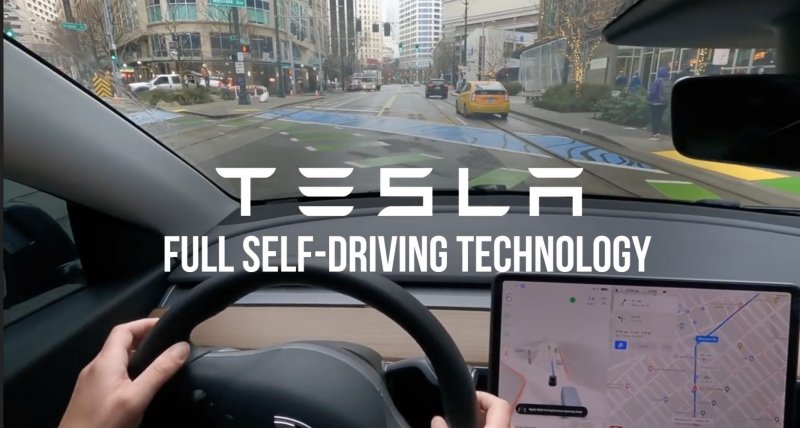
Shares of Tesla declined after the company confirmed that its full self-driving (fsd) software would transition more decisively toward a subscription-based model rather than being sold primarily as a high-priced one-time purchase, News.Az reports.
While the move aligns Tesla with broader software-as-a-service trends, investors reacted cautiously, raising questions about near-term revenue recognition, customer adoption, and long-term margins. This faq explainer outlines what changed, why the market reacted negatively, and what the shift could mean for Tesla’s business model and valuation.
What exactly changed with Tesla’s fsd pricing?
Tesla announced that access to fsd would increasingly be offered through a monthly subscription, with the one-time purchase option de-emphasized or limited by market. Previously, customers could pay a large upfront fee to unlock fsd features permanently on a vehicle. Under the revised approach, more users are expected to opt into a recurring monthly plan that can be activated or canceled over time.
The company framed the move as a way to lower the barrier to entry, allowing more drivers to experience fsd without committing thousands of dollars upfront. The subscription model also enables Tesla to update pricing dynamically and align payments more closely with ongoing software improvements.
Why did Tesla stock fall after the announcement?
The immediate market reaction reflected investor concern about short-term financial impacts. One-time fsd purchases delivered large upfront cash inflows that were attractive for quarterly revenue optics. A subscription model, by contrast, spreads revenue over time, potentially reducing near-term recognized revenue even if lifetime customer value remains similar or higher.
Investors also questioned whether subscription uptake would be strong enough to offset the loss of large upfront payments. Concerns emerged about churn risk, pricing sensitivity, and whether customers would maintain subscriptions consistently rather than activating them sporadically.
In addition, the announcement arrived amid broader market sensitivity to growth stocks, where changes to revenue visibility can amplify volatility.
How does the subscription model affect Tesla’s revenue structure?
Moving fsd to a subscription model shifts Tesla’s revenue mix from transactional to recurring. This can reduce revenue volatility over the long term and increase predictability once a stable subscriber base is established. However, the transition period can be uneven.
In accounting terms, subscriptions defer revenue recognition across months rather than recording a large portion at the point of sale. This can make growth appear slower in the short run, even if underlying demand is solid. Over time, recurring revenue can improve gross margins, assuming software development costs remain relatively fixed.
For Tesla, the challenge is timing – the benefits of subscriptions accrue gradually, while the costs of development and deployment are incurred continuously.
Why is Tesla pushing fsd toward subscriptions now?
Several strategic factors appear to be driving the shift. First, Tesla aims to expand fsd adoption beyond early enthusiasts. Lower monthly pricing makes the product accessible to a broader customer base, including buyers who were previously unwilling to pay a large upfront fee.
Second, the company wants to reinforce the perception of fsd as a continuously evolving service rather than a finished product. A subscription aligns expectations with ongoing updates, feature rollouts, and incremental improvements.
Third, subscriptions support Tesla’s longer-term vision of software-driven vehicles and autonomous mobility services. If fsd eventually enables features such as autonomous ride-hailing, a recurring payment framework is more compatible with usage-based monetization.
How does this compare with other software and automotive models?
In the technology sector, subscriptions are the dominant model for monetizing software, from productivity tools to streaming services. Recurring revenue is often valued more highly by investors once scale is achieved, due to predictability and customer lifetime value.
In the automotive industry, however, subscription fatigue is a growing concern. Consumers have shown mixed reactions to paying monthly fees for features historically included in the purchase price. Tesla’s brand strength and fsd’s perceived uniqueness may mitigate some resistance, but the risk remains.
Competitors pursuing advanced driver assistance systems are experimenting with hybrid approaches, combining bundled features with optional subscriptions. Tesla’s move places it firmly in the software-first camp.
What does this mean for customers?
For customers, the subscription model lowers upfront cost and increases flexibility. Drivers can activate fsd for specific periods, such as long trips, and deactivate it when not needed. This flexibility could attract new users who want to test the system without a long-term commitment.
On the downside, customers who previously paid for permanent access may question the value proposition if new users gain similar access at a lower short-term cost. Tesla has attempted to address this by continuing to offer benefits to existing fsd owners, though perceptions of fairness remain subjective.
The model also raises expectations for continuous improvement. Subscribers may be less tolerant of delays or performance issues if they are paying monthly.
Does this signal anything about fsd readiness?
Some investors interpreted the shift as an implicit acknowledgment that fsd is still evolving and not yet a fully autonomous system. Subscriptions can be easier to justify when a product is in active development, allowing pricing to reflect current capabilities rather than promised future performance.
Tesla maintains that fsd continues to advance rapidly, with regular software updates and expanding functionality. The company argues that a subscription better reflects the ongoing nature of the product and its development trajectory.
Nevertheless, skepticism persists among regulators and parts of the investment community regarding timelines for full autonomy.
How could this affect Tesla’s valuation?
Valuation impacts depend on execution. If Tesla successfully scales fsd subscriptions, the company could build a high-margin, recurring revenue stream that supports premium valuation multiples. Software revenues typically command higher valuations than hardware sales when growth and retention are strong.
In the near term, however, valuation models may be adjusted downward to reflect slower recognized revenue growth and uncertainty around adoption rates. Analysts may wait for clearer data on subscriber numbers, churn, and average revenue per user before reassessing long-term assumptions.
Market reaction suggests investors are cautious but not dismissive of the strategy.
What are the risks associated with the subscription shift?
Key risks include slower-than-expected adoption, higher churn, and pricing pressure. If customers view fsd as non-essential or only occasionally useful, they may subscribe intermittently, reducing predictable revenue.
Regulatory scrutiny is another factor. Any incidents or negative publicity related to driver assistance features could affect willingness to pay for fsd and invite tighter oversight.
Competition also matters. As rival automakers improve their own systems, Tesla may face pressure to adjust pricing or enhance features to maintain differentiation.
What are the potential long-term benefits for Tesla?
If successful, the subscription model could transform Tesla from a primarily automotive manufacturer into a hybrid hardware–software company with recurring digital revenue. This aligns with the company’s long-stated ambition to monetize software, data, and autonomous capabilities at scale.
Over time, a large installed base of fsd subscribers could support additional services, including insurance pricing, fleet management, and autonomous mobility offerings. Subscriptions also strengthen customer relationships by maintaining ongoing engagement beyond the initial vehicle purchase.
These benefits, however, depend on sustained technical progress and customer trust.
How are analysts likely to view the change in the future?
Analysts are expected to focus on early indicators such as subscription uptake rates, average subscription duration, and the impact on gross margins. Transparency around these metrics will be critical in shaping market confidence.
Some analysts may view the initial stock decline as a short-term reaction to accounting optics rather than a fundamental rejection of the strategy. Others may remain cautious until evidence emerges that subscriptions can deliver equal or greater lifetime value compared with upfront sales.
Consensus is likely to evolve as data accumulates.
Tesla’s decision to move fsd more firmly toward a subscription model triggered a decline in its stock as investors weighed short-term revenue trade-offs against long-term strategic potential. The shift lowers barriers for customers and aligns fsd with software industry norms, but it also introduces uncertainty around adoption, churn, and near-term financial performance.
Whether the move ultimately strengthens Tesla’s valuation will depend on execution, customer response, and the pace of technological progress. For now, the market reaction reflects caution rather than a definitive judgment on the strategy’s success.


Similar news