France’s gamble against Azerbaijan: Paris’s geopolitical miscalculation
Editor’s note: Zaur Nurmamedov is a journalist and a graduate of the Faculty of Political Science at the Academy of Public Administration under the President of the Republic of Azerbaijan (1993–1999). He previously served as First Deputy Editor-in-Chief of the Vesti.Az news portal (2009–2023). The views expressed in this article are his own and do not necessarily reflect the position of News.Az.
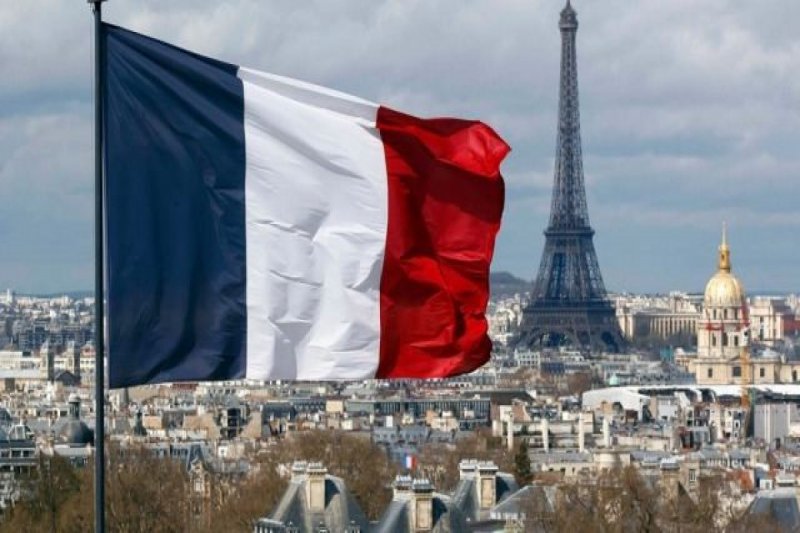
In recent years, relations between Azerbaijan and France have reached their lowest point in the history of bilateral ties. This crisis did not emerge overnight. Rather, it was the result of a deliberate political course pursued by Paris, which chose to align itself unequivocally with Armenia in the Armenian-Azerbaijani conflict.
France provided Armenia with diplomatic, financial, and military support. In Baku, this was viewed not merely as sympathy for one side, but as political interference and an attempt to alter the regional balance of power. Such a stance predictably provoked strong indignation in Azerbaijan.
The role of the Armenian diaspora in France cannot be overlooked. It is the second largest and most influential Armenian community in the world after the United States. By various estimates, it numbers around 600,000 people and is deeply integrated into French society. Its representatives are active in the country’s political life, and some politicians openly appeal to the diasporic electorate. French political history includes a number of prominent figures of Armenian origin, from Édouard Balladur to Patrick Devedjian.

Source: shutterstock
The issue is not the ethnic background of individual politicians. Rather, it is that the diasporic agenda has become embedded in France’s foreign policy. As a result, Paris lost its image as a neutral mediator in the South Caucasus. This was particularly evident during France’s co-chairmanship of the OSCE Minsk Group. Over the course of its work, it failed to demonstrate the objectivity required to advance a settlement of the Armenian-Azerbaijani conflict.
The turning point came in September 2020 with the outbreak of the Second Karabakh War. At that time, French President Emmanuel Macron publicly claimed that more than 300 fighters from the so-called Islamic State had allegedly been transferred to Azerbaijan’s side via the Turkish city of Gaziantep. These allegations were never substantiated, yet they dealt a serious blow to bilateral relations. Azerbaijani President Ilham Aliyev described the statements as unacceptable and demanded an apology.
After the liberation of the occupied territories, Emmanuel Macron stated that France would continue to provide political and humanitarian support to Armenia, “very closely monitor its territorial integrity,” and, if necessary, stand “on the side of the Armenian people.” In Baku, these statements were interpreted as a direct political signal.
Since 2020, France has repeatedly sought to advance resolutions against Azerbaijan in the UN Security Council and the European Parliament under the pretext of protecting the rights of Karabakh Armenians. In 2023, Ilham Aliyev stated directly that Azerbaijan’s victory in the 44-day war had caused irritation in France. According to him, the Minsk Group, and France in particular, had done everything possible to prevent the conflict from being finally resolved. Azerbaijan’s victory upended plans to maintain the status quo.
Source: connectivethink
Another source of tension was the effort to tarnish Azerbaijan’s image ahead of COP29. Several French politicians spoke out against holding the conference in Baku. This was seen as a continuation of political pressure, now extending into the environmental and climate agenda.
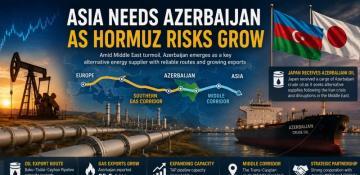
Beneath the rhetoric of “supporting democracy” and “protecting rights,” more pragmatic interests are evident. Following the outbreak of the Russia-Ukraine conflict, the strategic importance of the South Caucasus rose sharply. The Middle Corridor emerged as the most important alternative to traditional routes through Russia. The French economy relies on supplies of uranium from Central Asia, rare earth metals, and stable logistics free from the risks of sanctions.
In this context, influence in Armenia may have been seen as a means of shaping future transport projects, including the Zangezur corridor. Paris may have hoped that by increasing its sway in Yerevan, it could gain leverage over Baku and make Azerbaijan more “accommodating” in negotiations.
However, this calculation proved mistaken. Azerbaijan did not become a target of external pressure; on the contrary, it strengthened its agency and strategic position.
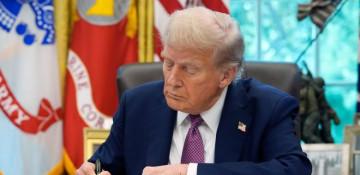
The situation was ultimately reshaped by the involvement of the United States. In August 2025, a meeting took place in Washington between US President Donald Trump, Ilham Aliyev, and Armenian Prime Minister Nikol Pashinyan. The meeting produced a joint declaration on the normalization of relations and the launch of the TRIPP project, the “Trump Route for International Peace and Prosperity.” The project envisions opening a transit route between mainland Azerbaijan and Nakhchivan with the participation of an Armenian-American consortium.
In effect, the United States took the lead in shaping a new architecture for peace and transit in the South Caucasus, leaving France’s strategy sidelined in key developments.
It is no coincidence that in a recent interview with France24, President Ilham Aliyev stressed that Azerbaijan was not the source of tensions with France. He recalled many years of friendly relations, sister city partnerships, and economic cooperation. However, following the Second Karabakh War, Paris’s position became “absolutely incomprehensible.” Aliyev highlighted that France had supported separatists by adopting more than 10 resolutions targeting Azerbaijan and had even recognized the so-called “Nagorno-Karabakh,” something Armenia itself had not done.
At the same time, the Azerbaijani leader noted that his meeting with Emmanuel Macron at the end of 2025 had been positive, and that the two sides had agreed to “press the reset button.” Baku is ready for normalization, but only on the basis of respect for sovereignty and non-interference in internal affairs.
Thus, it was clear that Paris’s previous approach was strategically flawed and resulted in losses for France itself. Amid internal socioeconomic challenges, a crisis of influence in Africa, and a difficult domestic political situation, it is increasingly difficult for Emmanuel Macron to pursue an ambitious foreign policy.
By confronting Azerbaijan, France objectively lost more than it gained. It failed to alter the outcome of the conflict, did not secure control over regional communications, and ceded the diplomatic initiative to the United States.
Today, the situation is different. Peace between Azerbaijan and Armenia is becoming a reality, and the region is entering a phase of post-conflict reconstruction, where economic projects and transport routes play a central role.
Now, “the ball is in Paris’s court.” Azerbaijan has made it clear that it is not seeking confrontation but will not tolerate double standards. If France is truly ready for a reset, it will need to recognize the new geopolitical reality in the South Caucasus. a reality in which Azerbaijan is an independent and strategically significant center of power.
History has shown that the strategy of applying pressure did not pay off. The question now is whether Paris is prepared to draw the necessary conclusions.
(If you possess specialized knowledge and wish to contribute, please reach out to us at opinions@news.az).
News.Az