Japan strengthens Asia’s anti-China contour: Why Marcos is heading to Tokyo


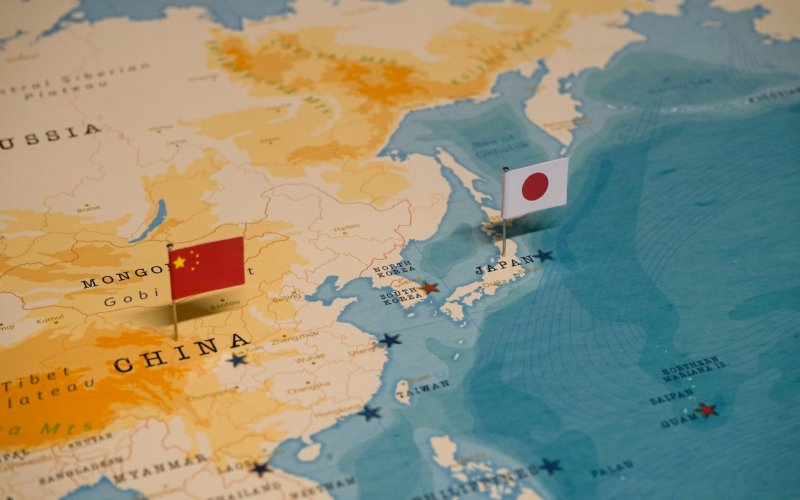
Philippine President Ferdinand Marcos Jr.’s state visit to Japan, scheduled for 26–29 May 2026, is not just another episode of bilateral diplomacy.
Against the backdrop of rising tensions in the South China Sea, the trip is taking on greater significance as an important element of Asia’s emerging security architecture. Tokyo and Manila are drawing increasingly closer amid China’s growing assertiveness, while Japan itself is gradually moving beyond the cautious post-war foreign policy that shaped its international role for decades.
According to Japan’s Ministry of Foreign Affairs, Marcos and First Lady Louise Araneta-Marcos will pay a state visit to Japan from 26 to 29 May. The programme includes meetings with Emperor Naruhito and Empress Masako, a state banquet, and talks with Japanese Prime Minister Sanae Takaichi. Tokyo has openly stated that it expects to further deepen relations with the Philippines as a partner that shares fundamental values and strategic interests.
Behind this diplomatic language lies a far more serious reality. Japan and the Philippines are effectively becoming two key pillars in the broader system aimed at containing China in East and Southeast Asia. While Japan remains the United States’ main ally in the north-eastern part of the region, the Philippines under Marcos has once again become one of Washington’s central partners near the South China Sea and the Taiwan Strait.
The main driver of the rapprochement between Tokyo and Manila is their shared concern over China’s actions. The Philippines faces regular pressure in the South China Sea, especially around disputed areas where Chinese coast guard and maritime militia vessels have been acting with increasing force and confidence. Japan, for its part, views Chinese activity around the Senkaku Islands, as well as the broader expansion of Beijing’s naval capabilities, as a direct challenge to its own security.

Source: Reuters
That is why Marcos’ visit to Japan should not be viewed as an isolated event, but rather as part of a broader and consistent process. Tokyo and Manila are already building practical mechanisms for defence cooperation. In early May, Japan announced plans to accelerate the transfer of Abukuma-class vessels and TC-90 training aircraft to the Philippines. The move became possible after Japan revised its defence export rules and demonstrates that Tokyo is prepared not only to make political statements, but also to help Manila strengthen its actual maritime capabilities.
Japan’s participation in joint military exercises in the Philippines is also highly significant. According to Reuters, Japan’s Self-Defense Forces in May 2026 fired a Type 88 anti-ship missile during drills with the United States, Australia and the Philippines in the northern part of the country facing the South China Sea. More than 17,000 troops took part in the exercises, including around 10,000 US service members and approximately 1,400 personnel from Japan. China has already criticised the activity, claiming that Japan is using security cooperation as a pretext to deploy offensive capabilities abroad.
However, the Japan-Philippines rapprochement is not limited to defence. Its durability is also underpinned by the strong economic foundation between the two countries. Japan has long been one of the Philippines’ key trade, investment and infrastructure partners. According to the Philippine Statistics Authority, the country’s total external trade in 2025 reached $218.68 billion, up 8.9% compared with 2024. This was the highest figure since relevant records began in 1991.
Against this backdrop, Japan remains one of Manila’s most important economic partners. According to UN Comtrade data cited by Trading Economics, Japanese exports to the Philippines in 2025 amounted to around $9.99 billion. These exports include machinery, transport equipment, electronics, industrial goods and components that are important for Philippine industry, infrastructure and supply chains.
The Philippines, in turn, exports electronics, semiconductor products, agricultural goods, seafood and other products to Japan. According to the Observatory of Economic Complexity (OEC), in January 2026 alone Philippine exports to Japan amounted to around $880 million, although this was 6.98% lower than in January 2025. Even this monthly figure illustrates the scale of the economic relationship between the two countries.
Japanese investment is no less important. In March 2026, the Philippine News Agency reported that foreign direct investment in the Philippines reached $560 million in December 2025, with Japan becoming the largest source of inflows. The largest share of the capital went into financial and insurance activities.
This means that Japan is not merely a diplomatic ally or security partner for the Philippines. It is one of the country’s key sources of capital, technology, infrastructure financing and long-term modernisation. For Manila, such a partnership is especially important at a time when the country is seeking to develop its economy, improve transport connectivity and strengthen its resilience against external pressure.
Another important area is Japan’s official development assistance. In March 2026, the Japan International Cooperation Agency (JICA) signed new loan agreements with the Philippine government to finance two major projects: the Metro Manila Subway Project Phase 1 and the Central Mindanao High Standard Highway Construction Project. These projects are not only economic in nature, but also strategic. The Manila subway is expected to improve the capital’s transport system, while the high-standard highway in Central Mindanao will strengthen connectivity in one of the country’s key regions.
According to the Philippine News Agency, the fourth tranche of the loan for the first phase of the Metro Manila Subway Project alone amounts to 220 billion yen, or around 84.81 billion Philippine pesos. This demonstrates that Japan’s presence in the Philippines is measured not by symbolic projects, but by major infrastructure investments capable of reshaping the country’s economic geography.
This is where economics begins to intersect with security strategy. The deeper Japanese investments, loans, transport projects and technological ties become embedded in the Philippine economy, the more difficult it will be for Manila to return to its previous policy of cautious balancing between Tokyo, Washington and Beijing. Japan offers the Philippines not only political support, but also a practical package: capital, infrastructure, technology, defence equipment and access to a broad network of partnerships with the United States, Australia and other allies.

Source: Reuters
For Japan, the Philippines occupies a special place. The country’s geography makes it a crucial link between the South China Sea, the East China Sea and the Taiwan Strait. In the event of a major crisis around Taiwan or further escalation in the South China Sea, the Philippines could become one of the key platforms for coordinating the actions of the United States and its allies. Strengthening Japan-Philippines ties is therefore not merely a bilateral matter. It forms part of a broader regional system involving the United States, Australia, Japan, the Philippines and increasingly active European partners.
For the Philippines, this cooperation also follows a clear strategic logic. Manila gains an opportunity to strengthen its position in the dispute with China without relying solely on US support. Japanese assistance makes the Philippine strategy more resilient: it is not only about military exercises or political statements, but also about vessels, aircraft, infrastructure, investment and long-term economic projects. This approach strengthens the Philippines’ state capacity and reduces the risk of isolation in the event of a new crisis in the South China Sea.
China, for its part, fully understands the political significance of these developments. For Beijing, the rapprochement between Japan and the Philippines is not simply diplomacy. It represents the formation of additional external pressure around the perimeter of China’s maritime interests. From China’s perspective, Washington and its allies are building a chain of partnerships designed to limit Beijing’s freedom of action in the region. From the perspective of Tokyo and Manila, however, the issue is the protection of sea lanes, sovereign rights and the regional balance of power.
At the same time, it is important to understand that this is not formally about creating a single military bloc against China. The participants in this system often avoid openly confrontational rhetoric. They speak instead about a free and open Indo-Pacific region, the protection of international law, the security of sea routes and the strengthening of partners’ resilience. Yet the political logic is clear: countries concerned about rising Chinese pressure are gradually creating a network of agreements, exercises, equipment transfers, consultations, investments and infrastructure projects.
In this regard, Japan is acting cautiously but consistently. It is not attempting to replace the United States as the main power centre in the region, but it does aim to become a more active strategic player. Tokyo is strengthening relations with Australia, India, South Korea, the Philippines and other Southeast Asian states. At the same time, Japan is increasing its defence budget, revising restrictions on the export of military equipment and more actively linking economic cooperation with security issues.
Marcos’ state visit to Tokyo may become another step towards the formation of an emerging Asian anti-China alignment. This alignment is being built not only on military agreements, but also on economics. Japanese loans, investments, infrastructure projects, equipment supplies and political support are creating around China not a rigid military bloc, but a flexible network of partner states that are becoming increasingly connected to Tokyo and its allies.
For the Philippines, this is a way to strengthen its position in its dispute with China and secure an additional centre of support beyond the United States. For Japan, it is an opportunity to demonstrate leadership in the Indo-Pacific region and strengthen the southern dimension of its security strategy. For the United States, it is a chance to expand the China-containment system through more active participation by its allies. For China, it is a troubling signal that its hard-line approach in maritime disputes is not isolating its rivals, but pushing them closer together.
That is why Marcos’ May visit to Japan will matter far beyond diplomatic protocol. The state banquet, meetings with the imperial family and talks with the Japanese prime minister will be only the visible part of the process. The central question is how quickly Japan and the Philippines can transform their political partnership into a sustainable system of security and economic interdependence.
If this process continues, Asia may enter a new phase of strategic confrontation. China will increase pressure, Japan will expand its network of partnerships, the Philippines will strengthen its defence and infrastructure capabilities, and the United States will seek to connect these elements into a more coherent regional structure. In this sense, Marcos’ trip to Japan is not merely a visit by one partner to another. It is another brick in the wall that regional states are gradually building in response to China’s growing power.
By Samir Muradov


Similar news