Morgan McSweeney's stolen phone sparks controversy—what happened?


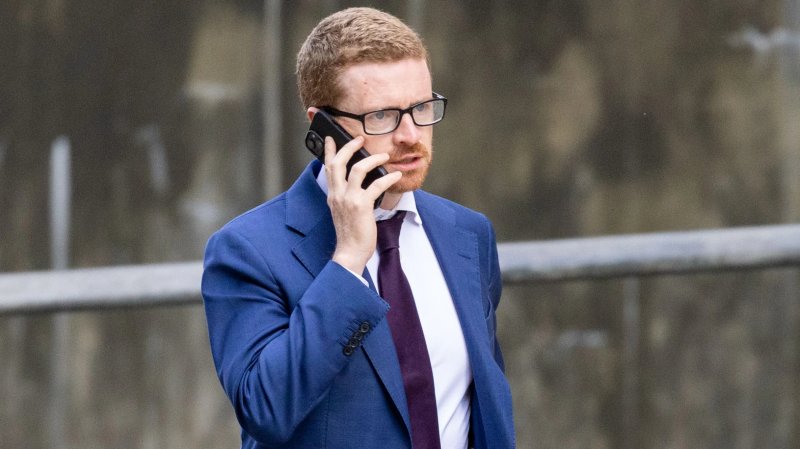
The government has faced questions since it emerged that the prime minister's former chief of staff's phone was stolen, leading to the loss of many of his messages with sacked US ambassador Lord Peter Mandelson.
The government-issued device was reported stolen after Mandelson's firing, but before parliament forced the government to publish all papers and communications relating to his appointment and time in office.
However, the theft of a device containing so much sensitive information, as well as the loss of messages of which parliament has mandated the release, has raised a number of questions, particularly after the police admitted they took down the wrong address of the theft.
So what do we know about what has happened?
Mr McSweeney's government-issued iPhone was stolen shortly before 22.30pm on 20 October, the Metropolitan Police has confirmed.
This was a month after Lord Mandelson was sacked as ambassador to the US following the release of a cache of emails showing he had a much closer relationship with deceased paedophile financier Jeffrey Epstein than previously known.
The police took the unusual step in March of releasing a transcript of Mr McSweeney's emergency call to police reporting the theft, which reveals confusion over where it actually occurred.
Although Mr McSweeney said it was on "Belgrave Street in Westminster", it was misrecorded by the police call handler as Belgrave Street in Tower Hamlets.
The explanation for this is that the street in Westminster is actually called Belgrave Road, and when the call handler typed "Belgrave Street" into their system, it entered the address as East London, which went unnoticed. The force has now reopened the investigation.
In addition, although Mr McSweeney said it was a "government phone", he did not say he was the prime minister's chief of staff, and the Met Police has said that it means the detail "could not reasonably have shaped our decision-making".
It is worth noting that over 2,000 government devices across all departments were lost or stolen in 2024, according to figures published by The Guardian.
Mr McSweeney told parliament's Foreign Affairs Committee (FAC) on 28 Paril that he reported the theft to No 10 as soon as it happened, and he "thought at the time that they would be able to track" the phone.
"I then called 999. If No 10 had told me you need to tell the police or you need to tell the call handler what your job is, I would have done so. But otherwise, I didn't do that as a matter of course. I didn't in any part of my job go around saying 'I'm a very serious and senior person'. If No 10 had asked me to do it, I would have done that."
He later made "further calls to No 10", and said he was "quite surprised by how limited the security is around the chief of staff's telephone".
Why is the theft of McSweeney's phone an issue?
Firstly, he was the prime minister's chief of staff, so the PM's most senior political advisor. His phone contained the contact details for and messages with Sir Keir Starmer, the cabinet, and the most senior British officials.
This is information that the foreign intelligence services of adversaries like Russia, China and Iran would be very interested in obtaining.
But there is controversy because it also contained messages exchanged with Lord Mandelson, who had been fired as US ambassador just over a month before it was stolen.
The humble address passed by the Commons specifically mandates the release of "electronic communications between the prime minister's chief of staff and Lord Mandelson" because Mr McSweeney is said to have been the main advocate for his initial hiring - which led to his resignation from Downing Street last month.
Although it is understood that the Cabinet Office does hold some messages between the pair, Mr McSweeney said he was not aware if the phone was backed up at all, and regardless, he believes he had the 'disappearing messages' function switched on for his conversations with Lord Mandelson.
Sir Keir Starmer has rejected accusations that the government wanted to hide the messages, telling broadcasters: "The phone was stolen. It was reported to the police. There's a transcript of the call in which Morgan McSweeney gives his name, his date of birth, the details of the phone, and the police confirm that it was reported.
"Unfortunately, there are thefts like this. It was stolen. It was reported at the time and the police have acknowledged and confirmed that that is what happened.
"And the idea that somehow everybody could have seen that sometime in the future there would be a request for the phone is, to my mind, a little bit far-fetched."
For full coverage, see the original article on SkyNews.
By Ulviyya Salmanli


Similar news