NASA to use James Webb Telescope to assess impact risk of Asteroid 2024 YR4


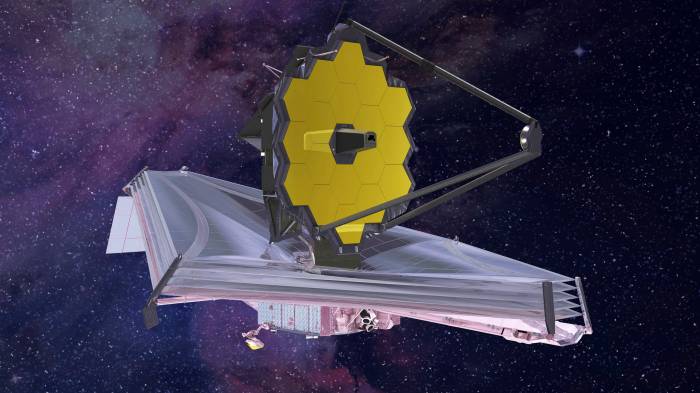
NASA will utilize the James Webb Space Telescope to gather critical data on asteroid 2024 YR4, which has a small chance of colliding with Earth in 2032
There is currently a 2.3% chance of 2024 YR4 hitting the planet on Dec. 22, 2032, according to calculations by astronomers, a figure that has risen in just the past few weeks from an initial 1.3%. The calculations are expected to change with new data between now and May, the most likely scenario a near-miss, News.Az reports, citing Forbes.
If 2024 YR4 strikes Earth, it has been calculated to do so somewhere on a path across the eastern Pacific Ocean, northern South America, the Atlantic Ocean, Africa, the Arabian Sea and South Asia, according to the International Asteroid Warning Network, which NASA chairs. IAWN released a warning about 2024 YR4 on Jan. 29, 2025. 2024 YR4 currently is top of the Sentry list of objects whose orbital trajectories suggest a possible impact with Earth in the future. It also has a value of 3 on the Torino Impact Hazard Scale, the International Astronomical Union’s list of asteroids that come close to Earth.
2024 YR4 is thought to be between about 130 and 300 feet (40 and 90 meters) in diameter, but that’s a guess based on how bright it appears in observations so far. As well as uncertainties about its exact size — and, therefore, the damage it could do if it does strike Earth — scientists don’t yet know enough about its density or what it’s made of.
According to the European Space Agency, Webb will be used to get a much more precise estimate of the asteroid’s size. Its MIRI instrument will make observations in early March with a second round of observations scheduled for May, by which time it will be out of reach of ground-based optical telescopes. The asteroid will then be hidden from view of Earth until June 2028.
Webb will study 2024 YR4 for a total of four hours during “director’s discretionary time” set aside for urgent observations. The observations are being squeezed in between its regular science work after a request from an international team of astronomers.
Asteroids reflect sunlight, but they also absorb it and emit it as heat, which Webb is specifically designed to see. “Webb will get data on the full spectrum from the end of the visible all the way to the infrared, in one go with one instrument, so it will be much cleaner and easier to interpret,” said Oliver Hainaut at the European Southern Observatory, who has already observed 2024 YR4 using the Very Large Telescope in Chile, in an interview. “By measuring its thermal, radiated infrared, and comparing it to the light that is reflected, you immediately get its size.” From his own observations, Hainaut already knows what it is not. “It’s not a snowball, so it’s not a comet, and we can also rule out metal,” he said.
Asteroid 2024 YR4’s observation arc — the time period between its earliest and latest observations — is short, having been discovered in late-December. “To work out an asteroid’s trajectory precisely, you need to spend as much time as possible following them,” said Lord Dover, senior technical officer at the Bayfordbury Observatory at the University of Hertfordshire in the U.K. “Webb is going to extend that observation arc by a month or beyond the observations using ground based telescopes, which will help us work out if it is going to hit us or not, and constrain its trajectory.”


Similar news