Russia drives Iran to fulfill Rasht-Astara railway commitments


Chatgpt
By Tural Heybatov
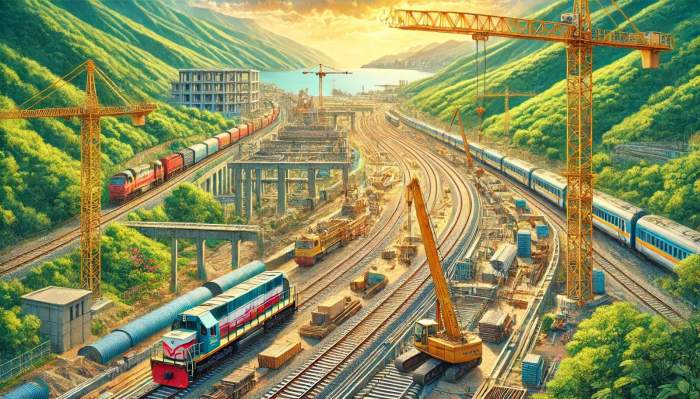
The long-awaited construction of the Rasht-Astara railway is slated to commence in 2025, marking a pivotal moment in the development of regional infrastructure. This project, delayed for nearly two decades, represents a critical missing link in the International North-South Transport Corridor (INSTC), a strategic trade route connecting Russia, Azerbaijan, and Iran.The absence of a continuous railway connection has significantly hindered the corridor's potential, forcing the majority of freight to rely on less efficient road transport. This dependency has curtailed economic growth among participating nations and constrained Azerbaijan’s ambitions to establish itself as a key transit hub.
Although long overdue, the decision to move forward with the railway’s construction presents immense opportunities. Beyond its logistical benefits, the project is a bold initiative toward fostering deeper economic integration and promoting geopolitical stability in a region often fraught with challenges.
The Rasht-Astara railway has faced decades of delays and indecision, with plans for its construction first proposed more than 20 years ago. Originally scheduled to break ground in 2024, the project was again postponed due to unresolved issues described by Iran’s ambassador to Russia, Kazem Jalali, as “many questions.” These ambiguities underscore the complexities of aligning the political, financial, and logistical priorities of the involved nations.
However, recent developments signal a renewed sense of urgency. Technical preparations are reportedly complete, leaving little room for further delays. This shift in momentum is critical, as the railway’s potential benefits far outweigh the costs of inaction.
For Iran, Russia, and Azerbaijan, the railway is more than an infrastructure project—it is a strategic imperative. Iranian President Masoud Pezeshkian has highlighted its importance in discussions with Russian Deputy Prime Minister Vitaly Saveliev, framing the railway as a cornerstone of Iran’s economic strategy. Russia, too, has demonstrated strong support, with President Vladimir Putin championing the project as integral to Russia’s regional trade agenda.
Once operational, the Rasht-Astara railway is projected to initially handle 15 million tons of cargo annually, with the capacity to expand to 30 or even 50 million tons. This enhanced connectivity will not only boost trade among the participating nations but also position the INSTC as a viable alternative to traditional maritime routes, such as the Suez Canal. The reduction in transportation time and costs could significantly impact global trade flows, particularly for goods moving between Europe, the Middle East, and South Asia.
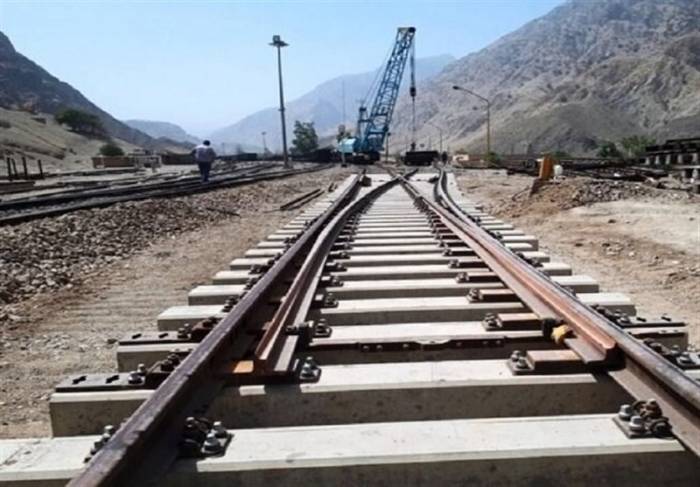
tasnimnews
The project’s financial structure reflects the commitment of all stakeholders. Russia and Iran have pledged to jointly fund the construction of the 160-kilometer segment, with Russia providing a €1.3 billion state credit. Meanwhile, Azerbaijan has extended a $500 million preferential loan to support Iran’s efforts. These contributions underscore a shared vision of economic integration and mutual benefit.
The railway’s design incorporates dual-gauge tracks—both standard gauge (1,435 mm) and Russian gauge (1,520 mm)—to ensure interoperability across national networks. In its initial phase, the narrower gauge will be constructed to align with Iran’s existing infrastructure, with the broader gauge to follow, enabling seamless connectivity with Russia and other CIS countries.
The Rasht-Astara railway is poised to be a geopolitical game-changer. By establishing a direct land connection between Russia and the Persian Gulf, the railway strengthens the strategic partnership among Russia, Iran, and Azerbaijan. This enhanced connectivity not only fortifies economic ties but also provides a counterweight to Western-dominated trade routes.
For Azerbaijan, the project offers an opportunity to cement its role as a pivotal transit hub. As a vital component of the INSTC, Azerbaijan stands to benefit from increased trade volumes and heightened regional influence. The railway could also attract further investment in the country’s infrastructure, triggering a ripple effect of economic growth.
Globally, the railway’s completion will revolutionize shipping times. Cargo could traverse the 7,000-kilometer distance from St. Petersburg to Mumbai in just 10 days—a stark contrast to the 30-45 days required via the Suez Canal. Such efficiency gains could make the INSTC a preferred route for global traders, reshaping the logistics landscape and bolstering Eurasian connectivity.
While the renewed momentum behind the Rasht-Astara railway is encouraging, challenges remain. Political will, financial stability, and effective coordination will be essential to meet the project’s 2028 operational target. Additionally, navigating the complex geopolitical landscape involving multiple nations with diverse interests will require transparency, collaboration, and long-term planning.
Despite its protracted history, the Rasht-Astara railway embodies the promise of transformative change. By unlocking the full potential of the INSTC, the railway will enhance economic connectivity and strengthen geopolitical stability in Eurasia.
As construction begins, stakeholders must remain steadfast in their commitment to the project’s success. The rewards—streamlined shipping, increased trade, and fortified regional ties—are well worth the effort. After decades of anticipation, the Rasht-Astara railway is set to become a cornerstone of Eurasian trade and a symbol of what can be achieved through shared vision and determination.


Similar news