Satellite images show devastation as Sri Lanka floods kill 366


Sri Lankan authorities are working tirelessly to rescue hundreds of missing people as the death toll from rain and flooding caused by Cyclone Ditwah reached 366, marking one of the island's worst natural disasters.
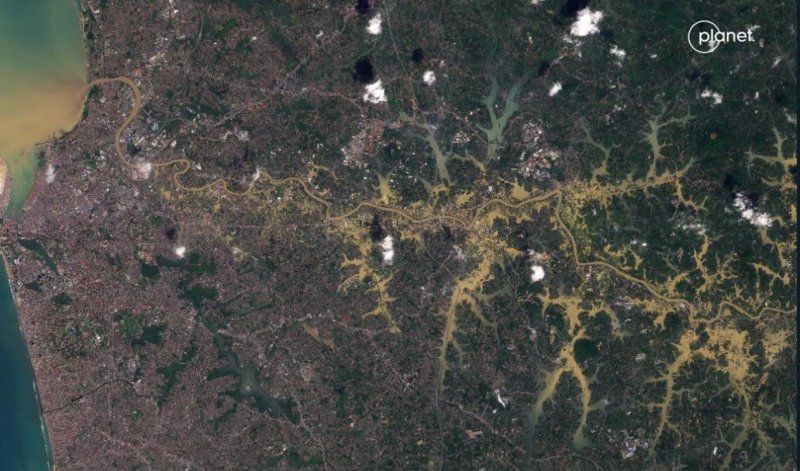
Satellite images captured by Planet Labs on November 30 revealed the massive scale of destruction, with the Kelani River overflowing and submerging vast areas, News.Az reports, citing foreign media.
The river, Sri Lanka's fourth-largest, swelled far beyond its normal course, flooding large parts of the northern region.
Over one million people have been affected by the torrential rains and flooding, with nearly 218,000 people taking shelter in 1,275 centers, according to the Disaster Management Centre.
Sri Lankan president Anura Kumara Dissanayake on Monday said the economically battered island was facing the “largest and most challenging natural disaster in our history”, far exceeding the damages caused by the devastating 2004 tsunami.
"With the nation affected from end to end, this is a highly challenging exercise that needs to be conquered," Mr Dissanayake said, requesting international aid efforts. "The estimated scale of destruction is severe".
Three cyclones tore through South and Southeast Asia this week leaving at least 1,200 people dead, hundreds missing and millions displaced, with most number of deaths recorded in Sri Lanka and Indonesia.
Flooding and landslide related deaths were reported in more than half of the country's 25 districts, prompting the Sri Lankan government to deploy military to rescue people.
Over 24,000 police, army and air force personnel, aided by aircraft sent by the Indian government, are still trying to reach families stranded by floods with additional 367 people still missing, the authorities said.
More than 120 people were airlifted to safety in helicopters by the air force after water breached the dam of the Mavil Aru Reservoir in the eastern part of the island. About another 2,000 people were moved to higher ground for safety, the military said in a statement.
Dozens of families were trapped in their homes by flood waters in the commercial capital of Colombo, which is one of the worst affected places.
Sri Lanka's irrigation department on Tuesday said the water level of the Kelani River was receding, but warned residents living in lower catchment areas to remain extremely vigilant and adhere strictly to the safety and evacuation directives.
The department added that the flood situation that affected the low-lying areas of the Kelani River basin was also decreasing, Ada Derana reporterd. The flood situation is expected to improve later this week as the cyclone moves north to batter India.
The cyclone has dealt a heavy blow to Sri Lanka, still reeling from the 2022 economic crisis that left its entire population scrambling for basic food and medicine. With the island’s recovery hinging on Western tourism, the storm’s damage is expected to further threaten an already fragile industry.
In the Colombo suburb of Kelaniya, as in many other parts of the country, cooked food is supplied by state agencies and through donations but many told Reuters they are yet to receive adequate help. More than 17,000 people are living in shelters waiting for the flood waters retreat from their homes.


Similar news