Scientists discover "dark oxygen" production on the deep-ocean floor


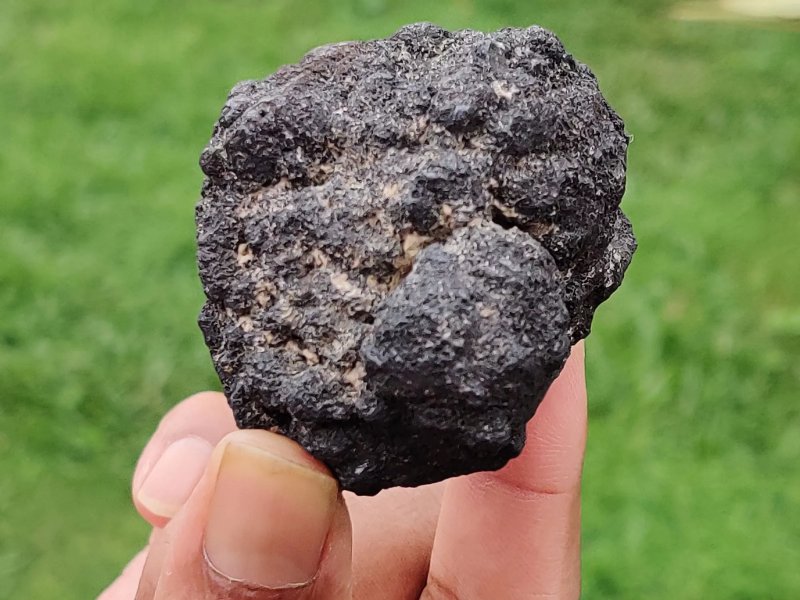
An international team of researchers has uncovered evidence of "dark oxygen" being produced 13,000 feet below the ocean surface in the Pacific Ocean’s Clarion-Clipperton Zone.
This discovery challenges the long-held scientific consensus that oxygen on Earth is produced solely through photosynthesis by plants and algae using sunlight, News.Az reports, citing Popular Mechanics.
At these abyssal depths, where no light can penetrate, oxygen levels were found to increase rather than decrease, indicating a local source of production.
RECOMMENDED STORIES
The source of this oxygen appears to be polymetallic nodules—potato-sized mineral deposits rich in manganese, nickel, and cobalt. Research led by Professor Andrew Sweetman of the Scottish Association for Marine Science and Professor Franz Geiger of Northwestern University suggests these nodules act as "geobatteries." By measuring the electrical charge on the surface of the nodules, the team found voltages of up to 0.95 volts. When clustered together, these nodules generate enough electricity to trigger seawater electrolysis, a process that splits water molecules into hydrogen and oxygen.
This finding has significant implications for our understanding of the origins of life, suggesting that aerobic life could have existed before the evolution of photosynthesis. It also raises environmental concerns regarding deep-sea mining, as the targeted mineral nodules may be essential for sustaining the deep-ocean ecosystem. Furthermore, the discovery of a non-photosynthetic oxygen source provides new clues for the potential of life on other ice-covered ocean worlds, such as Jupiter’s moon Europa or Saturn’s moon Enceladus.
By Leyla Şirinova


Similar news