What a developing El Niño means for Michigan's summer


Long-range climate forecasts are sending a clear signal for Southeast Michigan this summer: a new El Niño pattern is rapidly developing in the Pacific Ocean, setting Metro Detroit up for an unusually warm and dry stretch.
El Niño represents the warm phase of a naturally fluctuating climate pattern along the equator in the tropical Pacific. When ocean temperatures spike in this region, it triggers a domino effect that alters weather patterns across the entire globe—including right here in the Midwest, News.Az reports, citing Click On Detroit.
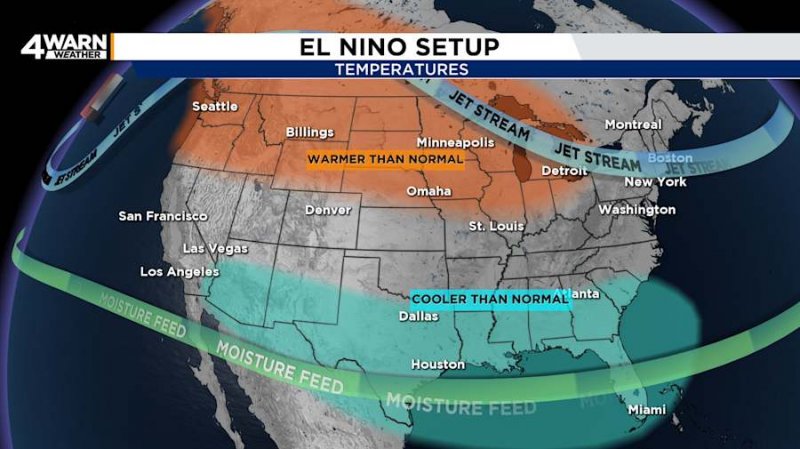
In a typical El Niño setup, the atmospheric jet stream is pushed well to the north. This shift locks a heavy feed of moisture over the southern United States, leaving states like Michigan cut off from standard seasonal rainfall. While the American South braces for a cooler, much wetter season, the Midwest trends significantly warmer and drier than average.
RECOMMENDED STORIES
Meteorologists are already tracking the possibility of a "super El Niño." This rare designation occurs when monitored Pacific sea surface temperatures climb more than 2 degrees Celsius above normal. A spike of this magnitude has only happened three times since 1950, with the most recent event occurring over a decade ago during the winter of 2015–16.
While the Climate Prediction Center notes that ocean temperatures are only beginning their upward climb, the transition is moving quickly. Forecasters place the current probability of a true "super El Niño" developing by early winter at roughly 37%. However, local experts emphasize that a stronger climate event doesn't automatically mean more extreme weather—it simply increases the likelihood that these warm, dry conditions will persist.
The global stakes are also high. Driven by rising global temperatures, emerging research indicates that climate change is actively amplifying the intensity of El Niño and La Niña swings by roughly 10%. This developing cycle has the potential to push average global temperatures through the roof, threatening near-record territory.
For residents in Metro Detroit, this means preparing for a summer defined by higher heat and lower humidity. While the pattern doesn't completely rule out passing frontal boundaries that can spark sudden showers or thunderstorms, the overarching theme for Southeast Michigan's upcoming season will be a warm, dry trend.
By Aysel Mammadzada


Similar news