SCO summit seen as opportunity for China to project itself as a stable global power for peace


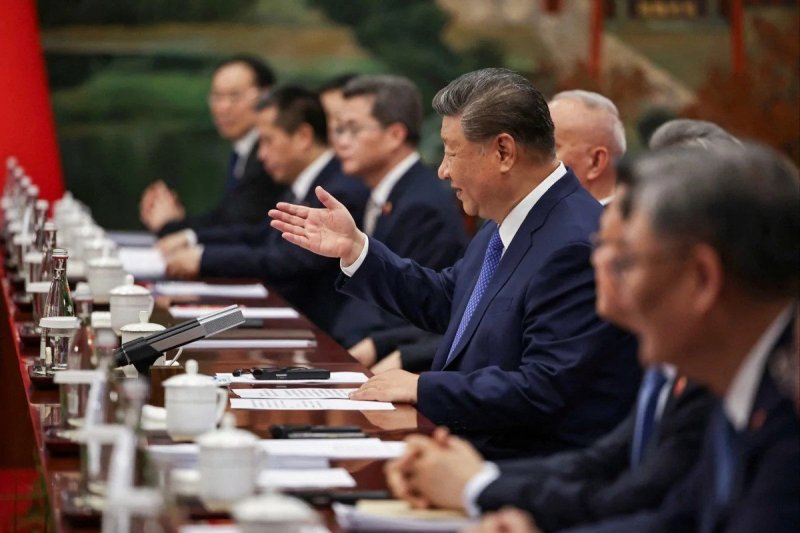
Xi Jinping frames the country as a source of certainty in a tumultuous time for the global community.
He told Guterres that China was a “source of stability and certainty” amid global changes and that “history teaches that multilateralism, solidarity and cooperation are the right way to address global challenges”.
Some 30 world leaders and heads of international organisations are expected to show up for the SCO summit – an event China’s foreign ministry is billing as the “largest in SCO history” and “one of the most important activities this year for China’s head-of-state diplomacy and home-ground diplomacy”.
Analysts said the world would be watching to see how Beijing tried to position itself as a global power at a time of rising geopolitical tensions.
In his welcome to Egyptian Prime Minister Mostafa Madbouly on Saturday, the Chinese leader said the two countries should make “greater contributions to maintaining world peace and stability” and promote global development and prosperity.
Beijing has repeatedly called for countries – particularly those from the Global South – to stand up against unilateral and protectionist measures, in apparent reference to US President Donald Trump’s isolationism and his sweeping tariff wars on countries.
Throughout it all, Beijing is seeking to present itself as a key leader of the developing world.
That message is expected to be echoed on Wednesday when the Chinese capital will be the backdrop for a massive military parade commemorating the end of World War II, an event expected to be attended by many of the leaders from the summit.
In Tianjin, Xi is expected to deliver keynote speeches and suggest ways for the SCO to “constructively safeguard the post-war international order and improve the global governance system”.
The member states will also adopt a series of documents to deepen security, economic and cultural cooperation, according to an earlier report.
The grouping was formed in 2001 as a Eurasian security bloc but it has since expanded to include other areas such as economics and trade. According to the Chinese foreign ministry, it brings together 26 countries across Asia, Europe and Africa, including its dialogue partners.


Similar news