Smart cars become “self-reasoning machines” in China


China’s automotive industry is rapidly integrating artificial intelligence into vehicles, as part of a sweeping national push to transform next-generation electric cars into “self-reasoning machines,” aligned with government industrial policy.
The initiative follows Beijing’s broader “AI Plus” strategy outlined in its latest five-year plan by Government of China, which aims to embed artificial intelligence across manufacturing, healthcare, and key industrial sectors, News.Az reports, citing Reuters.
The shift is also designed to reduce reliance on foreign high-end semiconductor technology, particularly in areas where the United States currently holds a dominant position.
RECOMMENDED STORIES
Industry leaders say the boundary between technology firms and automakers is disappearing as software-driven mobility becomes central to competition.
“There’s no longer a distinction between a technology company and a car company,” said Stephen Ma, China chief of Nissan Motor, speaking at the Beijing Auto Show.
Chinese manufacturers are now introducing AI systems that allow vehicles to interpret natural language commands, navigate without traditional mapping, and interact more intelligently with drivers.
XPeng has developed AI systems enabling cars to respond to voice instructions such as navigating to destinations without manually selecting routes, using camera-based perception instead of reliance on static maps.
Xiaomi has also expanded its AI-driven vehicle platform, integrating features that can manage tasks such as scheduling, navigation, and in-car personalization based on driver behavior.
Meanwhile, Huawei has announced multi-billion-dollar investments to boost computing power for smart driving systems, strengthening its position in the connected vehicle ecosystem.
Chinese chipmaker Horizon Robotics has introduced new processors designed to support advanced in-car AI functions, further accelerating integration between automotive and computing technologies.
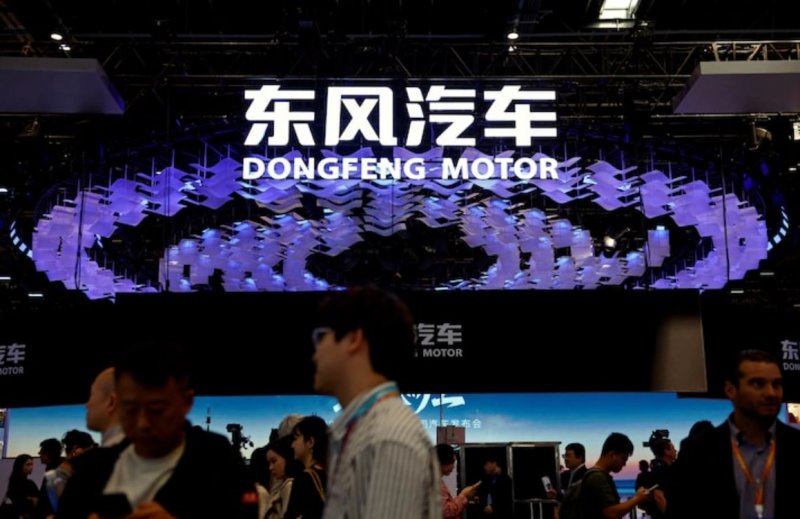
At the Beijing Auto Show, state-owned automaker Dongfeng Motor emphasized its commitment to national strategy, highlighting its work on “embodied AI” vehicles in collaboration with Huawei.
Experts say the pace of development represents a structural shift in the global automotive industry, where vehicles are increasingly evolving into software-defined, AI-powered systems rather than traditional mechanical products.
As China pushes forward, analysts warn the transformation could reshape global competition in both the automotive and semiconductor industries.
By Aysel Mammadzada


Similar news