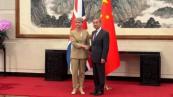
Why the UK foreign secretary’s China trip is drawing global attention amid Ukraine, Hormuz and trade tensions


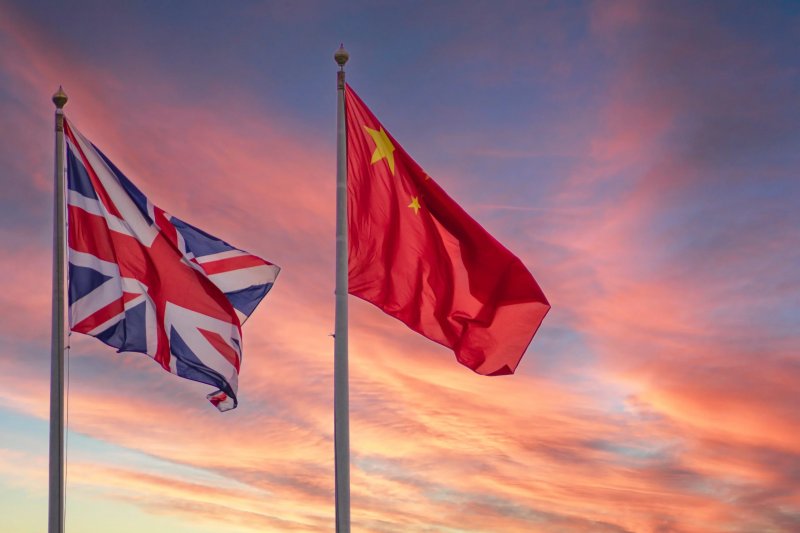
UK Foreign Secretary Yvette Cooper's visit to China comes at a particularly sensitive moment in international affairs.
The world is grappling with multiple overlapping crises, including the war in Ukraine, heightened tensions around the Strait of Hormuz, growing uncertainty in global trade, strategic competition between major powers, and concerns about the future direction of the international order, News.Az reports.
Against this backdrop, the British foreign secretary's trip to Beijing has attracted significant international attention. While such visits are often presented as routine diplomatic engagements, the timing of this one has elevated its geopolitical importance. The discussions are expected to touch on some of the most pressing issues facing the international community, from European security and Middle Eastern stability to economic cooperation and strategic rivalry.
The visit reflects a broader reality confronting many countries today: the need to engage with China while simultaneously managing growing political, economic, and security disagreements.
Why is the visit important right now?
The timing is perhaps the most important aspect of the trip.
Several major geopolitical crises are unfolding simultaneously. The war in Ukraine continues to reshape European security. Tensions involving Iran and Western powers have renewed concerns about maritime security in the Strait of Hormuz. Global supply chains remain vulnerable to political disruptions. Trade disputes continue to affect economic relations between major powers.
China sits at the center of many of these developments.
As the world's second-largest economy, a permanent member of the United Nations Security Council, and a major geopolitical actor, Beijing plays an important role in shaping international responses to global challenges.
For the United Kingdom, maintaining dialogue with China has become increasingly important even as disagreements persist on numerous issues.
What are the main objectives of the British visit?
The British government is likely pursuing several goals simultaneously.
First, London wants to maintain open channels of communication with Beijing during a period of heightened global uncertainty.
Second, the United Kingdom is seeking greater clarity regarding China's positions on major international crises.
Third, economic issues are expected to feature prominently in discussions.
Fourth, the visit provides an opportunity to address areas of disagreement while preserving cooperation in areas where interests overlap.
Diplomatic engagement does not necessarily imply agreement. In many cases, it reflects recognition that communication is preferable to isolation.
How does Ukraine factor into the visit?
Ukraine remains one of the most significant issues in relations between Western countries and China.
Since Russia launched its full-scale invasion of Ukraine, Beijing has sought to position itself as a neutral actor while maintaining close relations with Moscow.
This approach has generated criticism from many Western governments.
The United Kingdom has been among Ukraine's strongest supporters, providing military assistance, training, and diplomatic backing.
British officials have repeatedly called on China to use its influence with Russia to help promote a just and lasting peace.
China, meanwhile, argues that it supports dialogue and political solutions while opposing actions that could escalate the conflict further.
The differing perspectives make Ukraine one of the most challenging topics on the diplomatic agenda.
Why are Western countries concerned about China's position on Ukraine?
Many Western governments believe China's relationship with Russia has strategic significance.
Although China has not directly entered the conflict, Western policymakers closely monitor economic ties, diplomatic support, and broader cooperation between Beijing and Moscow.
There is concern in some capitals that closer Sino-Russian cooperation could complicate efforts to pressure Russia.
At the same time, Western leaders recognize that China could potentially play an important role in future peace initiatives.
This combination of concern and opportunity shapes much of the discussion surrounding China's involvement.
What is the Strait of Hormuz and why is it relevant?
The Strait of Hormuz is one of the world's most important maritime chokepoints.
Located between Iran and Oman, it connects the Persian Gulf with global shipping routes.
A substantial portion of the world's energy exports passes through this narrow waterway.
Any disruption to shipping in the area can affect global energy markets, transportation costs, and economic stability.
Recent tensions involving Iran, regional actors, and Western powers have renewed concerns about maritime security in the region.
For both China and the United Kingdom, stability in the Strait of Hormuz carries significant economic importance.
Why does China care about developments in Hormuz?
China is one of the world's largest energy importers.
A significant share of its energy supplies travels through routes connected to the Persian Gulf.
Disruptions in the Strait of Hormuz could increase energy prices and create economic challenges for Chinese industries and consumers.
As a result, Beijing has a strong interest in maintaining freedom of navigation and regional stability.
China has increasingly sought to expand its diplomatic influence in the Middle East and position itself as a constructive actor capable of facilitating dialogue.
Why is the UK concerned about Hormuz?
The United Kingdom has long-standing security and economic interests in the Gulf region.
British naval forces have periodically participated in efforts to protect commercial shipping and ensure maritime security.
The UK also maintains close relationships with several Gulf states.
Disruptions in Hormuz could affect global energy prices, financial markets, and international trade, all of which have direct implications for the British economy.
Consequently, discussions about regional security are likely to be a major component of the diplomatic agenda.
How important is trade in UK-China relations?
Trade remains one of the most important dimensions of the relationship.
China is a major trading partner for the United Kingdom.
British businesses engage with China across sectors including finance, education, manufacturing, technology, pharmaceuticals, and consumer goods.
At the same time, concerns regarding economic dependence, supply chain vulnerabilities, and national security have become increasingly prominent.
Many governments are attempting to strike a balance between economic engagement and strategic caution.
The United Kingdom faces the same challenge.
What trade issues could be discussed?
Several economic topics are likely to feature prominently.
Market access remains a key concern for businesses seeking opportunities in China.
Supply chain resilience has become increasingly important since the pandemic and subsequent geopolitical disruptions.
Technology restrictions, investment screening mechanisms, and industrial policy may also be discussed.
The broader global trend toward economic security has complicated international trade relationships, making dialogue increasingly necessary.
How have UK-China relations changed in recent years?
The relationship has undergone significant transformation.
A decade ago, policymakers often emphasized economic cooperation and investment opportunities.
Today, security concerns play a much larger role.
Issues such as technology, cybersecurity, strategic infrastructure, human rights, and geopolitical competition have become central to policy discussions.
This shift does not mean cooperation has disappeared.
Rather, the relationship has become more complex and multidimensional.
Why are major powers engaging China despite disagreements?
The answer lies in China's global influence.
China is deeply integrated into the international economy.
It is a major trading nation, a technological power, a manufacturing hub, and a key diplomatic actor.
Many global challenges cannot be addressed effectively without Chinese participation.
Climate change, international trade, financial stability, public health, and conflict resolution all require some degree of engagement with Beijing.
As a result, governments often pursue a strategy of competing and cooperating simultaneously.
Could the visit affect broader UK foreign policy?
Potentially.
Successful dialogue could help improve communication channels and reduce misunderstandings.
It may also provide opportunities for cooperation on specific issues.
However, major policy differences are unlikely to disappear overnight.
The visit should therefore be viewed less as a transformative event and more as part of an ongoing effort to manage a complex relationship.
Diplomatic engagement often produces incremental progress rather than dramatic breakthroughs.
What role does economic competition play in the relationship?
Economic competition has become increasingly significant.
Countries around the world are seeking to strengthen domestic industries, protect critical technologies, and reduce strategic vulnerabilities.
This trend has affected relations between China and many Western economies.
The challenge for policymakers is balancing economic openness with security concerns.
Finding that balance remains one of the defining issues of contemporary international relations.
How does the visit fit into wider geopolitical trends?
The trip reflects broader changes in global diplomacy.
The world is increasingly characterized by strategic competition between major powers.
At the same time, economic interdependence remains extensive.
Countries therefore face a paradox.
They must manage geopolitical rivalry while maintaining economic cooperation.
This reality explains why diplomatic engagement continues even amid significant disagreements.
What outcomes should observers watch for?
Several indicators will be important.
Any statements regarding Ukraine.
Comments related to maritime security and the Strait of Hormuz.
Announcements concerning trade and investment.
New mechanisms for dialogue or cooperation.
Signals regarding future high-level diplomatic engagement.
The tone of official statements may be just as important as any concrete agreements.
Could this visit improve UK-China relations?
It may help stabilize the relationship, but major differences are likely to remain.
Both sides have incentives to maintain communication.
At the same time, disagreements regarding security, technology, trade practices, and international politics will continue.
The most realistic expectation is not a dramatic improvement but rather better management of existing tensions.
The bottom line
The British foreign secretary's visit to China comes at a moment when global politics is being shaped by interconnected crises involving Ukraine, the Middle East, energy security, and international trade. The trip highlights China's growing importance in world affairs and the challenge facing many Western governments: how to engage constructively with Beijing while managing profound strategic differences. Whether the discussions produce tangible results remains uncertain, but the visit itself underscores a central reality of modern diplomacy – dialogue between major powers remains essential even during periods of disagreement and geopolitical tension.
By Faig Mahmudov


Similar news