The Eastern Mediterranean faces a new escalation of tensions


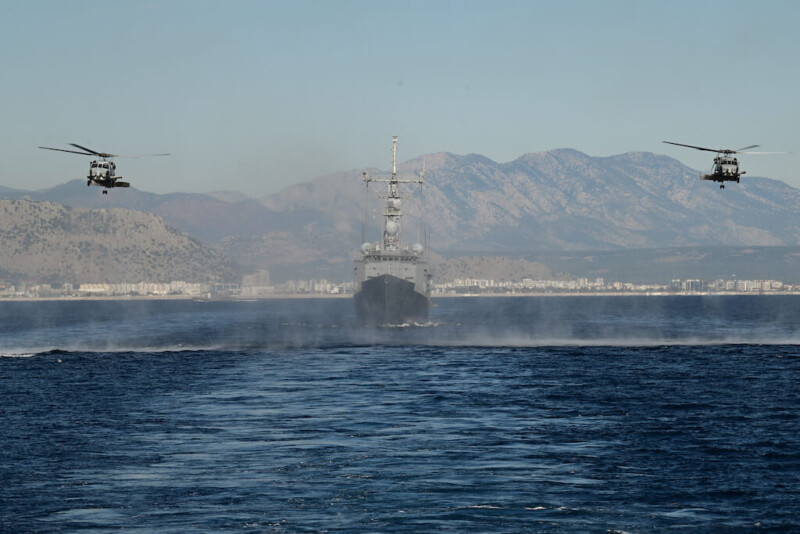
The Eastern Mediterranean may once again soon become one of the most sensitive flashpoints in global politics as, according to Bloomberg, Türkiye is preparing draft legislation to formalise its claims to disputed maritime zones in the Aegean and Eastern Mediterranean.
The initiative, backed by the authorities, aims to officially confirm claims to potential gas fields and define the continental shelf while excluding islands from the delimitation process. Analysts expect such a move to sharply escalate tensions between escalate tensions between Ankara, Greece and Cyprus.
Reports that Türkiye is preparing legislation concerning disputed maritime zones in the Aegean and Eastern Mediterranean indicate that the region is entering a new phase of geopolitical and energy rivalry. This is not merely about legal terminology. At stake are enormous energy resources, control over maritime communications and the balance of power among regional states.
In recent years, the Eastern Mediterranean has gradually turned into one of the key centres of global energy politics. Following the discovery of major gas fields off the coasts of Israel, Egypt and Cyprus, international interest in the region has surged. For Europe, which seeks to diversify energy supplies and reduce dependence on traditional routes, Mediterranean gas is viewed as one of the potential pillars of energy security. That is why any move by regional states concerning maritime borders automatically acquires international significance.
Türkiye occupies a special place in this complex equation. The country possesses an extensive coastline, a highly strategic geographical position and objectively seeks to become one of the central hubs of the region’s energy and transportation architecture. Ankara consistently argues that the existing approaches to maritime delimitation in the Eastern Mediterranean do not reflect the actual geographical and political balance.
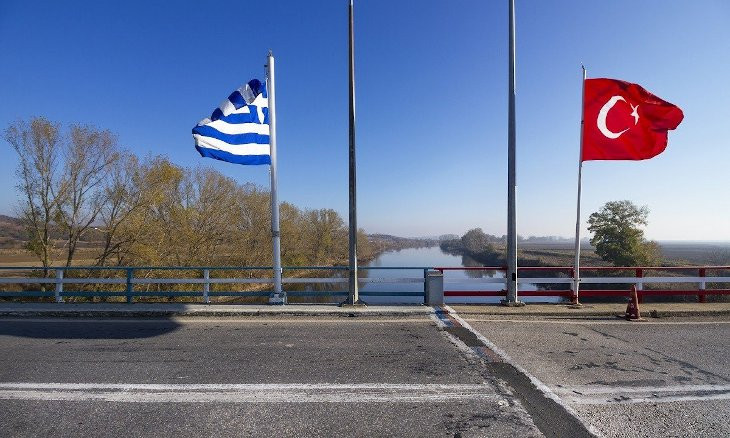
From Türkiye’s perspective, several islands located in close proximity to the Turkish coast should not automatically generate vast exclusive economic zones that significantly restrict continental states’ access to maritime resources. This issue has remained the primary source of disagreement between Ankara and Athens for many years.
Source: duvarenglish
Greece, in turn, relies on international maritime law and maintains that islands are fully entitled to their own maritime zones and continental shelves. The Republic of Cyprus shares this position and continues to expand cooperation with Western energy companies in developing offshore fields.
Against this backdrop, Türkiye’s initiative appears to be an attempt to institutionalise its legal position and consolidate it at the national level. In essence, Ankara seeks to establish a domestic legislative framework that would allow it to defend its interests more confidently both diplomatically and economically. Broadly speaking, this move is unlikely to alter the international legal position on the matter, but it will expand Türkiye’s room for manoeuvre.
For Türkiye, the energy issue carries strategic importance. The country, with its rapidly growing economy and large population, remains one of the largest energy importers in the region. Reducing dependence on external supplies, gaining access to potential gas reserves and transforming into an international energy hub are among the key objectives set by the Turkish leadership.
At the same time, the Eastern Mediterranean has long ceased to be merely a regional issue. The dispute over maritime borders and energy projects now involves the European Union, the United States, Middle Eastern countries and major international energy corporations. Any shift in the balance immediately affects the broader system of international relations.
The security factor also plays a crucial role. The Aegean Sea and the Eastern Mediterranean are areas where historical tensions between Türkiye and Greece periodically intensify. Disputes over airspace, the status of islands, maritime boundaries and military presence have a long history. Therefore, any new legislative formalisation of claims is perceived extremely sensitively by all parties involved.
However, the current situation differs from previous crises because energy has now become the decisive factor. Gas reserves have transformed maritime boundaries into issues of enormous economic value. Amid global instability and the transformation of energy markets, states are striving to secure their positions in advance, understanding that access to resources will become even more important in the future.
Nevertheless, developments do not necessarily have to lead to direct confrontation. Despite their hardline positions, Türkiye and Greece remain neighbours, NATO members and important contributors to regional security. Neither side benefits from destabilisation and crisis in the Eastern Mediterranean. The energy component itself also acts as a restraining factor, since any escalation would inevitably damage energy projects and investments.
In any case, analysts tend not to view Ankara’s current initiative as an isolated episode, but rather as part of a broader trend. Competition for maritime resources is expected to intensify in the coming years, and the Eastern Mediterranean may become one of the principal arenas of this struggle.
Finally, it is worth examining the key sources of tension.

Source: srpcdigital
The Aphrodite gas field is one of the largest discoveries off the coast of Cyprus, found in 2011. It is located in the south-eastern section of Cyprus’ exclusive economic zone. Reserves are estimated at approximately 120–140 billion cubic metres of gas. Türkiye disputes the Republic of Cyprus’ right to independently develop such resources without taking into account the interests of Turkish Cypriots in Northern Cyprus. Ankara argues that the island’s natural resources should be shared between the two communities.
One of the most disputed areas surrounds the island of Kastellorizo, located just a few kilometres from the Turkish coast. For Greece, the island holds enormous significance because it allows Athens to claim a vast maritime zone connecting the Greek and Cypriot exclusive economic zones. Türkiye rejects this approach. Ankara insists that a small island cannot block a large continental state’s access to maritime resources. Most crises in recent years involving research vessels and naval ships have occurred around Kastellorizo.
Another point of contention concerns the area south of Crete. According to some studies, large gas structures may exist there. Greece has actively issued exploration licences for hydrocarbons in the region, while Türkiye considers parts of these areas disputed.
Another major issue emerged in 2019, when Türkiye signed an agreement with Libya’s government on the delimitation of maritime zones. Greece stated that the document violated the rights of Greek islands, particularly Crete.
According to estimates by the U.S. Geological Survey, the Eastern Mediterranean may contain more than 3 trillion cubic metres of natural gas and significant oil reserves. For Europe, this represents a potential alternative to traditional energy supply sources. For Türkiye, it is an opportunity to reduce energy dependence and become a key energy hub. For Greece and Cyprus, it offers the possibility of transforming into major energy centres within the European Union.


Similar news