The global race for AI sovereignty: Why countries are fighting to control their artificial intelligence future


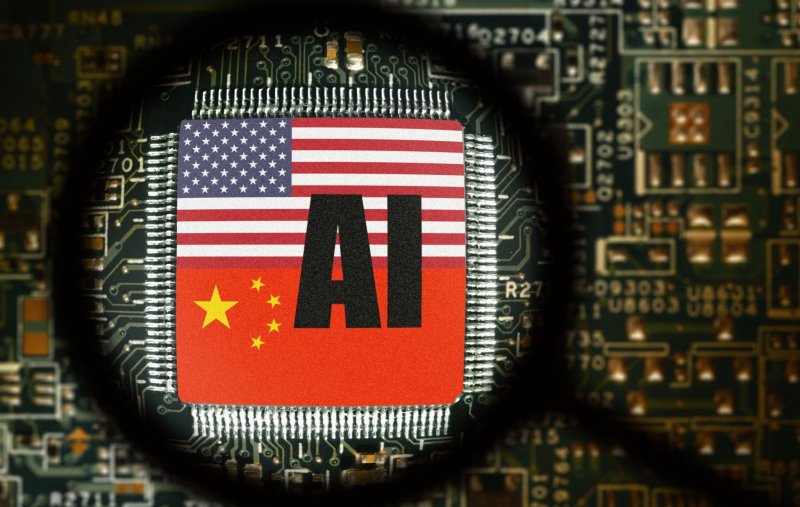
Artificial intelligence is no longer viewed merely as a technological innovation. Around the world, governments increasingly see AI as a matter of economic survival, geopolitical influence, military competitiveness, national security, and digital independence.
As a result, a new global competition has emerged around what experts call “AI sovereignty” — the ability of countries to develop, control, regulate, and deploy their own artificial intelligence infrastructure, models, chips, data systems, and digital ecosystems without excessive dependence on foreign powers.
RECOMMENDED STORIES
At the center of this race are the United States and China, which currently dominate most advanced AI technologies, semiconductor development, cloud infrastructure, and large language model ecosystems. However, many other countries and regions including the European Union, India, Saudi Arabia, United Arab Emirates, France, and Japan are now investing billions of dollars to avoid technological dependence and secure strategic positions in the AI economy.
Governments fear that countries unable to build sovereign AI capabilities could become permanently dependent on foreign technology companies for critical digital infrastructure, economic productivity, military systems, and even information control.
Below is a detailed FAQ explainer examining what AI sovereignty means, why it matters, and how the global competition is reshaping international politics and economics.
What is AI sovereignty?
AI sovereignty refers to a country’s ability to independently develop, control, regulate, and deploy artificial intelligence technologies and infrastructure.
This includes several components:
– Domestic AI models and software
– Semiconductor and chip manufacturing capacity
– Data storage and cloud infrastructure
– National cybersecurity systems
– Computing power and data centers
– Local language AI systems
– Regulatory control over AI deployment
– Domestic technological talent and research capacity
The idea is that countries should not become excessively dependent on foreign powers or private corporations for technologies that may eventually influence national security, economic growth, public administration, education, media, and military systems.
Why has AI sovereignty become such a major issue?
Several developments pushed governments to prioritize AI sovereignty.
The explosive growth of generative AI systems demonstrated that artificial intelligence may transform nearly every major economic sector.
At the same time, the global semiconductor shortage during the COVID 19 pandemic exposed vulnerabilities in technology supply chains.
Growing geopolitical tensions between the United States and China also intensified fears about technological dependence.
Governments increasingly realized that countries lacking domestic AI infrastructure could lose competitiveness in future industries ranging from finance and manufacturing to defense and biotechnology.
Many leaders now view AI similarly to electricity, oil, or nuclear technology — a strategic capability that could determine future global power balances.
Why do the United States and China dominate the AI race?
The United States currently leads in several critical AI areas.
American companies dominate large language models, cloud computing, advanced semiconductor design, and venture capital investment.
Major companies such as OpenAI, Google, Microsoft, NVIDIA, and Meta are central players in global AI development.
Meanwhile, China possesses enormous advantages in data scale, state driven industrial policy, digital infrastructure, and manufacturing capacity.
Chinese companies such as Baidu, Alibaba Group, Tencent, and Huawei are investing heavily in AI ecosystems.
Beijing also treats AI development as a core national strategic priority tied to economic modernization and military competitiveness.
Why are semiconductors so important in AI sovereignty?
Semiconductors are the foundation of modern AI systems.
Advanced AI models require enormous computing power, which depends heavily on specialized chips such as graphics processing units and AI accelerators.
Without access to advanced semiconductors, countries cannot effectively train or deploy competitive AI systems.
This is why semiconductor production has become one of the most strategically important industries in the world.
The United States has imposed export restrictions on advanced AI chips and semiconductor technologies to China in an effort to limit Beijing’s technological progress.
At the same time, countries around the world are investing heavily in domestic chip manufacturing.
The semiconductor race is now inseparable from the AI sovereignty race.
Why is Europe worried about technological dependence?
The European Union increasingly fears becoming technologically dependent on American and Chinese companies.
Although Europe remains economically powerful, it has fewer globally dominant technology companies compared with the United States or China.
European policymakers worry that reliance on foreign cloud providers, AI models, and semiconductor supply chains could weaken economic sovereignty and digital security.
As a result, Europe is pursuing investments in AI research, semiconductor manufacturing, data infrastructure, and regulatory frameworks.
The EU also emphasizes “ethical AI” and regulatory leadership as part of its global strategy.
Many European leaders believe the continent must avoid becoming merely a consumer of foreign AI technologies.
What role do Gulf countries play in the AI race?
Gulf states are rapidly emerging as major AI investors.
Countries such as the United Arab Emirates and Saudi Arabia are investing billions into artificial intelligence, cloud computing, smart cities, and digital infrastructure.
These governments see AI as essential for economic diversification beyond oil dependence.
The UAE was among the first countries to appoint a minister for artificial intelligence.
Saudi Arabia’s Vision 2030 strategy also heavily prioritizes digital transformation and technological modernization.
Gulf states possess significant financial resources, allowing them to invest aggressively in data centers, research partnerships, and global technology companies.
They increasingly hope to position themselves as major digital and AI hubs connecting Asia, Europe, and Africa.
Why is data considered strategically important?
Artificial intelligence systems depend heavily on enormous amounts of data for training and operation.
Countries therefore increasingly view data as a strategic national resource.
Control over data affects economic competitiveness, surveillance capabilities, cybersecurity, and AI performance.
Governments are becoming more concerned about where citizen data is stored and who controls it.
This explains why many countries now require certain sensitive data to remain within national borders.
Data localization laws and digital sovereignty policies are expanding globally.
Some analysts even describe data as the “new oil” of the digital economy.
How does AI affect national security?
AI is rapidly becoming integrated into military systems, intelligence analysis, cybersecurity, surveillance, and autonomous technologies.
Governments fear that falling behind in AI could weaken national defense capabilities.
Potential military applications include:
– Autonomous drones
– Intelligence analysis
– Cyber warfare systems
– Predictive surveillance
– Battlefield automation
– Missile guidance systems
– Strategic simulations
As a result, many governments increasingly treat AI development as a national security issue rather than only an economic matter.
The military dimension of AI competition is significantly increasing geopolitical tensions between major powers.
Why are countries building sovereign AI models?
Many governments want AI systems trained in local languages, cultural contexts, and legal environments.
Reliance entirely on foreign AI models may create several risks:
– Loss of data control
– Cultural and linguistic bias
– Political influence concerns
– Dependence on foreign regulations
– Vulnerability to sanctions or restrictions
Countries therefore increasingly support development of domestic AI systems capable of serving local markets and public institutions.
Language sovereignty is especially important because many global AI systems remain heavily dominated by English language data.
Governments want AI models capable of accurately understanding local languages, legal systems, and cultural norms.
Can smaller countries realistically compete in AI?
Most smaller countries cannot fully compete with the United States or China in every area of advanced AI development.
However, they can still build strategic capabilities in specific sectors.
Some countries focus on:
– Specialized AI research
– Data center infrastructure
– AI regulation
– Regional cloud services
– Smart city technologies
– Digital governance systems
– Local language AI models
Rather than trying to dominate globally, many governments aim to avoid complete technological dependence.
Strategic partnerships, regional cooperation, and targeted investment may allow smaller economies to remain relevant in the AI ecosystem.
Why is computing power becoming a geopolitical issue?
Advanced AI requires enormous computing resources.
Training large language models can cost hundreds of millions of dollars and requires vast data centers filled with advanced chips.
Countries lacking sufficient computing infrastructure may struggle to participate meaningfully in the AI economy.
This has created a global race to build:
– Hyperscale data centers
– AI cloud infrastructure
– Supercomputers
– Semiconductor manufacturing plants
– Energy infrastructure for AI systems
Energy availability is becoming increasingly important because AI infrastructure consumes massive amounts of electricity.
Some countries now view access to computing power similarly to access to strategic natural resources.
How does AI sovereignty affect ordinary people?
AI sovereignty influences many aspects of daily life.
Governments increasingly use AI in healthcare, transportation, education, banking, taxation, policing, and public administration.
Control over AI systems therefore affects:
– Privacy protections
– Access to digital services
– Information flows
– Employment markets
– Economic competitiveness
– Online freedom
– Cybersecurity
Countries unable to develop digital infrastructure may become dependent on foreign corporations for critical services and communication systems.
The AI race therefore affects not only governments but also businesses, workers, and consumers.
Could AI widen global inequality?
Many experts believe AI could deepen inequalities between technologically advanced and developing economies.
Countries possessing advanced AI infrastructure may gain enormous productivity and economic advantages.
Meanwhile, countries lacking investment, education systems, computing power, or digital infrastructure may struggle to compete.
This could create a new form of technological dependency where a limited number of powers dominate global AI ecosystems.
Some developing countries therefore worry about becoming digitally colonized by foreign technology giants.
As a result, AI sovereignty discussions increasingly overlap with debates about economic justice and global development.
What role does education play in AI sovereignty?
Human capital is one of the most important factors.
Countries need skilled engineers, programmers, mathematicians, cybersecurity experts, and researchers to build competitive AI ecosystems.
Governments around the world are investing in:
– STEM education
– AI research institutes
– University modernization
– Technical training programs
– International research partnerships
Talent shortages remain a major challenge globally.
Brain drain also creates difficulties for many emerging economies whose best technology specialists often migrate abroad.
Without strong educational systems, AI sovereignty ambitions may remain limited.
Can regulation become a competitive advantage?
Some countries believe so.
The European Union especially aims to become a global leader in AI regulation and digital governance.
Supporters argue that strong regulation can build public trust, protect privacy, and reduce risks associated with AI systems.
Critics, however, warn that excessive regulation could slow innovation and reduce competitiveness compared with less restrictive markets.
Balancing innovation and oversight has therefore become one of the biggest policy challenges globally.
How does AI sovereignty affect geopolitics?
AI competition is reshaping global power dynamics.
Technological leadership increasingly overlaps with economic influence, military capability, and diplomatic leverage.
The AI race is accelerating competition between the United States and China while also pushing other regions to strengthen technological independence.
International alliances are increasingly influenced by technology partnerships, semiconductor access, cybersecurity cooperation, and digital infrastructure agreements.
Many analysts believe AI may become one of the defining geopolitical battlegrounds of the 21st century.
Could AI sovereignty lead to a fragmented internet?
Possibly.
Some experts warn that increasing digital sovereignty policies could create a more fragmented global digital system.
Countries may increasingly develop separate AI ecosystems, cloud infrastructures, regulatory systems, and internet governance models.
This could result in competing technological spheres centered around different geopolitical blocs.
The future digital world may therefore become less globally unified and more politically fragmented.
What does the future of the AI sovereignty race look like?
The competition is likely to intensify dramatically over the coming decade.
Artificial intelligence is expected to reshape productivity, military systems, finance, healthcare, logistics, education, and scientific research.
Countries capable of controlling AI infrastructure and innovation may gain enormous strategic advantages.
At the same time, fears about technological dependence are pushing governments to invest heavily in domestic capabilities.
The AI sovereignty race is no longer simply about technology companies.
It is becoming a struggle over economic power, national security, information control, and geopolitical influence in the future global order.
For many governments, the central question is no longer whether AI will transform the world.
The real question is who will control that transformation — and who will become dependent on others to access it.
By Faig Mahmudov


Similar news