The return of great-power competition is reshaping global politics


A new era of great-power competition is transforming the global landscape as the United States, China, and Russia pursue competing visions of world order, challenge existing institutions, and deepen ideological and geopolitical rivalries, News.az reports.
While the post–Cold War narrative of cooperation and globalization once promised a stable international system, the past decade has taken a dramatically different direction. Today’s geopolitical climate is defined by strategic competition, competing alliances, and a fragmentation of global power that touches every region of the world.
Analysts argue that the return of great-power rivalry is not merely a revival of Cold War logic but the emergence of a complex multipolar environment. Unlike the bipolar world dominated by Washington and Moscow, the contemporary system is shaped by multiple power centers, each with its own strategic priorities, economic strengths, and regional ambitions. The consequence is a competitive framework where superpowers shape events not just directly but also through networks of middle powers, technology partnerships, and regional alliances.
At the center of this competition is the strategic rivalry between the United States and China. Washington frames Beijing as its primary long-term competitor, citing economic coercion, military expansion, and ideological challenges to the rules-based order. China, meanwhile, positions itself as a rising power seeking global recognition, greater influence in international institutions, and leadership in emerging technologies such as artificial intelligence, electric vehicles, semiconductors, and digital finance.
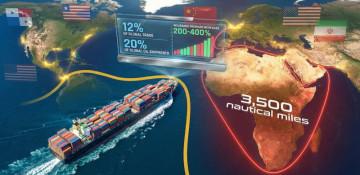
The Pacific region has become the main arena of this rivalry. The US strengthens alliances through AUKUS, the Quad, and deeper security cooperation with Japan, South Korea, the Philippines, and Australia. China counters with military modernization, expanding its naval presence, and pursuing its Belt and Road Initiative across Asia, Africa, and Europe. This strategic competition influences critical issues such as South China Sea tensions, Taiwan’s security, Pacific Island diplomacy, and global trade routes.
Russia, though weakened economically by sanctions and the Ukraine war, remains a major military and nuclear power and continues to challenge the West’s geopolitical influence. Moscow’s strategy involves undermining Western unity, deepening partnerships with China and Iran, and expanding ties with Global South countries disillusioned with Western policies. The war in Ukraine has become a defining fault line in the new era of great-power politics — a test of Western resolve, Russian military capability, and global diplomatic fragmentation.
Europe faces a dual challenge: sustaining support for Ukraine while simultaneously recalibrating economic relations with China and reducing energy dependency on Russia. The European Union is increasingly pushing for strategic autonomy, investing in defense, and building new security arrangements. Yet internal divisions, economic pressures, and political shifts complicate the EU’s ability to act as a unified geopolitical actor.
The Middle East stands at the intersection of great-power competition, with China’s growing diplomatic footprint, the United States’ long-standing security role, and Russia’s military engagement in Syria creating overlapping spheres of influence. Gulf states are now rebalancing their foreign policies: Saudi Arabia and the UAE maintain security ties with Washington while deepening economic partnerships with China. Türkiye asserts its own model of strategic autonomy, mediating between powers while expanding its defense capabilities and regional influence.
In Asia, India’s role as a major independent actor highlights how great-power competition is also a story of rising regional powers. Delhi avoids rigid alliances, balancing between Washington and Moscow while countering China’s influence across the Indo-Pacific. India’s demographic weight, technological ambitions, and military modernization make it an essential pillar in shaping future global power dynamics.
The contest is not limited to geopolitical territory; it extends into technology, energy, supply chains, and information systems. The US–China competition over semiconductors reflects the broader struggle for dominance in advanced industries. Cyber warfare, disinformation campaigns, and competition over artificial intelligence standards illustrate how the digital domain has become a new battleground for great-power rivalry.
Critical resources such as rare earth elements, green technologies, LNG infrastructure, and strategic minerals are also part of this competition. Countries rich in energy resources or positioned along key transport corridors — from Central Asia to the South Caucasus, from the Middle East to Africa — gain new geopolitical relevance. Azerbaijan, for example, benefits from renewed Western interest in diversified energy routes and from its role as a bridge between Europe and Asia. Central Asian states increase their leverage by offering alternative corridors and mineral resources critical to emerging technology industries.
Great-power competition has also fueled the rise of minilateral and regional alliances. The US strengthens ties with NATO and Indo-Pacific partners; China builds partnerships through the Shanghai Cooperation Organisation and BRICS+; Russia leans on Iran, North Korea, and parts of Africa. These evolving blocs reflect a world where power is distributed and alliances shift according to issue-specific needs.
As the global order becomes increasingly fractured, smaller and middle powers act strategically to avoid being caught in the crossfire. Many adopt multi-vector diplomacy, strengthening relations with all major powers while maintaining autonomy. This balancing strategy reduces dependency and creates space for regional leadership — a trend seen from the Gulf to the Caucasus to Southeast Asia.
The return of great-power competition is reshaping everything from military strategy to global trade, supply chains, and digital governance. It marks the end of an era of unchallenged Western dominance and the beginning of a new geopolitical age defined by rivalry, fragmentation, and shifting alignments. How states navigate this turbulent environment will determine the future balance of global power for decades to come.


Similar news