How the new age of global energy politics is reshaping the world order


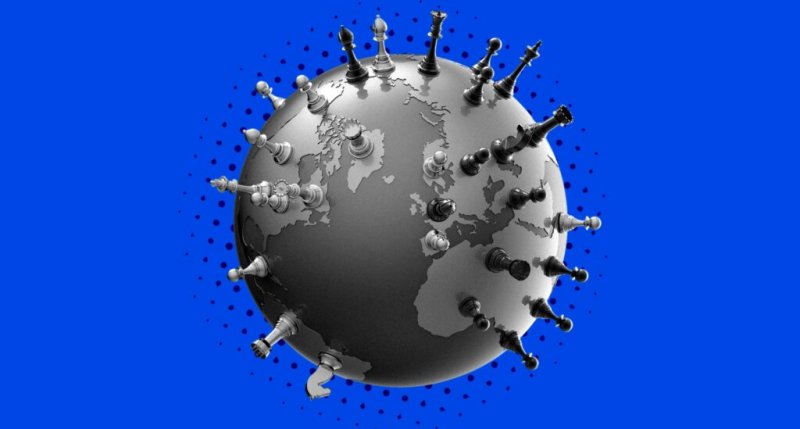
A profound transformation is underway in global energy politics as countries race to secure new resources, reconfigure supply chains, and adapt to the accelerating transition toward cleaner technologies, News.az reports.
From the rising value of rare earth elements and critical minerals to the geopolitical weight of liquefied natural gas (LNG), green hydrogen, and strategic energy corridors, the world is entering a new era where states no longer compete only over oil barrels but over the infrastructure, technology, and political influence behind the future of energy.
This shift has created new winners, new vulnerabilities, and new alignments, pushing energy to the center of global power dynamics in ways not seen since the oil crises of the 1970s. Today’s energy landscape is more complex, more diversified, and increasingly linked to geopolitical competition among middle powers and regional blocs.
The first driver of this transformation is the global push for energy diversification. The pandemic, Europe’s gas crisis after the Ukraine war, and the instability in Middle Eastern supply lines forced governments to rethink their reliance on traditional suppliers. As a result, LNG has become a geopolitical currency. Countries like Qatar, the United States, and Australia now compete to dominate long-term LNG markets, while Europe seeks to lock in contracts to replace Russian gas for decades.
At the same time, new players are rising. Azerbaijan has expanded its role as a reliable supplier of natural gas to Europe through the Southern Gas Corridor, while also positioning itself in the geopolitics of green energy and rare earth elements. The growing strategic value of the Caspian region reflects a broader trend: energy security is no longer just about supply; it is also about routes, diversification, and the political stability of transit corridors. The Middle Corridor, connecting China to Europe via Central Asia and the South Caucasus, has become a crucial part of this strategy as states seek alternatives to Russian-controlled routes.
The second major driver is the geopolitical battle over critical minerals. As countries shift toward electric vehicles, wind turbines, solar panels, and battery technologies, the demand for lithium, cobalt, nickel, graphite, and rare earth elements has skyrocketed. China currently dominates much of the global processing and manufacturing capacity, creating vulnerabilities for the United States, Europe, Japan, and South Korea. This imbalance has sparked a global race to secure mining rights, diversify supply chains, and form new partnerships — from Africa to Central Asia to Latin America.
Governments are now treating minerals as strategic assets, with policies resembling Cold War-style resource diplomacy. The United States’ Inflation Reduction Act, the EU’s Critical Raw Materials Act, and Japan’s investment programs all aim to reduce dependence on China. Meanwhile, countries rich in minerals — including Kazakhstan, Uzbekistan, Namibia, Chile, and Indonesia — are gaining political leverage as global demand increases. Azerbaijan is emerging as a potentially significant source of rare earth elements, putting the Caspian region on the radar of Western strategic planners.
The third factor is the rapid expansion of renewable energy and green technologies. Solar and wind power have become central to national energy strategies, not only for environmental reasons but as tools of geopolitical influence. Countries such as Türkiye, the UAE, India, and Morocco are investing massively in green hydrogen and renewable infrastructure to become energy exporters of the future. The UAE’s role as host of major COP summits and its investment in green projects across Africa illustrate how renewable power is being used to expand diplomatic influence.
But this green transition also has political consequences. Countries dependent on fossil fuel revenues — from the Middle East to Africa to Latin America — face pressure to diversify their economies or risk instability. At the same time, energy-rich states are using the transition to reposition themselves globally. Saudi Arabia’s Vision 2030, Qatar’s LNG strategy, and Azerbaijan’s renewable energy partnerships with Europe all reflect this repositioning.
A fourth geopolitical dynamic is the increasing importance of electricity interconnections and digital energy infrastructure. Power grids, smart systems, and cross-border interconnectors are becoming strategic assets. Europe’s push to integrate its electricity markets, China’s global influence in solar and battery production, and the Gulf states’ investment in regional grid networks show how the control of electricity — not just hydrocarbons — shapes power relations.
These developments are reshaping alliances and creating new blocs. The BRICS+ expansion, energy dialogues between the EU and Caspian states, and the rise of minilateral partnerships — such as India-Middle East-Europe energy initiatives or Central Asian renewable coalitions — demonstrate the evolution of energy diplomacy. Cooperation is becoming more flexible, issue-driven, and regionally concentrated.
As the world moves deeper into the new age of energy politics, the line between economic strategy and geopolitical competition is disappearing. Energy is now a multidimensional power tool: countries compete over pipelines, LNG terminals, critical mineral mines, battery factories, hydrogen plants, and transit corridors.
The result is a global map in transition. The superpowers are no longer the only decisive players; middle powers with strategic resources and corridors are rising as influential actors in the new energy order. From the Caspian Sea to the Indo-Pacific, the future of geopolitics will increasingly depend on who controls not only the oil and gas of today but the minerals, technologies, and energy networks of tomorrow.


Similar news