Can artificial intelligence build smarter and more inclusive cities?


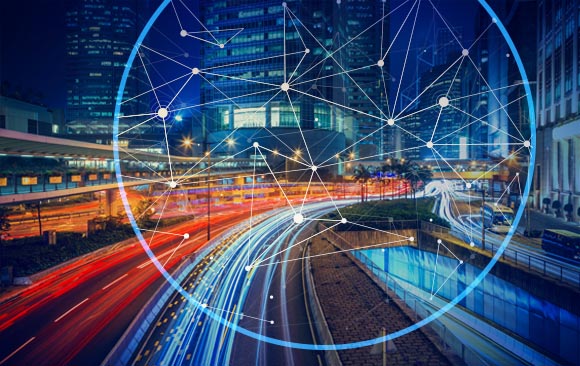
Artificial intelligence is rapidly transforming how modern cities function. From traffic management and public transportation to policing, healthcare, energy systems and urban planning, AI is becoming deeply integrated into urban life.
Governments around the world increasingly view smart technologies as essential tools for solving some of the biggest challenges facing rapidly growing cities.
RECOMMENDED STORIES
At the same time, the expansion of AI powered urban systems is raising major concerns about privacy, inequality, surveillance and digital control. Critics warn that while AI can improve efficiency and sustainability, it may also deepen social divisions if access to technology remains unequal or if governments rely excessively on automated decision making.
These debates have become one of the central discussions at World Urban Forum 13, where policymakers, urban planners, technology companies and researchers are examining how artificial intelligence may shape the cities of the future.
The core question is increasingly clear: can AI help create cities that are not only smarter, but also more inclusive, sustainable and humane?
Why are cities turning to artificial intelligence?
Urban populations are growing at an unprecedented pace. According to United Nations estimates, nearly 70 percent of the world’s population could live in urban areas by 2050. This rapid urbanization is placing enormous pressure on transportation networks, housing systems, public utilities, healthcare infrastructure and environmental sustainability.
Traditional governance systems often struggle to manage such complexity in real time. AI offers governments a way to process massive amounts of data quickly and automate many urban management functions.
Modern cities generate enormous volumes of information every day through:
- Traffic cameras
- Public transport systems
- Energy grids
- Mobile devices
- Smart sensors
- Weather monitoring systems
- Surveillance networks
- Digital public services
Artificial intelligence can analyze this data continuously and identify patterns that humans alone may struggle to detect.
Supporters argue that AI allows cities to become more efficient, reduce waste, improve public services and respond faster to emergencies.
As a result, governments worldwide are investing heavily in smart city technologies.
What exactly is a “smart city”?
A smart city is generally defined as an urban area that uses digital technologies and data driven systems to improve infrastructure, governance and quality of life.
Artificial intelligence is increasingly becoming the central engine behind these systems.
Smart cities typically integrate technologies such as:
- AI powered traffic management
- Smart electricity grids
- Digital healthcare systems
- Intelligent public transport
- Automated waste management
- Smart water distribution
- Real time environmental monitoring
- Predictive emergency response systems
The goal is to create urban environments that operate more efficiently while reducing costs and environmental impact.
However, experts increasingly emphasize that technology alone does not make a city “smart.” A truly intelligent city must also prioritize inclusion, accessibility and social equity.
Otherwise, smart cities risk becoming highly efficient systems that primarily benefit wealthier populations while excluding vulnerable communities.
How is AI changing transportation in cities?
Transportation is one of the most visible areas where AI is already transforming urban life.
Traffic congestion costs cities billions of dollars annually through lost productivity, fuel consumption and environmental damage. AI powered traffic systems are now helping many cities reduce congestion by analyzing vehicle movement in real time.
Smart traffic lights can automatically adjust based on traffic volume. AI systems can reroute vehicles during accidents or road closures. Public transportation networks increasingly use predictive analytics to optimize schedules and reduce delays.
Ride sharing platforms also rely heavily on AI to match passengers, predict demand and improve routing efficiency.
Some cities are experimenting with autonomous public transportation systems, including self driving buses and delivery vehicles.
Artificial intelligence is also playing a growing role in sustainable mobility. AI can help reduce emissions by improving transport efficiency and supporting electric vehicle infrastructure management.
Urban planners argue that future transportation systems may become significantly more integrated through AI driven coordination between trains, buses, bicycles, electric scooters and autonomous vehicles.
However, major questions remain about regulation, safety and employment impacts.
Can AI help solve housing problems?
Housing affordability has become one of the most serious urban challenges globally.
Many cities face severe shortages of affordable housing, rising rents and expanding informal settlements. Governments are increasingly using AI to improve housing management and urban planning.
Artificial intelligence can analyze demographic trends, migration patterns and land usage data to help cities predict future housing demand more accurately.
Some municipalities use AI systems to identify vacant properties, monitor illegal construction and improve zoning decisions.
AI powered digital twins, which are virtual models of cities, allow planners to simulate how new developments may affect transportation, infrastructure and population density before construction begins.
This can help governments make more informed urban development decisions.
However, critics warn that AI driven housing systems can also reinforce existing inequalities if algorithms rely on biased or incomplete data.
For example, automated housing assessments or loan approval systems may unintentionally discriminate against lower income communities if oversight is weak.
This has made algorithmic transparency a major issue in urban governance debates.
How is AI transforming public safety?
Public safety is another area where artificial intelligence is expanding rapidly.
Many cities now use AI assisted surveillance systems capable of monitoring large public areas continuously. Facial recognition technologies, predictive policing software and behavioral analysis systems are becoming increasingly common in some countries.
Supporters argue these tools can:
- Detect criminal activity faster
- Improve emergency response
- Identify security threats
- Locate missing persons
- Prevent terrorist attacks
- Manage crowd safety during major events
AI is also being used for disaster response. Smart systems can predict flood risks, monitor wildfire spread and coordinate emergency evacuations more efficiently.
However, public safety technologies have become highly controversial.
Civil liberties organizations warn that excessive surveillance may undermine privacy, freedom of movement and democratic rights. Critics also point to risks of racial profiling, algorithmic bias and mass data collection.
Several cities and countries have introduced restrictions on facial recognition technologies due to these concerns.
The debate increasingly centers on how to balance security benefits with human rights protections.
Can AI make cities more environmentally sustainable?
Climate change is forcing cities to rethink energy consumption, emissions and environmental management. Artificial intelligence is increasingly viewed as a powerful tool for improving urban sustainability.
AI systems can optimize electricity usage across smart grids, reducing energy waste and improving efficiency. Buildings equipped with smart systems can automatically regulate heating, cooling and lighting based on occupancy and weather conditions.
Water management systems powered by AI can detect leaks, monitor consumption and improve distribution efficiency.
Waste collection routes can also be optimized through predictive analytics, reducing fuel usage and operational costs.
Environmental monitoring is another major application. AI can analyze air quality, heat patterns and pollution levels in real time, helping authorities respond faster to environmental threats.
Some cities are even using AI to expand green infrastructure by identifying areas most vulnerable to heat stress or flooding.
However, AI itself also has environmental costs.
Large data centers and advanced AI systems require enormous amounts of electricity and water for operation. As AI adoption expands globally, concerns are growing about the environmental footprint of digital infrastructure itself.
This creates a paradox: AI may help fight climate change while simultaneously increasing energy consumption.
How are healthcare systems using AI in cities?
Urban healthcare systems are increasingly adopting AI technologies to improve efficiency and patient care.
Artificial intelligence can assist hospitals by:
- Predicting patient demand
- Optimizing staffing levels
- Supporting diagnostics
- Managing emergency response
- Monitoring disease outbreaks
During the COVID 19 pandemic, many cities used AI systems to track infection patterns and allocate medical resources more effectively.
Telemedicine platforms powered by AI are also expanding access to healthcare services, especially in densely populated urban areas.
Some experts believe AI could significantly improve healthcare accessibility in developing countries where medical resources are limited.
However, concerns remain regarding:
- Data privacy
- Medical bias in algorithms
- Unequal access to digital healthcare
- Dependence on private technology companies
Healthcare experts increasingly stress that AI should support human medical professionals rather than replace them.
Could AI deepen inequality in cities?
One of the biggest concerns surrounding smart city development is the possibility of widening social inequality.
Advanced technologies are often introduced first in wealthier urban districts with better infrastructure and internet access. Poorer communities may struggle to benefit equally from digital transformation.
This digital divide affects:
- Internet access
- Digital literacy
- Access to online services
- Employment opportunities
- Education systems
If governments rely too heavily on digital systems without ensuring universal access, vulnerable populations may become increasingly excluded from essential services.
Automation also raises employment concerns.
AI may reduce demand for certain urban jobs, particularly in transportation, administration, retail and logistics sectors.
Experts warn that cities must prepare for workforce transformation through:
- Reskilling programs
- Digital education
- Social protection systems
- Inclusive economic policies
Otherwise, technological progress could intensify unemployment and social instability.
Why is data becoming the most valuable urban resource?
Modern smart cities rely heavily on data collection.
Every interaction with digital infrastructure generates information about how cities function. Transportation patterns, energy consumption, shopping behavior, mobility trends and communication systems all produce valuable datasets.
This data helps governments improve urban management, but it also creates new political and ethical questions.
Who owns urban data?
Who controls it?
How is it stored?
Can private companies profit from it?
How secure is it from cyberattacks?
Technology companies increasingly play major roles in smart city infrastructure, giving private corporations significant influence over public systems.
Some experts warn that cities could become overly dependent on a small number of powerful technology providers.
Cybersecurity has therefore become a central issue in urban governance.
A successful cyberattack against transportation systems, electricity grids or healthcare infrastructure could paralyze entire cities.
As a result, urban resilience now includes digital security alongside physical infrastructure protection.
What role does AI play in urban planning?
Urban planning itself is being transformed by artificial intelligence.
Traditionally, city planning required lengthy studies, manual data analysis and long term projections. AI now allows planners to simulate urban scenarios much faster.
Digital twins can create detailed virtual models of entire cities. These models help authorities test how policy decisions may affect traffic, housing, pollution and infrastructure before implementing them in reality.
AI can also identify patterns invisible to traditional planning methods.
For example:
- Predicting which neighborhoods may face future flooding
- Identifying infrastructure most vulnerable to heatwaves
- Forecasting transport demand
- Mapping urban inequality
- Detecting inefficient land use
This allows cities to become more proactive rather than reactive.
However, urban experts caution that AI should remain a tool rather than a replacement for democratic decision making.
Human judgment, public participation and cultural context remain essential components of urban development.
How are different countries approaching smart city development?
Countries around the world are pursuing smart city strategies differently based on their political systems, economic priorities and technological capacities.
Some Asian cities have become global leaders in integrating AI into urban infrastructure. Smart transportation systems, digital payments and AI assisted governance are expanding rapidly in parts of East Asia and the Gulf region.
European cities often place stronger emphasis on privacy protections, sustainability and human centered design.
Meanwhile, many developing countries view smart technologies as opportunities to modernize infrastructure more rapidly despite limited resources.
The challenge for many governments is balancing innovation with regulation.
Too little regulation may create privacy risks and corporate dominance. Too much regulation may slow technological progress and investment.
As a result, international forums such as WUF13 are increasingly important for sharing experiences and developing common principles for ethical urban AI governance.
Can AI actually make cities more human centered?
One of the major criticisms of smart city models is that they sometimes prioritize efficiency over human experience.
Critics argue that cities are not simply machines to be optimized. They are social environments shaped by culture, history and human relationships.
Urban planners increasingly stress that technology should improve quality of life rather than dominate it.
This means smart cities must prioritize:
- Accessibility
- Community participation
- Public spaces
- Mental wellbeing
- Cultural preservation
- Social inclusion
For example, AI may help improve public transportation efficiency, but cities must still ensure that systems remain affordable and accessible for all residents.
Similarly, digital governance should simplify public services without excluding citizens who lack technological access.
The future of smart cities therefore depends not only on technological innovation, but also on political choices and social priorities.
What does the future of AI driven cities look like?
Experts believe AI will become even more deeply integrated into urban life over the next two decades.
Future cities may include:
- Autonomous public transport networks
- Fully integrated smart energy systems
- Predictive healthcare infrastructure
- AI assisted disaster response
- Intelligent climate adaptation systems
- Automated logistics networks
- Digital governance platforms
Some futurists envision highly connected urban ecosystems where infrastructure continuously adapts in real time based on data analysis.
At the same time, debates about ethics, surveillance and inequality are likely to intensify.
The challenge facing governments will be ensuring that AI strengthens democratic governance rather than weakening it.
The cities that succeed may not necessarily be those with the most advanced technology, but those that use technology most responsibly and inclusively.
Why is this debate becoming so important globally?
Artificial intelligence is no longer a distant future concept. It is already shaping how millions of people live, travel, work and interact within cities every day.
The decisions governments make now regarding digital infrastructure, data governance and AI regulation may determine the character of urban life for generations.
The discussions taking place at World Urban Forum 13 reflect a broader global realization that the future of cities will increasingly depend on how societies manage technological transformation.
The central issue is not whether AI will become part of urban life.
It already has.
The real question is whether artificial intelligence will help create cities that are more equal, sustainable and human centered, or whether it will deepen division, surveillance and inequality in an increasingly digital world.
By Faig Mahmudov


Similar news