‘They’ll just hack the system’: why Europeans doubt social media bans for kids will work.


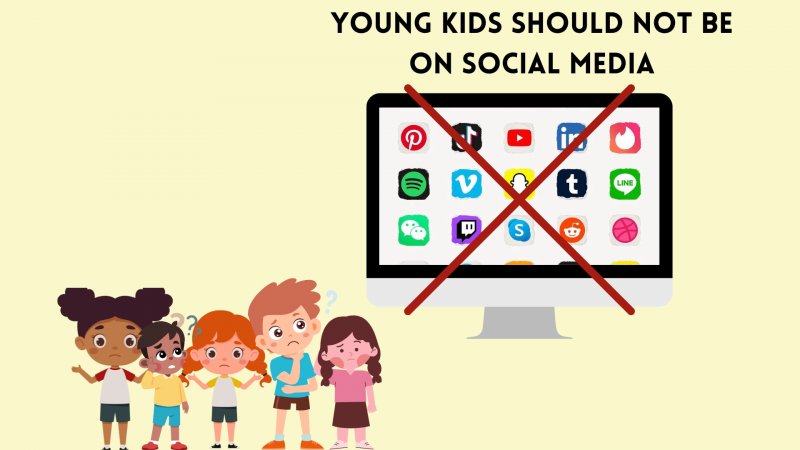
Following Australia’s lead, several European nations are considering social media bans for minors.
From viral trends to artificial intelligence (AI) slop, children’s worlds have become shaped by their digital experiences News.Az reports citing euronews.com
But excessive screen time and the harmful consequences of social media have caused growing concern, with governments across the world seeking to impose tighter regulations.
Australia became the world’s first country to enforce a social media ban for under-16s in December. This restricts minors from having accounts on all major platforms, like Facebook, TikTok, Instagram and YouTube.
Countries across Europe have since been debating similar measures, with Austria the latest country to consider a national ban for under-14s. The European Parliament has also proposed an EU-wide minimum age of 16 for independent access to social media and video-sharing platforms.
RECOMMENDED STORIES
Many people favour more extreme restrictions to protect minors, with social media fuelling a proliferation of cyberbullying and harmful content.
A landmark ruling in the United States last week added fuel to the fire, with Meta, the owner of Facebook and Instagram, found to have knowingly harmed children's mental health by taking advantage of their vulnerabilities.
Still, others believe an outright ban is not the answer, arguing that age verification systems are flawed - and that it could lead to children seeking out more dangerous, unregulated corners of the internet. But both sides of the debate mostly agree on one thing: the fundamental design of social media, built upon aggressively addictive algorithms, needs to change.
As various countries prepare to implement their own restrictions, Euronews Next spoke to locals across European cities to find out how they feel about a social media ban for minors.
Having grown up with social media, Margot, a 26-year-old from Lyon, knows first-hand the harms it can cause.
“Most of my friends and myself suffered a lot from stuff we weren't supposed to see or online bullying and everything, so I think in a way it's not so bad to prevent [young people from using social media].”
She believes, however, that an outright ban isn’t the answer due to it being such a huge part of teenagers’ lives already.
“It's the parents that should really educate their children and also schools about the dangers,” she added.
On 31 March, the French Senate voted on whether to block social media access for under-15s, a bill that authorities hope can come into force in September.
Hanif Ibrahim, a 26-year-old student in Lyon, thinks a move like this is overall a “net positive,” but that a ban is also an overly harsh measure that could leave minors lacking in digital literacy.
“We don't want [minors] to be like, the moment they turn 16, and then suddenly they're thrust into this whole social media thing. You want to make sure they learn how to use social media slowly to be more responsible users of it once they reach [adulthood],” he said.
Current legislation in Belgium stipulates that children must be at least 13 to create a social media account, but discussions have been underway about raising this age to 15.
“I think [a ban] should be implemented in every single country in Europe at least, because [social media] has a big impact on [teenagers’] psyche,” said Alexandra Barilova, a resident of Brussels. “Even for me, I try to reduce it as much as possible, so I think that It's a very useful thing for young people.”
Sorengo Guie, a 27-year-old nurse also living in Brussels, is particularly worried about how young people’s mental health is being affected.
“I see [at work] every day, we have more and more young people that suffer from depression. They are not doing ok in their lives because they are being harassed on social media or they [feel they] have to be all skinny and look like models,” he said.
“I don't think it's worth banning social media because kids will find a way around it,” Tyler, a 27-year-old retail worker in London, told Euronews Next. “You can still connect to a VPN (Virtual private network), connect to any country and then still use those services. And people, a lot of younger people, are much more tech savvy than I ever was when I was their age.”
The UK government is set to trial a social media ban on 300 teenagers, which was launched this month alongside a consultation that asks the public for their views on protecting minors online.
Taylor is in favour of stricter regulation, but believes it’s something social media companies should be enacting already.“[Platforms like] Instagram and Twitter, they should be self-governing themselves, and they should be regulating stuff.”
In February, Portugal's government approved a bill to restrict free access to social media for under-16s. This can only be bypassed if verified consent is given from a parent or legal guardian.
“I totally agree [with banning social media for minors],” said a woman who lives in Lisbon and has struggled with monitoring her own children’s screentime.
“Exposure to screens, and particularly to social networks, is harmful to children whose brains are still in formation, who do not yet have an understanding of reality,” she explained, adding that official legislation would help take some pressure off parents too.
A male Lisbon resident agreed, citing his fears over the “manipulation, false information and loss of identity” that social media can generate. Another man said that any type of regulation should take into account individual contexts and whether parents agree or not.
“I think [the method for applying these regulations] depends on the social context of each person and what education they have at home or at school itself,” he said. “For me, it's extremely relative whether you should or shouldn't restrict a person from using [social media].”


Similar news