Tolerance in action: How Azerbaijan builds a peaceful and inclusive society


By Arif Suleymanov
In an increasingly globalized world where borders grow more symbolic and intercultural exchanges expand, the question of peaceful coexistence among different cultures, religions, and ethnicities has become critically important. Against this backdrop, multiculturalism—as both a theory and a policy aimed at preserving and fostering cultural diversity—emerges as a vital framework for sustainable and harmonious societal development.
Azerbaijan is one of the few countries where the ideas of multiculturalism are not only declared but also consistently implemented in practice. This is no coincidence: tolerance and respect for other cultures, beliefs, and traditions are deeply rooted in the Azerbaijani national identity and represent an integral part of its historical and spiritual heritage. It is precisely this spirit of mutual tolerance that allows the country to foster a society in which dozens of ethnic and religious communities coexist peacefully, united by a shared sense of citizenship and patriotism.
Situated at the crossroads of East and West, Islam, Christianity, and Judaism, Europe and Asia, Azerbaijan has, for centuries, been a meeting point of civilizations, cultures, and peoples. For generations, this ancient land has been home to various religious communities—Muslims, Christians, Jews, Zoroastrians, and others—living side by side. Unlike many other regions in the world, Azerbaijan has never experienced large-scale conflicts rooted in religious or ethnic intolerance. On the contrary, relations among peoples in the country have traditionally been based on mutual respect, solidarity, and trust.
Tolerance in Azerbaijan is not limited to legal norms—it is embedded in the culture and everyday life of its people. The Constitution of the Republic of Azerbaijan guarantees freedom of conscience and religion to all citizens. Religious communities enjoy equal rights, and their activities are protected and supported by the state. The country is home to a wide variety of religious sites—mosques, churches, synagogues—many of which have been preserved and restored in the years since independence, including those that date back centuries.

The foundation of modern Azerbaijani multiculturalism was laid by the National Leader Heydar Aliyev. Upon his return to power in 1993, strengthening interethnic and interreligious harmony became one of the key priorities of state policy. Under his leadership, institutional mechanisms were established to support ethnic and religious communities and to preserve their cultural heritage. Heydar Aliyev recognized that the stability and prosperity of society depend on dialogue, mutual understanding, and inclusion.
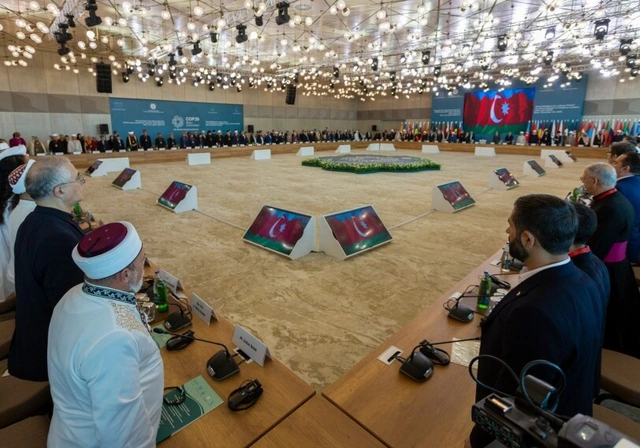
Today, this policy is being successfully and resolutely continued by President Ilham Aliyev. Under his leadership, Azerbaijan has implemented numerous initiatives aimed at promoting tolerance and safeguarding cultural and religious diversity. The country has hosted international forums, conferences, and summits dedicated to interfaith and intercultural dialogue. The Baku Process, initiated by Azerbaijan, has become a globally recognized platform for connecting East and West, fostering dialogue among Islamic and Christian civilizations, and advancing cooperation between religions and cultures.
The Azerbaijani model is especially relevant in the context of ongoing global crises. In many parts of the world, xenophobia, religious intolerance, and ethnic violence are on the rise. Millions have become victims of hatred and forced displacement. Against this troubling backdrop, Azerbaijan presents a compelling alternative—a model of justice and inclusiveness where people of diverse backgrounds live with dignity and security.
And this is not just rhetoric. In practice, Azerbaijanis of different nationalities and faiths not only live in peace but also actively contribute to the political, social, and cultural life of the country. They serve in government, the military, education, science, the arts, and business. They are not considered minorities but fully integrated, equal members of society.
The Azerbaijani model of multiculturalism and tolerance is neither a temporary phenomenon nor a political slogan—it is the result of centuries of tradition, strategic statecraft, and the collective will of a peace-loving nation. At a time when the world is searching for sustainable solutions for coexistence, Azerbaijan offers a proven and practical path: one grounded in respect, openness, and dialogue. That is why the country today rightly occupies a special place on the global map as one of the most tolerant and multicultural nations.
Preserving and further developing these values is not only a state priority but also a moral duty to future generations. It is our collective responsibility to show the world that peace and harmony among people are indeed possible—when based on sincere respect and shared love for one’s homeland. Azerbaijan has already proven this through action—and continues to do so, every single day.
The material was prepared with the financial support of the Media Development Agency of the Republic of Azerbaijan.


Similar news