Toxic mines threaten Southeast Asia’s rivers and millions of people, new study warns


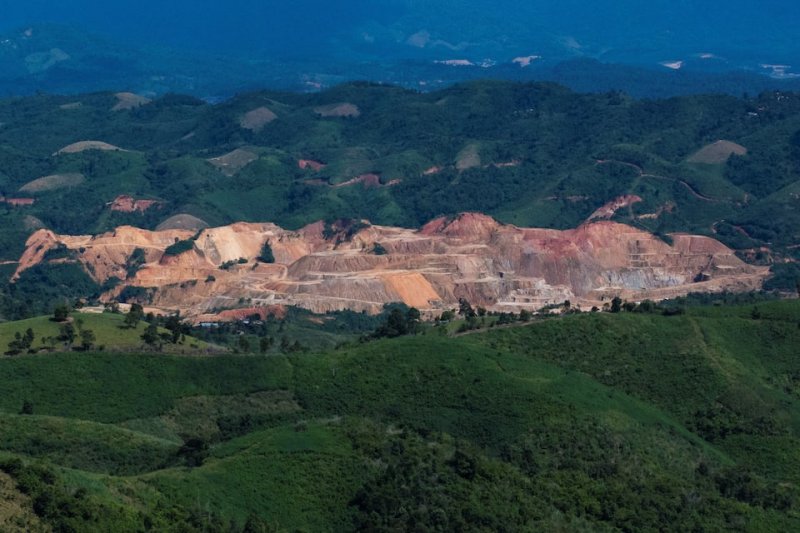
More than 2,400 mines across mainland Southeast Asia—many illegal and unregulated—may be leaking toxic chemicals into major river systems, posing a growing health risk to millions of people.
The study identifies widespread contamination risks in rivers that feed into the Mekong, Salween, and Irrawaddy, including hazardous chemicals such as cyanide, mercury, ammonium sulphate, and heavy rare earth elements, News.Az reports, citing Reuters.
In northern Thailand’s Tha Ton sub-district, 59-year-old farmer Tip Kamlue said she had relied on water from the Kok River her entire life. But after authorities warned residents in April to avoid using the river due to suspected contamination, she switched to groundwater for her pumpkin, garlic, sweet corn, and okra fields.
“It’s like half of me has died,” she said, looking at the river she can no longer use.
The Stimson report is the first region-wide assessment of pollution risks from mining operations along Southeast Asia’s major river basins. Using satellite imagery, researchers identified:
366 alluvial mining sites
359 heap leach operations
77 rare earth mines
Most alluvial mines extract gold, though some produce tin and silver. Heap leach mines include gold, nickel, copper, and manganese.
“The scale is striking,” said Brian Eyler, senior fellow at Stimson. He warned that many tributaries flowing into the Mekong and other major rivers are “probably highly contaminated.”
The Mekong River, Asia’s third-longest, supports over 70 million people and is central to global exports of shrimp, rice, and fish. Once viewed as a comparatively clean river, it now faces severe threats due to weak regulation and expanding mining activity.
“Much of the Mekong Basin is ungoverned or under-regulated,” Eyler said. “That makes it ripe for the kind of unregulated mining our data reveals.”
A rapid expansion of China-backed rare earth mines in eastern Myanmar—near the Thai border—has heightened fears about downstream contamination. These mines use techniques that rely on large amounts of chemicals, which can leach directly into river systems.
Testing conducted this year by Tanapon Phenrat of Thailand Science Research and Innovation found traces of arsenic, dysprosium, and terbium in the Kok River, all of which are linked to rare earth and gold mining.
“It has only been two years since rare earth and gold mining surged at the river’s source, and contamination is already rising sharply,” Tanapon warned.
Myanmar, embroiled in conflict since the 2021 military coup, is one of the world’s top producers of heavy rare earths—critical minerals used in electric vehicles, wind turbines, and defence systems. Much of the raw material is shipped to China for processing, reinforcing Beijing’s near-monopoly in global rare earth magnet production.
China’s foreign ministry said it was unaware of the situation but insisted that Chinese companies abroad are required to follow local environmental laws.
Toxic runoff from mines threatens not only Southeast Asian communities but also consumers worldwide.
“There’s not a major U.S. supermarket that doesn’t carry products from the Mekong Basin,” Eyler said. “Shrimp, rice, fish — all potentially exposed.”
Thailand has established three new task forces to coordinate international cooperation, monitor health impacts, and identify alternative water sources for affected communities along the Kok, Sai, Mekong, and Salween rivers.
In Tha Ton, banners still hang from a bridge calling for the closure of the mines in Myanmar that residents blame for poisoning the river.
Farmers like Tip hope action comes soon.
“I want the Kok River to be how it used to be — where we could eat from it, bathe in it, play in it, and farm with it,” she said.
“I hope someone will help make that happen.”


Similar news