Ukraine 2025: Challenges, strategies, and opportunities


The war has changed everything: our priorities, our perception of the world, and our sense of self. We can no longer afford to live "as we used to," yet we also have no right to lose what the best among us are fighting and giving their lives for today.
Now more than ever, it is crucial to think strategically: what decisions and long-term plans do we need to implement to ensure that our country is prepared for any potential developments, possesses the resources for recovery, achieves economic stability, preserves its independence, and becomes a strong player on the international stage?But I want to focus not only on the challenges we face but also on the solutions we can and must pursue. This is the path that can make us stronger. The answer to the question "What will Ukraine look like tomorrow?" lies in our hands.
The primary test our nation is undergoing, which brings with it numerous challenges, is the full-scale war that is exhausting the country and affecting all aspects of our lives.
This year, our partners will be looking for mechanisms to de-escalate active combat. Direct statements increasingly made by foreign leaders essentially confirm this. This is primarily due to the lack of a step-by-step plan and strategic communication from Ukrainian authorities with NATO and other partner countries.
Amid public discussions about ending the war in 2025, we must remain vigilant and actively engage with our allies to ensure our future is not planned without us. Unfortunately, Russia will not disappear, and we cannot predict what is on Putin's mind or whether there will be new escalations a year, two years, or five years after the war ends. Therefore, the critical issue for Ukraine to address with its partners is establishing security guarantees that would help us end the war now and prevent new Russian aggression in the future.
The ideal scenario for ensuring Ukraine's security would be NATO membership, with Article 5 protections extended to territories not occupied by Russia and currently under Ukrainian control, as outlined in Article 6 of the North Atlantic Treaty. However, this window of opportunity is narrowing by the day. Moreover, an invitation to join NATO alone does not guarantee security or influence the war's conclusion.
Another option for Ukraine is securing tangible security guarantees equivalent to NATO's Article 5 from individual NATO members, such as obtaining the status of a major non-NATO ally of the United States. The U.S. remains the primary nation capable of guaranteeing peace in Ukraine and Europe. The professionalism with which we build bilateral relations will determine our future. Returning to classical diplomacy, strengthening governmental and business ties, attracting American investments and providing guarantees for them from the Ukrainian state, and fostering cooperation in the defense sector should become priorities for 2025 and beyond. We must remember that the U.S. has no interest in working with inefficient, unpredictable, and corrupt states. Thus, while advocating for continued financial and military support from our American and European partners, we must tirelessly address internal issues that hinder our development—this is also one of the key requirements of Western partners and international donors.
European nations remain Ukraine's key economic and political partners. We must not only seek support but also demonstrate readiness for cooperation through reforms, effective anti-corruption policies, adherence to the rule of law, and the creation of a transparent economy. Moving closer to the standards of EU nations will help strengthen the trust of our European partners and open new opportunities for Ukraine's development as a modern democratic state.
Every post-war nation faces two paths: achieving a new impetus for development or falling into the abyss of decline, potentially ceasing to exist. Ukraine must undoubtedly take the first path—there is no other option for us.
This is why we must develop realistic plans and high-quality strategies in all spheres of life now. We still have a window of opportunity to do so.
Firstly, we must rebuild the economy inherited from the Soviet Union. As we restore destroyed factories, enterprises, and even entire industries, we need to lay the foundation, create a margin of safety, and build a reserve of opportunities for years to come. From being a raw-materials-based economy, as it largely was before the full-scale invasion, Ukraine must transit to an economy with deep processing of its abundant resources—from agriculture to minerals. This will increase the added value of produced goods and, as a result, significantly boost state revenue and budget income. To achieve this, we must ensure equal conditions for both foreign and Ukrainian investors, encouraging foreign capital to contribute to Ukraine's economic development and establish enterprises on our territory. With the financial resources of our partners and our domestic businesses, we can revive Ukraine's economy. Attracting investor funds will modernize existing enterprises and create new production facilities, providing jobs and producing goods competitive on the global market.
In general, a strong economy is the foundation of a strong state. Without it, we simply will not be able to rebuild the country in the future or bring millions of Ukrainian refugees back home.
Incidentally, this is becoming an increasingly challenging task with each passing day. Many Ukrainians who left at the beginning of the war and remain in EU countries have adapted there, found jobs, housing, and receive financial support and decent wages.
According to official data, in Poland alone, 15,200 Ukrainian private enterprises were established in the first half of 2024—accounting for more than one-tenth (11.2%) of all new companies in Poland. Meanwhile, Ukrainians in the Czech Republic are already contributing more to the state budget than they receive in aid. Sadly, it may be harder for these individuals to settle back in their homeland. Additionally, many Ukrainians who are currently abroad either have their homes destroyed or located in occupied territories.
A strong motivation for Ukrainians to return would be decent economic conditions—better than those in Poland, the Czech Republic, or other countries. It is crucial not to divide Ukrainians but to restore the unity and faith in the future that existed at the start of the full-scale war. We must abandon decisions that discriminate against those currently outside Ukraine and stop violating their rights (such as limiting consular services). Official communications that stigmatize refugees as "traitors to the state" must end, and we must show determination in fighting corruption. Ukrainians returning from abroad need to feel they are needed at home. The same sentiment must resonate with those who remained in the country. Effective programs to increase employment, support childbirth, and build housing for young families must become essential priorities. Where will the funding come from? Through an appropriate state policy in the area of entrepreneurial activity.
Therefore, liberalizing and deregulating business is the path that will enable entrepreneurs to work effectively, pay taxes, and create jobs. This will also help bring people back to Ukraine and integrate veterans after their military service. The taxes businesses pay to the state budget will facilitate social support for those Ukrainians who need it and will continue to need it after the war—veterans who have lost their ability to work and deserve proper support and gratitude from the state, vulnerable populations, internally displaced persons, and others.
However, none of this will be possible without a transparent judiciary and genuine anti-corruption efforts. The absence of these two factors will be a massive, if not insurmountable, barrier to economic recovery and attracting investors to the country.
Ukrainians see their future in a democratic state. For this to happen, the balance of power must remain steadfast. Ukraine is a parliamentary-presidential republic, and the system of checks and balances must function clearly—something that, unfortunately, is lacking today. Ukraine as a democratic state stands on four pillars: the Parliament, the Government, the President, and the judiciary. Just as no chair can stand if even one leg is missing, the state cannot endure if the role of any one of these essential institutions is undermined. Sadly, today, this "chair" is left with only one leg—the Office of the President. It is critical to restore the balance of power!
Ukraine's future depends on each of us: on our ability to think strategically, act decisively, and take responsibility for ourselves, our children, and the world. Today, we have a historic chance not only to rebuild the country but to create a state that future generations will be proud of.
The article was published in Ukrainian by Ukrainska Pravda newspaper.
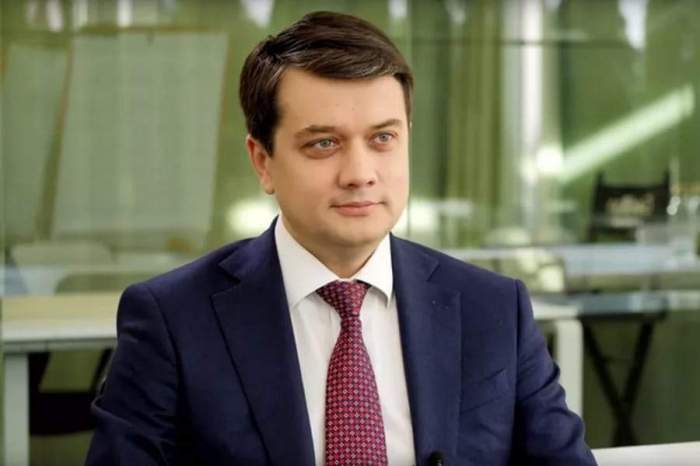
The author is a deputy, former speaker of the Verkhovna Rada, Dmytro Razumkov.


Similar news