Ultranationalist jews chant racist slogans during annual march in jerusalem’s old city


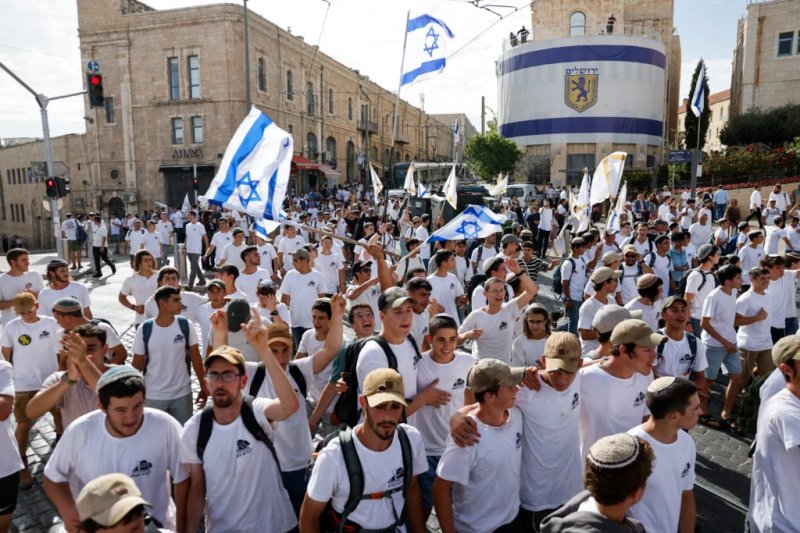
Large crowds of ultranationalist Jews gathered on Thursday at the foot of Damascus Gate in Jerusalem, chanting slogans including “Death to Arabs” and “May your villages burn” as they began an annual march through Palestinian areas of the Old City, a procession often marked by tensions and violence.
The march is held on Jerusalem Day, marking Israel’s capture of East Jerusalem, including the Old City and its holy sites, in the 1967 Middle East war, News.Az reports, citing The Associated Press.
The event comes amid political tension in Israel, with authorities deploying police as participants moved through areas normally used by Palestinian residents, many of whom stayed indoors and closed their shops.
RECOMMENDED STORIES
The procession has frequently led to confrontations between ultranationalist participants and Palestinians. On Thursday, chants also included “Muhammad is dead,” referring to the Muslim prophet.
Participants said they view Jerusalem as central to their religious identity. One marcher, Yehonatan Sopher, said he has taken part since childhood and dismissed the racist slogans as coming from a minority within the group.
Earlier in the day, Israel’s National Security Minister Itamar Ben Gvir visited the Al-Aqsa Mosque compound, known to Jews as the Temple Mount, where he raised an Israeli flag and declared “the Temple Mount is in our hands,” a statement that has previously fueled tensions.
The visit and the march both come amid heightened regional instability and past clashes in the city, including violence that has previously escalated into wider conflict between Israel and Hamas.
Scuffles were reported in parts of the Old City before the march began, including in the Christian quarter, where objects were thrown during clashes between groups. Activists from Israeli-Palestinian coexistence organizations attempted to intervene and reduce tensions.
Jerusalem remains a core point of dispute between Israelis and Palestinians, with both sides claiming the city as central to their national and religious identity. Israel considers the entire city its capital, while Palestinians seek East Jerusalem as the capital of a future state.
By Leyla Şirinova


Similar news