US conducts test launch of Minuteman III ICBM


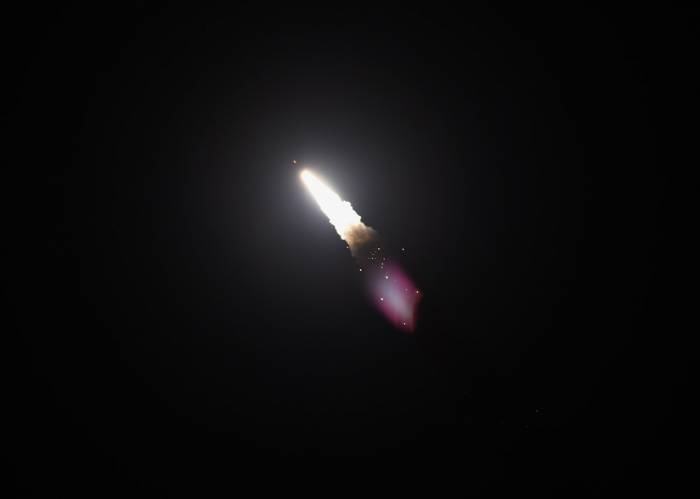
The United States has conducted a training launch of the Minuteman III intercontinental ballistic missile (ICBM) from Vandenberg Space Force Base in California.
"A joint team of Air Force Global Strike Command Airmen and Navy aircrew launched an unarmed Minuteman III intercontinental ballistic missile equipped with multiple targetable re-entry vehicles from aboard the Airborne Launch Control System (ALCS) Nov. 5, 2024, at 11:01 p.m. Pacific Time from Vandenberg Space Force Base, California," the base said in a statement , News.Az reports."This Minuteman III test launch exemplified the mission readiness, agility, and professionalism of the personnel at Vandenberg, Global Strike Command, and the U.S. Navy," said Col. Dorian Hatcher, Space Launch Delta 30 deputy commander. "Every test of this deterrent system at Vandenberg underscores the nations robust capabilities and highlights the indispensable support our Airmen and Guardians provide to ensure national security."
This test launch is part of routine and periodic activities intended to demonstrate that the United States’ nuclear deterrent is safe, secure, reliable and effective to deter 21st century threats and reassure our allies. Such tests have occurred over 300 times before, and this test is not the result of current world events.
“These tests are demonstrative of what Striker Airmen bring to the fight if called by the president,” said Gen. Thomas A. Bussiere, commander, Air Force Global Strike Command. “An airborne launch validates the survivability of our ICBMs, which serve as the strategic backstop of our nation’s defense and defense of allies and partners.”
The ICBM's reentry vehicle traveled approximately 4,200 miles to the U.S. Army Space and Missile Defense Command's Ronald Reagan Ballistic Missile Defense Test Site located within Republic of the Marshall Islands at the Kwajalein Atoll. Reagan Test Site sensors, including high-fidelity metric and signature radars, as well as optical sensors and telemetry, support the research, development, test and evaluation of America's defense and space programs. For these tests, RTS team members collect radar, optical and telemetry data in the terminal phase of flight to evaluate system performance.


Similar news