US lawmakers push control over AI chip sales to China


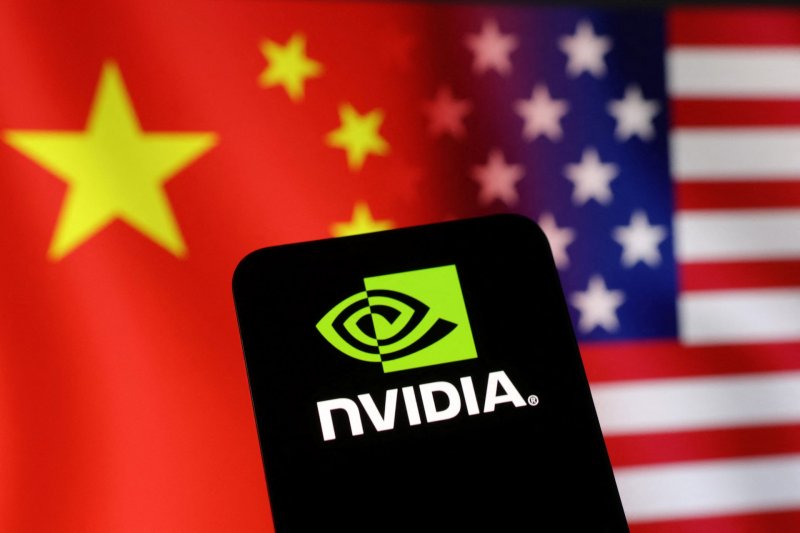
The U.S. Congress is moving closer to gaining the authority to oversee the sale of artificial intelligence chips to China, a development that could create tensions with the Trump administration, which plans to allow Nvidia Corp. to export its advanced H200 processors to the world’s second-largest economy.
On Wednesday, a House committee on foreign affairs approved bipartisan legislation that would apply congressional oversight to AI chip exports, similar to the process used for arms sales, News.Az reports, citing Bloomberg.
The legislation, supported by both Republicans and Democrats on the panel, would also prohibit the sale of Nvidia’s most advanced Blackwell chips to China for at least two years, effectively codifying current export restrictions into law.
The bill marks a response to President Donald Trump’s decision last month to ease longstanding export controls on China, a move aimed at spurring adoption of American AI technology in global markets but one that drew strenuous objections from national security hawks in Congress. Trump’s approval for Nvidia’s H200 sales to Chinese customers was formalized by a new rule issued last week by the Commerce Department.
The panel approved the bill by a 42-2 margin. It now heads to the House for a floor vote. The Senate has yet to release a companion version, but lawmakers there have introduced a separate bill that would effectively block H200 sales.
“I have been so worried that the president wouldn’t stop at just H200s,” Representative Gregory Meeks, the top Democrat on the panel, said Wednesday. He added that lawmakers want to “send a clear message that our national security, our foreign policy, and our technological crown jewels are not for sale.”
Under the legislation, the administration would be required to notify Congress of advanced AI chip sales before they’re approved, giving lawmakers the power to review and block export licenses to China, Russia, Iran, and other adversaries through a joint resolution. The measure calls for allowing members of House Foreign Affairs and Senate Banking committees to see the numbers of chips up for export as well as the end-users buying them.
It also creates a way for so-called “trusted” US person’s AI companies to receive license exemptions when sending chips to US allies and neutral countries — an approach commended by Microsoft Corp. executive Fred Humphries — and requires the administration to submit a strategy on its policy for maintaining the US lead in the AI race.
Humphries said in a December statement on LinkedIn that Microsoft appreciates lawmakers’ focus on ensuring the US leads in AI but has not endorsed a specific bill. Spokespeople for Nvidia didn’t respond to a request for comment Wednesday.
White House AI Czar David Sacks has publicly criticized the bill, the latest in a series of congressional attempts to rein in Trump administration efforts to let Nvidia and Advanced Micro Devices Inc. reenter China’s fast-growing AI chip market. Last year, the White House helped derail a bill that called for giving US customers first dibs over AI chips potentially headed to China.
Conservative political activist Laura Loomer also tore into the draft bill in a post on X, saying it “yanks control of advanced AI chip exports away from President Trump.”
Sacks and other Trump administration officials have argued that selling in China’s market will encourage foreign companies to become reliant on American technology, boosting US leadership while offering a product that can compete with Huawei Technologies Co.’s systems. Nvidia has also pushed to be able to sell a modified version of its more-advanced Blackwell chip design to China.
Trump’s approach has been met with skepticism from Republicans and Democrats on Capitol Hill, who have coalesced around safeguarding US innovation from adversaries. China hawks warn that sending highly advanced American chips to the Asian country may inadvertently strengthen its military and economy, threatening US national security.
Representative Brian Mast, a Florida Republican who chairs the committee, over the weekend blasted opposition to the bill, targeting Sacks, Nvidia and other White House allies. Since Trump took office, Nvidia has lobbied against nearly every congressional attempt to stop or restrict its chip sales to China.
“We all agree that we are in an AI arms race,” Mast, who introduced the bill, said Wednesday. “So why wouldn’t we want to know what the AI arms dealers want to sell to our adversaries?”
By Nijat Babayev


Similar news