Vance speaks truth: Brussels pressured Hungary, Orbán stands strong


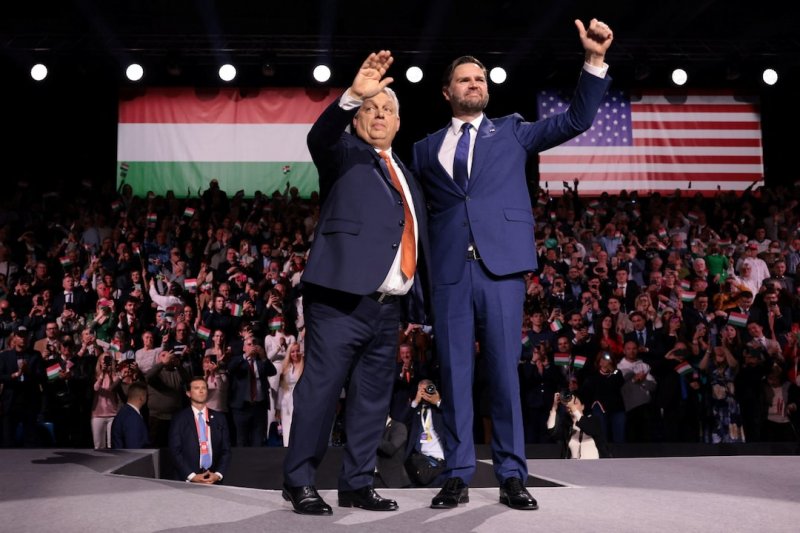
Editor’s note: Seymur Mammadov is a special commentator for News.Az and the director of the international expert club EurAsiaAz. The article reflects the author’s personal opinion and does not necessarily represent the views of News.Az.
The political debate unfolding in Europe is increasingly defined not only by external challenges, but by growing internal contradictions within the Western alliance itself. What once appeared as a relatively unified transatlantic space is now showing clear signs of fragmentation — both in terms of ideology and governance. The recent remarks by US Vice President James David Vance during his visit to Hungary have added new momentum to this discussion, bringing to the surface tensions that have been building for years but were often left unspoken in official discourse.
At the heart of this emerging divide lies a fundamental question: should Europe continue down the path of deeper centralization under Brussels’ institutional framework, or should member states retain greater control over their political and economic destinies? This dilemma is no longer theoretical — it is being actively tested in real political practice. Hungary, under the leadership of Viktor Orbán, has become one of the most visible examples of an alternative approach, challenging prevailing assumptions about how the European Union should function.
RECOMMENDED STORIES
Vance's statements during his visit to Hungary have once again brought into focus a growing divide within the Western political space. His remarks were not just another episode of transatlantic rhetoric — they reflected deeper structural tensions between Brussels’ centralized governance model and the desire of individual states to pursue sovereign political and economic strategies.
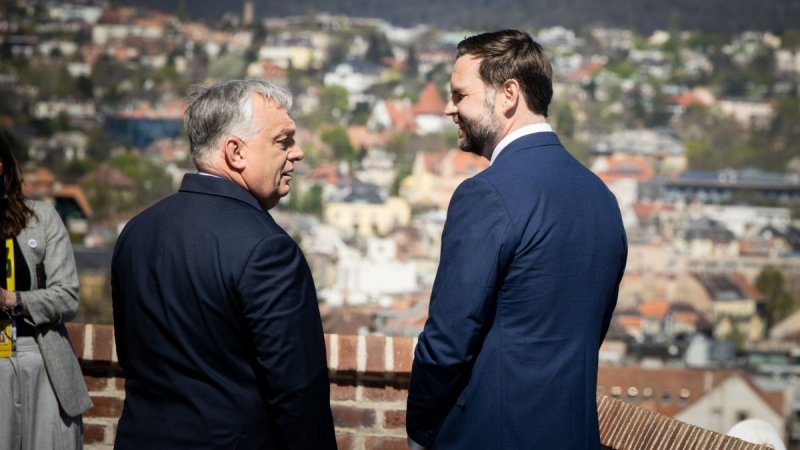 Source: EPA
Vance openly suggested that bureaucratic structures in Brussels had attempted to influence Hungary’s internal political processes, aiming to weaken its leadership. He argued that such actions stem from discomfort with leaders who prioritize national interests over supranational agendas. Moreover, he described developments during Hungary’s election campaigns as one of the clearest examples of external intellectual interference he has seen. This assessment is particularly striking given the European Union’s long-standing position against external interference in domestic affairs and its consistent advocacy for electoral sovereignty across the globe.
Earlier, speaking at the Munich Security Conference, Vance had already voiced similar concerns, criticizing Europe’s trajectory and linking it to what he described as excessive liberalism and declining strategic autonomy. His remarks align with a broader and increasingly visible trend — growing dissatisfaction within parts of the Western political establishment regarding how the EU’s political model is evolving. This trend is no longer limited to fringe voices but is gradually entering mainstream political discourse on both sides of the Atlantic.
Against this backdrop, Hungary occupies a distinctive position. Under the leadership of Viktor Orbán, Budapest has pursued a consistent policy centered on national sovereignty, economic pragmatism, and internal stability. This approach has not only differentiated Hungary from the mainstream EU line but has also demonstrated that alternative governance models can exist within the Union. Despite sustained external pressure, Hungary has maintained political stability and continued to implement its chosen course — something that, even among critics, is often acknowledged as a sign of strategic consistency and political resilience.
At the same time, Hungary’s model challenges a key assumption embedded in the European integration project — that deeper centralization necessarily leads to stronger unity. Budapest’s experience suggests that cohesion can also be achieved through flexibility, where member states retain significant autonomy while remaining part of a broader institutional framework. This alternative vision is increasingly resonating with political actors across Europe who are seeking to balance integration with national sovereignty.
Brussels, however, views this trajectory as a challenge. As a result, various forms of pressure have intensified. Support for protest movements, activation of non-governmental networks, engagement of media structures, and the circulation of compromising information are frequently cited by critics as tools used to influence the domestic landscape. In other contexts, such practices would likely be described by European policymakers themselves as elements of hybrid pressure or indirect political influence. Their application within the EU, therefore, raises questions about consistency, institutional norms, and the credibility of European democratic standards.
Importantly, Hungary is not entirely alone in this positioning. Countries such as the Czech Republic and Slovakia have also demonstrated a growing inclination toward more autonomous policymaking, emphasizing the protection of national interests, economic resilience, and political flexibility. While these states do not always align fully with Hungary’s approach, their evolving positions indicate the gradual emergence of a broader intra-European dynamic. This dynamic reflects a shift away from uniformity toward a more pluralistic understanding of how the European Union can function.
Another critical factor is the evolving stance of the United States. Traditionally aligned with Brussels on key strategic issues, Washington now appears less unified in its approach. Vance’s statements indicate that at least part of the American political elite is reassessing its position and showing greater openness to alternative governance models within Europe. This shift does not necessarily signal a complete break in transatlantic relations, but it does introduce a new layer of complexity. The absence of a fully coordinated transatlantic stance inevitably weakens Brussels’ leverage and creates additional space for independent actors within the EU.
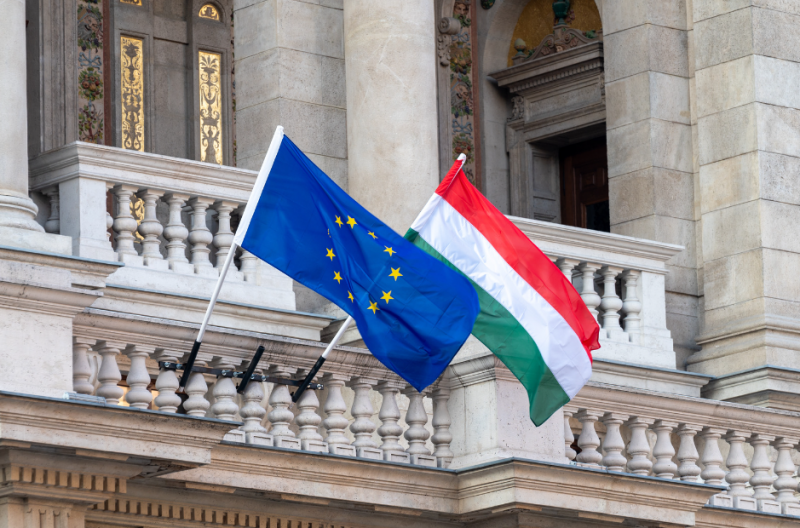 Source: Getty Images
Hungary’s foreign policy further contributes to this dynamic. Its efforts to deepen ties with the Turkic world and expand partnerships beyond the traditional European framework reflect a pragmatic attempt to diversify economic and geopolitical options. In an increasingly multipolar international system, such diversification can be seen not as a departure from European identity, but as an adaptive strategy aimed at strengthening national resilience. While this approach raises concerns among some EU policymakers, from Budapest’s perspective it represents a rational and forward-looking course.
In a broader sense, the situation surrounding Hungary highlights a structural tension within the European project itself. The balance between integration and sovereignty is being actively redefined. While Brussels continues to advocate for deeper centralization and policy harmonization, a growing number of states are exploring ways to preserve greater autonomy within the Union. This process is likely to shape the future trajectory of the EU in the coming years.
In this context, Orbán’s course, whether one agrees with all of its elements or not, illustrates a coherent alternative that resonates beyond Hungary’s borders. Supporting such a trajectory does not necessarily imply rejecting European cooperation; rather, it suggests the need to recalibrate the balance between collective decision-making and national self-determination. Hungary’s experience demonstrates that participation in European structures can coexist with a strong emphasis on sovereignty, strategic independence, and pragmatic policymaking.
Ultimately, Vance’s remarks serve as a catalyst for a wider debate that is already unfolding. Europe is entering a phase of strategic reassessment, where foundational assumptions about governance, identity, and power distribution are being questioned. In this evolving landscape, Hungary — and the course it represents — has become an important reference point in shaping the continent’s future direction.
(If you possess specialized knowledge and wish to contribute, please reach out to us at opinions@news.az).


Similar news