What comes next after the Israel-Hezbollah ceasefire takes effect?


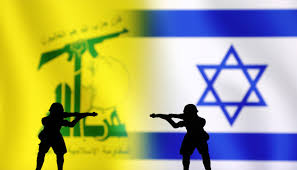
Israel and Hezbollah have agreed to a ceasefire that is scheduled to take effect at 4 p.m. local time on Friday, according to a senior U.S. official familiar with the negotiations. The announcement came after both sides exchanged fire earlier in the day, raising fears that the conflict could intensify further and draw additional regional actors into the confrontation.
The ceasefire was reportedly negotiated through a diplomatic effort involving the United States and Qatar, with assistance from Iran. While details of the agreement have not yet been made public, officials indicated that both sides have committed to halting military operations and ending attacks across the Israel-Lebanon border.
The development is being closely watched across the Middle East and beyond because it comes after a period of heightened military activity that threatened to spiral into a broader regional conflict. Diplomatic observers say the agreement represents one of the most significant de-escalation efforts in recent months and could provide an opportunity for broader negotiations if it holds.
Why is this ceasefire important?
The ceasefire is important because the conflict between Israel and Hezbollah has long been considered one of the most dangerous flashpoints in the Middle East. Any major escalation carries the risk of expanding beyond Lebanon and Israel, potentially drawing in regional powers and affecting global security and economic stability.
The fighting has raised concerns among governments worldwide due to the potential for disruption to energy markets, international trade routes, and regional alliances. A wider conflict could have implications far beyond the immediate battlefield, affecting countries throughout the region and increasing tensions among global powers with interests in the Middle East.
For civilians, the ceasefire offers the possibility of relief from airstrikes, rocket attacks, displacement, and economic disruption. Thousands of people living near the border areas have faced uncertainty and security concerns, making the agreement particularly significant from a humanitarian perspective.
The truce also demonstrates that diplomacy remains possible even during periods of intense hostility, offering a reminder that military confrontations can sometimes be halted through negotiations involving multiple regional and international actors.
Who are the main parties involved?
At the center of the agreement are Israel and Hezbollah, the two adversaries that have been engaged in hostilities. Israel views Hezbollah as a major security threat due to its military capabilities and its close ties with Iran. Hezbollah, meanwhile, presents itself as a resistance movement opposed to Israeli military policies and regional influence.
The United States played a leading role in mediating the agreement. Washington maintains close relations with Israel and has significant diplomatic influence throughout the region. U.S. officials have spent considerable effort attempting to prevent the conflict from expanding into a larger war.
Qatar also played an important role in the negotiations. Over the past decade, Doha has increasingly positioned itself as a mediator capable of communicating with parties that often do not engage directly with one another. Qatar's diplomatic networks have made it an important intermediary in several regional crises.
Iran's involvement is perhaps the most significant aspect of the negotiations. As Hezbollah's principal ally and supporter, Tehran's cooperation was widely viewed as essential for securing any meaningful ceasefire. Without Iranian support, many analysts believe it would have been difficult to persuade Hezbollah to commit to a halt in hostilities.
Why was Iran's involvement important?
Iran's role matters because of its longstanding political, military, and strategic relationship with Hezbollah. The group is widely regarded as one of Tehran's closest regional partners and plays a key role in Iran's broader regional strategy.
Over the years, Iran has provided Hezbollah with financial support, military assistance, training, and political backing. As a result, Tehran possesses considerable influence over the group's strategic decisions. While Hezbollah operates independently in many respects, major developments often involve consultation between the two sides.
Iran's participation in facilitating the ceasefire suggests that Tehran may currently prefer de-escalation rather than further escalation. This could reflect concerns about regional stability, economic pressures, international diplomatic calculations, or a desire to avoid a wider conflict involving multiple countries.
The fact that Iran reportedly helped broker the deal may also signal a broader willingness among regional powers to prevent the situation from spiraling into a larger war that could have unpredictable consequences for all parties involved.
Does this mean the war is over?
No. A ceasefire does not necessarily mean that the underlying conflict has been resolved. It simply means that both sides have agreed to stop active military operations for a period of time.
The issues that contributed to the confrontation remain largely unchanged. These include longstanding disputes over security arrangements, military deployments, regional influence, deterrence strategies, and broader geopolitical rivalries.
History shows that ceasefires between Israel and Hezbollah have sometimes succeeded in reducing violence for extended periods, but they have also occasionally broken down due to accusations of violations, misunderstandings, or changes in the political environment.
Many analysts therefore caution against viewing the agreement as a permanent peace settlement. Instead, it should be seen as an opportunity to reduce immediate tensions and potentially create space for future diplomatic efforts aimed at addressing deeper issues.
Whether the ceasefire becomes a lasting arrangement or merely a temporary pause will depend on the actions of both sides in the days and weeks ahead.
What happens at 4 p.m. local time?
Once the ceasefire officially takes effect, both parties are expected to halt offensive military operations. This means that airstrikes, rocket launches, artillery fire, and other forms of direct attack should stop.
Military forces on both sides will likely remain in their positions initially while monitoring compliance with the agreement. Ceasefires generally do not involve immediate withdrawals unless specific arrangements have been negotiated in advance.
The first few hours after implementation are often the most sensitive period. Even a small incident can trigger accusations and potentially jeopardize the agreement. As a result, military commanders, diplomats, and international mediators will be closely watching developments.
There may also be communication channels established to address alleged violations and prevent misunderstandings from escalating. Such mechanisms often play an important role in helping ceasefires survive during their initial stages.
If the truce remains intact through the first several days, confidence in its durability may begin to increase.
How could the ceasefire affect Lebanon?
For Lebanon, the ceasefire could provide desperately needed breathing space after a period of heightened tension and insecurity. Communities in southern parts of the country have faced ongoing concerns about military activity, potential displacement, and economic disruption.
A successful ceasefire could allow residents who left affected areas to begin returning home. It may also facilitate the delivery of humanitarian assistance, restoration of public services, and repairs to damaged infrastructure.
Lebanon has already been grappling with severe economic challenges, political instability, and social pressures. Additional conflict risked worsening an already difficult situation. Reducing military tensions could therefore help prevent further deterioration of living conditions.
However, many challenges would remain. Economic recovery, reconstruction efforts, and political reforms cannot be achieved through a ceasefire alone. The agreement may provide stability, but long-term improvements would require sustained political and economic action.
How could the ceasefire affect Israel?
For Israel, the ceasefire could help reduce immediate security concerns along its northern border. Communities that have been affected by rocket threats and military activity may gain a greater sense of stability if the agreement holds.
Israeli authorities are likely to evaluate the success of the ceasefire based on practical outcomes rather than diplomatic announcements. The key question will be whether attacks actually stop and whether Hezbollah refrains from actions viewed as threatening.
A stable ceasefire could also reduce the burden on Israel's military and allow resources to be redirected toward other security priorities. Additionally, it could help calm concerns among businesses and residents who have been affected by uncertainty and conflict risks.
At the same time, Israeli leaders will remain cautious. Previous agreements in the region have sometimes collapsed unexpectedly, meaning policymakers are likely to monitor developments closely before concluding that the threat level has significantly diminished.
What role did Qatar play?
Qatar has emerged as one of the Middle East's most active diplomatic mediators, often serving as a bridge between parties that lack direct communication channels. Its ability to maintain dialogue with a wide range of regional actors has given it a unique position in conflict-resolution efforts.
In this case, Qatari negotiators reportedly worked alongside American officials to facilitate discussions and help overcome obstacles that might otherwise have prevented an agreement.
Qatar's involvement reflects its broader foreign policy strategy of positioning itself as a mediator in regional disputes. The country has participated in negotiations involving conflicts, hostage releases, ceasefires, and humanitarian arrangements across multiple theaters.
By helping secure the agreement, Qatar further strengthens its reputation as a diplomatic actor capable of contributing to complex regional negotiations.
Could this lead to broader regional diplomacy?
Potentially. Successful ceasefires sometimes create momentum for wider diplomatic engagement. When violence decreases, governments and mediators often have more space to pursue political discussions that would be difficult during active conflict.
Some observers hope the agreement could contribute to broader efforts aimed at reducing tensions across the Middle East. The involvement of the United States, Qatar, and Iran demonstrates that multiple actors remain interested in preventing a larger confrontation.
However, optimism should be tempered with realism. The Middle East contains numerous interconnected disputes, and progress in one area does not automatically resolve tensions elsewhere. Lasting stability generally requires sustained diplomatic engagement, confidence-building measures, and compromises that can be politically difficult to achieve.
Nevertheless, the ceasefire may provide an opportunity to test whether dialogue can produce additional agreements in the future.
What are the biggest risks to the ceasefire?
Several factors could undermine the agreement.
One major risk is miscalculation. Military forces operating in close proximity may misinterpret routine actions as hostile behavior, potentially triggering renewed exchanges of fire.
Another risk comes from factions or individuals who oppose the ceasefire and may seek to disrupt it. In many conflicts, hardliners view negotiations as a concession and may attempt to provoke incidents that derail diplomatic progress.
Disagreements over alleged violations also represent a common challenge. Even minor incidents can become politically sensitive if each side accuses the other of breaking the agreement first.
Regional developments could create additional pressure. Events elsewhere in the Middle East might influence decision-making by key actors and affect their willingness to continue observing the ceasefire.
Ultimately, the durability of the agreement will depend on restraint, communication, and the continued involvement of mediators capable of addressing disputes before they escalate.
What should observers watch next?
The coming days will be crucial in determining whether the ceasefire becomes a durable arrangement or merely a temporary pause in hostilities.
Observers will be watching for signs that military attacks have genuinely stopped and that both sides are honoring their commitments. Statements from Israeli officials, Hezbollah representatives, American diplomats, Qatari mediators, and Iranian authorities will provide important clues about the agreement's stability.
Analysts will also monitor whether displaced civilians begin returning to affected areas, whether humanitarian operations expand, and whether any follow-up negotiations are announced.
Another important indicator will be the tone of public messaging from both sides. If rhetoric becomes less confrontational and diplomatic contacts continue, confidence in the ceasefire may grow.
For now, the agreement represents a significant moment of de-escalation in a region that has experienced persistent instability. Whether it marks the beginning of a broader diplomatic process or simply a brief pause in conflict remains one of the most important questions facing the Middle East today.
By Faig Mahmudov


Similar news