What accusations has NATO made against China?


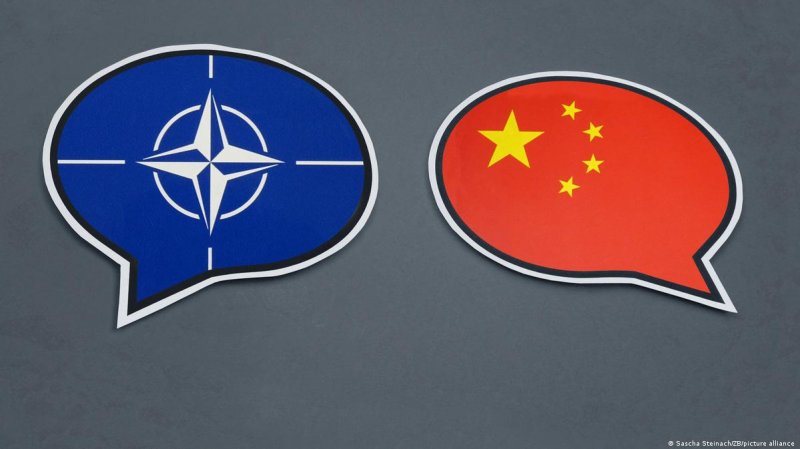
China has strongly rejected accusations from NATO that it is supporting Russia's military efforts in Ukraine. Chinese officials argue that NATO is attempting to shift responsibility for the continuation of the conflict and unfairly portray Beijing as a key enabler of Russia's war effort.
According to China's Foreign Ministry, Beijing has consistently promoted dialogue and negotiations as a means of resolving the conflict. Chinese officials maintain that the country has not supplied weapons to either side and has sought to preserve normal economic and trade relations with both Russia and Ukraine, News.az reports.
The latest exchange reflects growing tensions between China and NATO, which have increasingly clashed over security issues ranging from the war in Ukraine to cyber threats, technology competition, and the broader geopolitical balance of power.
NATO officials have repeatedly argued that China is providing political, economic, and technological support that helps sustain Russia's ability to continue its military operations in Ukraine.
Alliance leaders have expressed concerns about trade between China and Russia, particularly the export of dual-use goods that can have both civilian and military applications. Western governments claim that some technologies and industrial products supplied by Chinese companies contribute indirectly to Russia's defense sector.
NATO has stopped short of accusing China of directly supplying weapons on a large scale, but alliance members argue that Chinese exports help Russia mitigate the impact of Western sanctions and maintain critical industrial production.
How has China responded?
China has categorically denied the allegations and accused NATO of spreading misinformation. Beijing argues that the alliance is using China as a convenient scapegoat for its inability to resolve the conflict in Ukraine.
Chinese officials insist that normal trade between sovereign nations should not be politicized. They also point out that many countries continue to conduct business with Russia and that China has acted in accordance with international law.
Beijing has further accused NATO of expanding its influence beyond its traditional geographic area and attempting to interfere in Asia-Pacific affairs. Chinese policymakers frequently argue that the alliance's approach contributes to global instability rather than promoting security.
What is China's position on the war in Ukraine?
China officially presents itself as a neutral party in the conflict. Since Russia launched its full-scale invasion of Ukraine in February 2022, Beijing has called for peace talks, respect for sovereignty, and a political settlement to end the war.
At the same time, China has avoided condemning Russia's actions directly and has maintained close diplomatic and economic ties with Moscow. This balancing act has led some Western governments to question China's claims of neutrality.
China has proposed several peace initiatives and frameworks aimed at facilitating negotiations. However, these proposals have received mixed reactions from Ukraine, NATO members, and other Western countries, many of which believe that any peace plan must begin with respect for Ukraine's territorial integrity.
Why are China-Russia relations under scrutiny?
Relations between Beijing and Moscow have deepened significantly in recent years. The two countries have expanded cooperation in areas including energy, trade, finance, technology, and diplomacy.
Following the imposition of Western sanctions on Russia, trade between the two countries reached record levels. China became one of Russia's most important economic partners, purchasing large quantities of Russian oil and gas while exporting industrial goods and consumer products.
Critics argue that this relationship provides Russia with an economic lifeline. China, however, maintains that its cooperation with Russia is normal and does not target any third party.
The growing partnership has become one of the most closely watched geopolitical developments since the start of the Ukraine war.
What are dual-use goods and why are they controversial?
Dual-use goods are products and technologies that can be used for both civilian and military purposes. Examples include advanced semiconductors, machine tools, industrial equipment, navigation systems, and certain electronic components.
Western governments argue that some of these exports help Russia manufacture military equipment, maintain weapons systems, and support its defense industry.
China rejects accusations that it knowingly provides military assistance through dual-use exports. Beijing says it implements export controls in accordance with its laws and international obligations.
The debate over dual-use goods has become one of the central issues in disputes between China and Western governments regarding Russia.
How does this dispute affect NATO-China relations?
The disagreement is likely to deepen existing tensions between NATO and China. In recent years, NATO has increasingly identified China as a strategic challenge, citing concerns over military modernization, cyber activities, economic influence, and cooperation with Russia.
China, meanwhile, argues that NATO is extending its reach beyond the North Atlantic region and creating unnecessary confrontation. Chinese officials have frequently criticized the alliance's growing engagement with partners in the Asia-Pacific region.
As a result, relations between the two sides have become more competitive and less cooperative, particularly on security issues.
Could the dispute lead to new sanctions?
It is possible. Several Western governments have already imposed sanctions on Chinese companies accused of supplying products that could support Russia's military-industrial base.
If NATO members conclude that Chinese entities are providing additional assistance to Russia, further restrictions could follow. Such measures could target specific firms, technologies, financial transactions, or export channels.
China has warned against unilateral sanctions and has stated that it will defend the legitimate interests of its companies if new restrictions are introduced.
What does this mean for the war in Ukraine?
The dispute highlights the increasingly global nature of the conflict. While the fighting remains centered in Ukraine, the war has affected relations among major powers around the world.
Western governments view restrictions on Russia's access to technology and financing as a key part of their strategy. Any country seen as helping Moscow circumvent those restrictions is likely to face increased scrutiny.
For Ukraine and its supporters, limiting Russia's access to critical resources remains a priority. For China, maintaining economic ties while avoiding direct involvement in the conflict remains a delicate balancing act.
The outcome of this diplomatic confrontation could influence not only the future of the war but also broader relations between China and the Western alliance.
What should observers watch next?
Several developments will be important to monitor in the coming months:
-
Whether NATO releases additional evidence regarding alleged Chinese support for Russia.
-
Any new sanctions or export restrictions targeting Chinese companies.
-
Changes in trade patterns between China and Russia.
-
Diplomatic engagement between Beijing and European governments.
-
China's future role in potential peace negotiations.
-
NATO's expanding focus on security challenges beyond Europe.
These factors will help determine whether tensions remain limited to diplomatic rhetoric or evolve into a more significant geopolitical confrontation.
By Faig Mahmudov


Similar news