Major drone attack on Moscow and its impact on foreign nationals


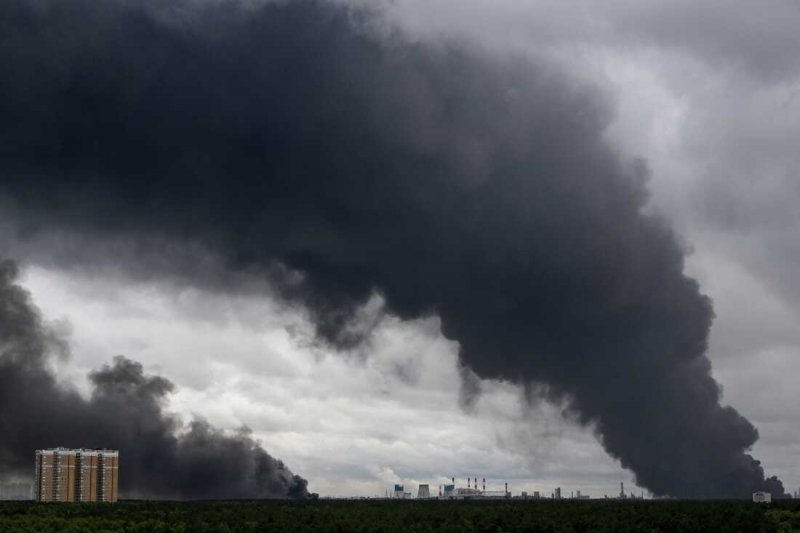
Moscow and several surrounding districts came under a large-scale drone attack that Russian authorities described as one of the most significant assaults on the Russian capital in recent months.
Air defense systems were activated throughout the night and early morning as dozens of drones approached the city and nearby strategic facilities. Explosions were reported in several locations, with emergency services rushing to areas where drone debris fell or where direct impacts caused damage, News.az reports.
The attack occurred amid the ongoing war between Russia and Ukraine, which has increasingly seen both sides use long-range drones to strike targets far from the front lines. While Moscow was once considered relatively insulated from direct attacks, the city has faced a growing number of drone incidents over the past two years. The latest assault once again highlighted the vulnerability of major urban centers to modern drone warfare and demonstrated the expanding reach of military operations connected to the conflict.
Russian officials said that air defense units intercepted many of the drones before they reached their intended targets. However, falling debris and several successful strikes still resulted in injuries and property damage, prompting a large-scale emergency response.
Were Azerbaijani citizens among the injured?
Yes. According to available information, two Azerbaijani citizens were among those injured during the attack. The individuals were reportedly located in areas affected by the drone strikes and sustained injuries as a result of the incident. Medical personnel provided assistance, and both individuals received treatment following the attack.
The injuries of Azerbaijani citizens abroad often attract significant attention because of the large Azerbaijani diaspora living and working in Russia. Hundreds of thousands of Azerbaijani nationals and people of Azerbaijani origin reside in Moscow and other Russian cities, making developments affecting civilians in Russia a matter of concern for families and officials in Azerbaijan.
At this stage, no reports have indicated that the injuries sustained by the Azerbaijani citizens were life-threatening. Azerbaijani diplomatic representatives are expected to remain in contact with local authorities and the affected individuals to ensure that they receive any necessary support and assistance.
How many people were injured overall?
Russian authorities reported that at least 16 people were injured as a result of the drone attack, although the exact figure may change as investigations continue and additional information becomes available. Among the injured were civilians who were affected either by direct impacts, explosions, shattered glass, or debris falling from drones intercepted by air defense systems.
Large drone attacks can cause injuries even when many drones are successfully destroyed before reaching their targets. Fragments from drones, pieces of damaged buildings, and secondary fires can create dangerous conditions for people living or working in affected areas. Emergency services therefore often conduct extensive inspections after such incidents to identify hidden damage and ensure public safety.
The fact that children were reportedly among the injured has also drawn attention to the broader humanitarian consequences of attacks involving densely populated urban areas. While military infrastructure may be the intended target, civilians often bear the consequences when hostilities reach major cities.
What was targeted during the attack?
Russian officials and media reports indicated that energy infrastructure and industrial facilities were among the main targets of the drone operation. Particular attention focused on the Kapotnya oil refinery, one of Moscow's most important fuel-processing facilities. The refinery plays a significant role in supplying fuel to the Russian capital and surrounding regions.
In addition to industrial sites, drones or their debris reportedly fell near residential neighborhoods, commercial properties, and transportation infrastructure. Such incidents can create widespread disruption even when critical facilities remain operational.
Targeting energy infrastructure has become a common feature of the Russia-Ukraine conflict. Both sides have sought to damage facilities that support military logistics, fuel supplies, transportation networks, and economic activity. As a result, refineries, storage depots, power facilities, and transport hubs have increasingly become focal points in the conflict.
How extensive was the drone attack?
The scale of the operation was notable both in terms of the number of drones involved and the geographical area affected. Russian authorities reported intercepting a large number of drones approaching Moscow, while attacks were also reported in other regions of the country.
The use of large drone swarms has become an increasingly important tactic in modern warfare. Launching many drones simultaneously can overwhelm air defense systems, forcing defenders to expend significant resources intercepting incoming threats. Even if the majority of drones are destroyed, a small number reaching their targets can still cause substantial damage.
Military analysts note that the growing sophistication of drone technology has transformed the battlefield. Compared with traditional missiles, drones are often cheaper to produce, easier to deploy, and capable of striking targets hundreds of kilometers away. The Moscow attack reflects this broader trend and demonstrates how drone warfare continues to evolve.
Did the attack affect transportation?
Yes. The attack caused disruptions to transportation, particularly air travel. Authorities temporarily imposed restrictions at several Moscow-area airports as a precautionary measure while air defense operations were underway. These restrictions resulted in flight delays, cancellations, and scheduling disruptions affecting thousands of passengers.
Airport closures have become a recurring consequence of drone attacks in Russia. Civil aviation authorities typically suspend operations whenever there is a potential threat to aircraft safety. Even short interruptions can have a cascading effect on airline schedules, cargo operations, and passenger travel throughout the country.
Beyond aviation, emergency responses to drone incidents can also affect road traffic and public transportation. Security forces often close roads near impact sites while investigators assess damage and remove debris.
Why is Moscow increasingly being targeted by drones?
The increasing number of drone attacks on Moscow reflects the changing nature of the Russia-Ukraine war. As the conflict has continued, Ukraine has expanded its ability to conduct long-range operations against targets deep inside Russian territory. Ukrainian officials argue that such strikes are intended to weaken military capabilities, disrupt logistics networks, and impose costs on Russia away from the battlefield.
Russia, meanwhile, views these attacks as a direct threat to civilian populations and critical infrastructure. Russian officials frequently condemn such operations and often respond with additional military actions of their own.
Military experts believe that long-range drone campaigns serve multiple purposes beyond physical destruction. They can force adversaries to divert resources to air defense, create psychological pressure on civilian populations, and demonstrate technological capabilities. The increasing frequency of attacks on Moscow suggests that the city has become an important symbolic and strategic target in the broader conflict.
What has Azerbaijan said?
Azerbaijani authorities closely monitor situations involving Azerbaijani citizens abroad, particularly in countries with large Azerbaijani communities. While official statements often focus on confirming the safety and condition of affected citizens, diplomatic missions also work with local authorities to provide practical assistance when necessary.
The Azerbaijani Embassy and consular services in Russia routinely coordinate with hospitals, emergency services, and local officials in situations involving Azerbaijani nationals. Such support can include helping injured individuals communicate with family members, obtain documentation, or access medical care.
Given the strong economic, social, and cultural ties between Azerbaijan and Russia, incidents affecting Azerbaijani citizens in Russia are followed closely by both governments and the public.
Could such incidents affect foreign nationals living in Russia?
Absolutely. Large-scale drone attacks pose risks to everyone living in affected areas, regardless of nationality. Moscow is home to millions of residents, including a significant number of foreign nationals from across the former Soviet Union and beyond.
When drones target infrastructure in or near urban areas, the danger extends beyond the intended objective. Falling debris, fires, damaged buildings, transportation disruptions, and emergency evacuations can affect entire communities. As a result, foreign citizens living in Moscow face many of the same risks as Russian residents during such incidents.
The attack serves as a reminder that modern conflicts increasingly have consequences far beyond the battlefield. Civilians living hundreds of kilometers from active combat zones can still find themselves directly affected by military operations.
What happens next?
Russian authorities are expected to continue investigating the attack, assessing damage, and reviewing the effectiveness of air defense systems. Additional security measures may be implemented around critical infrastructure, particularly energy facilities and transportation hubs considered vulnerable to future attacks.
The incident is also likely to influence military planning on both sides of the conflict. Russia may strengthen defensive measures around Moscow and other strategic locations, while Ukraine could continue to expand its use of long-range drone technology as part of its broader military strategy.
From a political perspective, the attack underscores the continuing escalation of a conflict that has increasingly crossed traditional front-line boundaries. As both sides develop more advanced drone capabilities, similar incidents may become more frequent, raising concerns about civilian safety, infrastructure security, and the risk of further escalation.
Key Takeaways
The Moscow drone attack represents another significant chapter in the evolving use of drone warfare during the Russia-Ukraine conflict. Two Azerbaijani citizens were among those injured, highlighting how civilians of various nationalities can become caught up in the consequences of modern military operations.
The attack targeted strategically important infrastructure, disrupted transportation, injured multiple civilians, and demonstrated the growing reach of long-range drone technology. While Russian air defenses intercepted many incoming drones, the incident shows that even successful defensive efforts cannot entirely eliminate risks to civilians and critical infrastructure.
As the conflict continues, governments, security experts, and ordinary citizens will be watching closely to see how both sides adapt their military strategies and whether further attacks of this scale occur in the future.
By Faig Mahmudov


Similar news