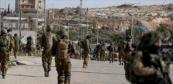
What's behind attack on Niger's main airport?


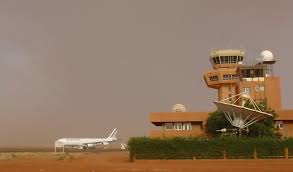
Reports of explosions and sustained gunfire at the airport in Niger's capital, Niamey, have raised fresh concerns about security in one of the world's most unstable regions.
Witnesses reported hearing multiple explosions and continuous gunfire for more than an hour on Thursday morning, while security forces sealed off the area amid indications that the airport may have come under attack, News.az reports.
Although authorities have not yet officially confirmed the nature of the incident, the event highlights the persistent security challenges facing Niger and the wider Sahel region, where extremist groups linked to al Qaeda and Islamic State have carried out deadly attacks for more than a decade.
This explainer examines what happened, what is known so far, who could be behind the incident, and what it means for Niger and regional security.
What happened at Niamey airport?
According to witnesses and a Reuters journalist in the area, a series of explosions were heard early Thursday morning at the airport in Niamey, the capital of Niger.
The first explosions reportedly occurred at approximately 6:00 a.m. local time. Shortly afterward, sustained gunfire erupted around the airport area. Witnesses said the gunfire continued for more than an hour, while occasional shots could still be heard nearly two hours later.
Security forces quickly responded by blocking roads and restricting access to the airport area. Reports from the scene suggested that military and security personnel were deployed to contain the situation and assess the threat.
At the time of reporting, authorities had not released information regarding casualties, damage, or the precise nature of the incident.
Was the airport under attack?
While Niger's government had not issued an immediate official statement, a security source told Reuters that it appeared the airport was under attack.
This assessment was based on the nature of the explosions, the prolonged exchange of gunfire, and the security measures implemented around the airport.
However, until authorities complete their investigation and release official findings, the exact circumstances remain unclear.
Security incidents involving airports are often treated with extreme caution because airports serve as critical transportation hubs, military facilities, and symbols of state authority.
If confirmed, such an attack would represent a significant security breach.
Why is Niamey airport important?
Niamey's airport is one of the most strategically important facilities in Niger.
The airport serves several functions simultaneously:
- International passenger travel
- Domestic transportation
- Military operations
- Government travel
- Humanitarian missions
- International security cooperation
The facility has played an especially important role in regional counterterrorism efforts.
Over the years, foreign military partners, including France and the United States, have used facilities in Niger to support intelligence gathering and security operations against extremist groups operating across the Sahel.
Because of its strategic significance, the airport has long been considered a potential target for militant organizations.
Has the airport been attacked before?
Yes.
Earlier this year, the Islamic State affiliate operating in the region claimed responsibility for an attack targeting the airport.
The claim underscored the vulnerability of critical infrastructure in Niger and demonstrated the ambitions of extremist organizations seeking to undermine state authority.
Although security measures have been strengthened since previous incidents, militant groups continue to demonstrate an ability to launch attacks against both civilian and military targets.
The recurrence of violence near such a high-profile facility raises questions about the evolving tactics and capabilities of armed groups operating in the region.
Who could be behind the attack?
At the time of reporting, no group had officially claimed responsibility for Thursday's incident.
However, security analysts note that several extremist organizations operate in Niger and neighboring countries.
The main groups include:
Islamic State Sahel Province (ISSP)
This organization is affiliated with the Islamic State and operates across large areas of the Sahel.
The group has claimed responsibility for attacks against military bases, government facilities, and civilian targets.
Jama'at Nusrat al-Islam wal-Muslimin (JNIM)
JNIM is linked to al Qaeda and remains one of the most active militant coalitions in West Africa.
The group conducts attacks against security forces and government institutions throughout the region.
Other Local Armed Groups
Several smaller armed factions and criminal networks also operate in Niger, often exploiting weak state control in remote regions.
While investigators continue to gather information, many observers believe extremist groups are among the most likely suspects.
Why is Niger facing ongoing security challenges?
Niger is located in the heart of the Sahel, a vast semi-arid region stretching across Africa.
The region has become one of the world's most active theaters of insurgency and terrorism.
Several factors contribute to instability:
Weak State Presence
Large areas of Niger are sparsely populated and difficult to govern effectively.
Porous Borders
Niger shares borders with several countries facing their own security challenges, making it easier for armed groups to move across frontiers.
Poverty and Unemployment
Economic hardship can create conditions that extremist groups exploit for recruitment.
Political Instability
Repeated political crises and military takeovers have complicated security efforts.
Regional Conflicts
Instability in neighboring Mali, Burkina Faso, Libya, and Nigeria has contributed to the spread of armed violence.
These interconnected challenges make it difficult for any single government to address the problem alone.
Why is the Sahel region considered a global security concern?
The Sahel has become one of the fastest-growing centers of extremist violence in the world.
Over the past decade, thousands of people have been killed in attacks across Niger, Mali, and Burkina Faso.
Millions more have been displaced from their homes.
International organizations warn that instability in the Sahel has consequences extending beyond Africa.
Security concerns include:
- Terrorist expansion
- Refugee and migration flows
- Humanitarian crises
- Organized crime
- Weapons trafficking
- Regional destabilization
As a result, developments in countries such as Niger are closely monitored by governments and security agencies worldwide.
What has changed in Niger's security environment in recent years?
Niger's security landscape has undergone significant changes following the military coup of July 2023.
The coup led to a deterioration in relations between Niger and several Western partners.
Subsequently, French forces withdrew from the country, and cooperation with some international security initiatives was reduced.
At the same time, Niger's military authorities have sought alternative partnerships and new approaches to combating insurgent groups.
Critics argue that the changing security arrangements have created vulnerabilities, while supporters maintain that Niger must pursue a more independent strategy.
The effectiveness of these new policies remains the subject of debate among analysts.
How serious would an attack on the airport be?
An attack targeting the capital's airport would carry both practical and symbolic significance.
Practically, it could disrupt transportation, trade, government activities, and international operations.
Symbolically, it would demonstrate that attackers are capable of striking one of the country's most heavily protected and strategically important facilities.
Such attacks are often intended not only to cause damage but also to create fear, attract publicity, and undermine public confidence in the government's ability to provide security.
For this reason, airports are frequently viewed as high-value targets by extremist organizations.
Could air travel be affected?
Any major security incident involving an airport has the potential to affect air travel.
Possible consequences may include:
- Flight delays
- Flight cancellations
- Temporary closure of airport facilities
- Increased security screenings
- Travel advisories
The extent of any disruption will depend on the results of security assessments conducted by authorities.
Airlines and airport operators typically review operational safety conditions before resuming normal services.
How have authorities responded?
Initial reports indicate that security forces rapidly secured the area and restricted access to the airport.
Roadblocks were established, and security personnel were deployed around key facilities.
Authorities are expected to conduct investigations to determine:
- The source of the explosions
- The identity of any attackers
- Whether there were casualties
- The extent of damage
- Potential links to extremist groups
Further information is likely to emerge as officials complete their assessments.
What does this incident mean for Niger's future?
Regardless of the final outcome of the investigation, the incident serves as a reminder of the security challenges facing Niger.
The country remains at the center of a broader regional struggle involving extremist violence, political instability, and international security interests.
If the airport was indeed targeted by militants, it would highlight the continued threat posed by armed groups despite years of military operations and counterterrorism efforts.
The event may also intensify debates about security policy, military cooperation, and regional strategies for combating extremism.
The Bottom Line
The explosions and sustained gunfire reported at Niamey's airport have once again drawn attention to the fragile security situation in Niger and the wider Sahel region. While details remain limited and authorities have yet to provide a full account, early indications suggest the possibility of an attack on one of the country's most important strategic facilities.
The incident comes against the backdrop of years of extremist violence that have destabilized Niger, Mali, and Burkina Faso. Whether Thursday's events are ultimately linked to militant organizations or another security threat, they underscore the ongoing challenges facing governments across the region as they seek to restore stability and protect critical infrastructure.
By Faig Mahmudov


Similar news