Who is Jeffrey Epstein?


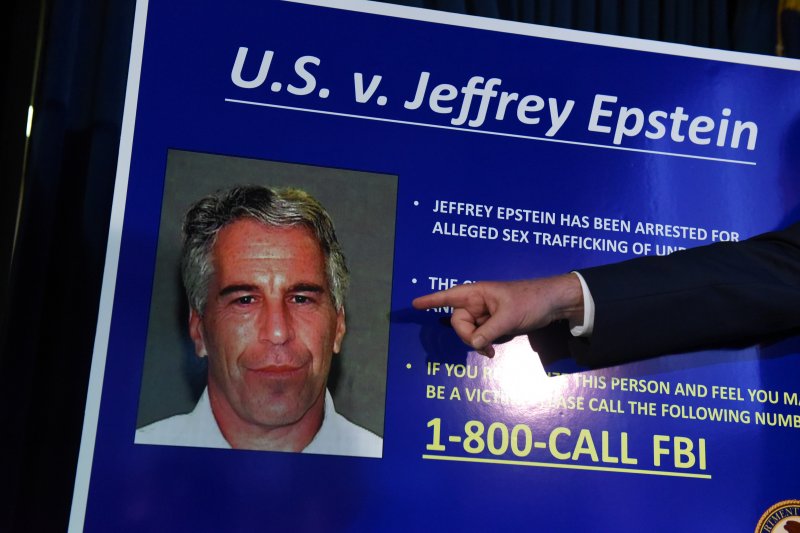
The name Jeffrey Epstein remains one of the most controversial and disturbing in modern American criminal history.
His case involved allegations of sexual abuse of minors, high profile connections to politicians and business leaders, questions about wealth and power, and a death in federal custody that continues to fuel speculation, News.Az reports.
This explainer answers the most frequently asked questions about who Jeffrey Epstein was, what he was accused of, how his case unfolded, and why it continues to generate public debate years after his death.
Who was Jeffrey Epstein?
Jeffrey Epstein was an American financier and convicted sex offender born on January 20, 1953, in Brooklyn, New York. He came from a middle class background and eventually moved in elite social and financial circles. By the early 2000s, he was known as a wealthy money manager with homes in New York, Florida, New Mexico, and the U.S. Virgin Islands.
Although he presented himself as a financier who managed money for high net worth individuals, much about his professional life remained opaque. Over time, it became clear that his wealth and influence were intertwined with a long running pattern of sexual abuse of underage girls.
What was Jeffrey Epstein’s professional background?
Epstein began his career in an unconventional way. After attending college but not completing a degree, he briefly worked as a mathematics and physics teacher at a private school in Manhattan. Through connections, he transitioned into finance in the late 1970s, working at the investment bank Bear Stearns.
He later left Bear Stearns and established his own financial advisory firm. Epstein claimed to manage the assets of billionaires and prominent individuals. However, details about the scale and nature of his business activities were often vague. Investigations and media reports over the years suggested that his financial operations were limited in scope compared to the image he cultivated.
Despite this ambiguity, he accumulated significant wealth, owning multiple luxury properties, a private jet, and a private island in the Caribbean.
What crimes was Epstein accused of?
Epstein was accused of sexually abusing and exploiting dozens of underage girls over many years. According to prosecutors and victims, he lured girls, some as young as 14, to his homes under the pretense of giving them massages. These encounters often escalated into sexual abuse.
Victims described a system in which they were paid for sexual acts and sometimes encouraged to recruit other girls, creating a pattern that investigators later characterized as sex trafficking. The abuse allegedly occurred in several locations, including Florida, New York, New Mexico, and the U.S. Virgin Islands.
In 2019, federal prosecutors charged Epstein with sex trafficking of minors and conspiracy to commit sex trafficking of minors. These charges alleged that he operated a wide ranging network of abuse from at least 2002 to 2005 and possibly beyond.
What happened in the 2008 Florida case?
One of the most controversial aspects of the Epstein story is a 2008 plea agreement in Florida. In 2005, parents of a teenage girl reported Epstein to police in Palm Beach, Florida. A local investigation uncovered allegations from multiple victims.
However, instead of facing federal charges that could have resulted in a life sentence, Epstein reached a plea deal with federal prosecutors in 2008. He pleaded guilty in Florida state court to two charges related to solicitation of prostitution involving a minor.
The agreement allowed him to serve 13 months in a county jail, with work release privileges that permitted him to leave the facility during the day. He was also required to register as a sex offender.
The deal later drew intense criticism because it granted immunity not only to Epstein but also to unnamed potential co conspirators. Many victims said they were not properly informed about the agreement, and legal battles over its legality continued for years.
Why was the 2008 plea deal so controversial?
The plea agreement was widely viewed as unusually lenient given the severity and number of allegations. Critics argued that federal prosecutors failed to pursue stronger charges and shielded Epstein from greater accountability.
A later review by the U.S. Department of Justice Office of Professional Responsibility examined the conduct of prosecutors involved in the case. While it found poor judgment, it did not conclude that they engaged in professional misconduct.
For victims and advocates, however, the deal became a symbol of how wealth and influence can affect the criminal justice system.
What led to his 2019 arrest?
In July 2019, federal prosecutors in the Southern District of New York arrested Epstein on new sex trafficking charges. The indictment alleged that he sexually exploited dozens of underage girls and used his properties to facilitate abuse.
During a search of his Manhattan mansion, law enforcement reportedly discovered large quantities of photographs, some of which allegedly depicted underage girls. The arrest followed renewed media scrutiny and investigative reporting that brought national attention back to the case.
This time, prosecutors appeared determined to pursue more serious federal charges.
What was Epstein facing at the time of his death?
At the time of his 2019 arrest, Epstein faced charges that carried the possibility of decades in prison, potentially up to 45 years. Given his age, a conviction could have effectively resulted in a life sentence.
He pleaded not guilty and was held without bail in a federal detention facility in New York City.
How did Jeffrey Epstein die?
On August 10, 2019, Epstein was found unresponsive in his cell at the Metropolitan Correctional Center in Manhattan. Authorities later ruled his death a suicide by hanging.
However, the circumstances surrounding his death generated widespread skepticism and conspiracy theories. At the time of his death, Epstein had reportedly been taken off suicide watch and was housed in a special housing unit. Guards failed to conduct required checks, and surveillance cameras in the area were either malfunctioning or lacked usable footage.
Multiple investigations, including one by the U.S. Department of Justice Inspector General, identified serious lapses and negligence by prison staff but did not find evidence of a criminal conspiracy in his death.
Why do conspiracy theories persist about his death?
The combination of Epstein’s powerful connections, the high stakes of his pending trial, and documented failures in jail procedures created fertile ground for speculation.
Many people questioned how a high profile detainee facing major federal charges could die in custody under such circumstances. The fact that guards did not perform regular checks and that cameras failed heightened suspicion.
Despite official findings that the death was a suicide, doubts continue to circulate in public discourse.
Who were Epstein’s known associates?
One of the most striking aspects of Epstein’s life was his association with prominent public figures. Over the years, he cultivated relationships with politicians, business leaders, academics, and celebrities.
Some individuals acknowledged social or professional interactions with him, while others faced scrutiny for the extent of their ties. It is important to note that being photographed with or acquainted with Epstein does not imply involvement in criminal activity. Nonetheless, these connections fueled public interest and concern about possible enablers.
His social network was part of how he maintained influence and credibility, even after his 2008 conviction.
What was Ghislaine Maxwell’s role?
Ghislaine Maxwell, a British socialite and longtime associate of Epstein, was accused of helping recruit and groom underage girls for him. Prosecutors alleged that she played a central role in facilitating abuse.
In 2021, Maxwell was convicted in federal court on charges related to sex trafficking and conspiracy. She was later sentenced to 20 years in prison.
Her conviction was seen by many as a measure of accountability after Epstein’s death prevented a full trial against him.
What is known about Epstein’s wealth?
Epstein claimed to manage billions of dollars for ultra wealthy clients, but public documentation of his financial operations was limited. Court records and investigations suggested that his fortune may have been less straightforward than portrayed.
After his death, legal battles over his estate began. Victims sought compensation through civil lawsuits, and an Epstein Victims’ Compensation Program was established. The program paid out hundreds of millions of dollars to individuals who filed claims of abuse.
His estate was valued at over 500 million dollars at the time of his death, although disputes and settlements reduced that figure.
What happened to his properties?
Epstein owned several high profile properties, including a mansion in Manhattan, a home in Palm Beach Florida, a ranch in New Mexico, and a private island in the U.S. Virgin Islands.
Some of these properties were sold after his death, with proceeds contributing to settlements and legal claims. His private island became a particularly controversial symbol of his activities, as some allegations involved abuse occurring there.
How many victims were there?
Prosecutors initially identified dozens of victims, but later estimates suggested that the number could be significantly higher. Civil lawsuits and compensation claims indicate that many individuals alleged abuse over a span of years.
Because of the secrecy surrounding earlier plea agreements and the lack of a full criminal trial in 2019, the complete scope of the network and the number of victims may never be fully known.
Did Epstein run an international sex trafficking ring?
Federal prosecutors in 2019 described his activities as a sex trafficking conspiracy involving the recruitment and exploitation of minors across state lines. While allegations and civil suits suggested a broader network of enablers, Epstein was not tried in 2019 due to his death.
As a result, some questions about the scale and structure of his operations remain unresolved in court.
What legal reforms followed the Epstein case?
The Epstein case prompted renewed debate about prosecutorial discretion, plea bargaining practices, and victims’ rights. Critics argued that the 2008 deal exposed weaknesses in transparency and accountability.
The case also intensified scrutiny of how federal prisons handle high profile detainees. The documented failures at the Manhattan detention center led to calls for reform in jail oversight and staffing.
How did the public and media respond?
The Epstein story dominated headlines in 2019 and continued to generate coverage in subsequent years. Media outlets investigated his connections, financial dealings, and the handling of his earlier case.
Documentaries, books, and investigative series examined various aspects of the scandal, from systemic failures to the experiences of survivors. Public interest remained high because the case touched on themes of power, privilege, and justice.
Why is the Epstein case considered historically significant?
The Epstein case is significant for several reasons. It exposed a long running pattern of abuse involving underage victims. It highlighted perceived disparities in how the justice system treats wealthy defendants. It revealed failures in prison management. It triggered broader discussions about accountability among elites.
Few cases in recent U.S. history have combined criminal allegations, political implications, and institutional scrutiny in such a concentrated way.
What remains unknown?
Despite multiple investigations, several questions persist. The full extent of Epstein’s network and whether others facilitated or concealed his activities. The precise nature of his financial dealings and sources of wealth. Whether additional criminal conduct might have been uncovered had he stood trial in 2019.
Because he died before facing trial on the most serious federal charges, many aspects of the case were never tested in court.
What is his legacy?
Jeffrey Epstein’s legacy is defined by the harm suffered by his victims and the institutional failures that allowed abuse to continue for years. His case became emblematic of the intersection of money, influence, and justice.
For survivors, the story is not about conspiracy theories or elite networks but about accountability and recognition of abuse. The compensation program and subsequent convictions, including that of Ghislaine Maxwell, provided some measure of legal consequence, though many argue that full justice was never achieved.
Conclusion
Jeffrey Epstein was a financier who leveraged wealth and social connections while engaging in criminal conduct involving the sexual abuse and trafficking of minors. His 2008 plea deal in Florida, his 2019 federal indictment, and his death in jail before trial combined to create one of the most controversial criminal cases of the 21st century in the United States.
The case raised profound questions about prosecutorial discretion, institutional oversight, and the influence of power in legal systems. Although several investigations have concluded and some associates have been convicted, the Epstein story continues to resonate because of the unresolved issues surrounding his network and the circumstances of his death.
Ultimately, understanding who Jeffrey Epstein was requires examining not only the crimes he was accused of, but also the broader systems that failed to stop him sooner.
By Faig Mahmudov


Similar news