WHO leader sets out cruise ship hantavirus evacuation plan


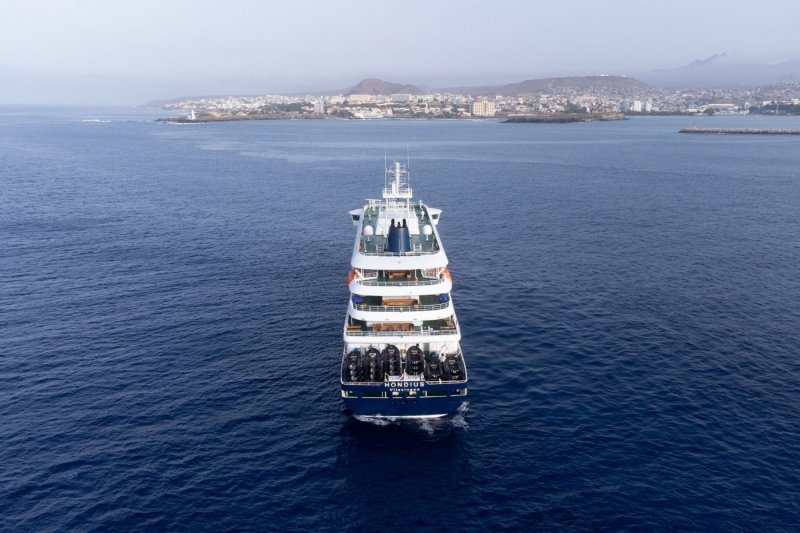
The World Health Organization (WHO) chief has arrived in Spain to supervise the evacuation of more than 140 passengers and crew from a cruise ship affected by a deadly hantavirus outbreak.
The operation comes as international health authorities scramble to contain the spread of the rare, rodent-borne virus, News.Az reports, citing The Independent.
RECOMMENDED STORIES
WHO Director-General Tedros Adhanom Ghebreyesus confirmed his presence on the Spanish island of Tenerife, off the coast of West Africa, alongside senior Spanish government officials.
Their mission is to "oversee safe disembarkation of the passengers, crew members and health experts" from the Dutch-flagged MV Hondius, which is expected to dock in the early hours of Sunday. Mr Ghebreyesus noted that, at present, no one aboard the vessel is displaying symptoms of the virus.
The WHO continues to monitor the situation closely, with Mr Ghebreyesus stating on X: "WHO continues to actively monitor the situation, coordinate support and next steps and will keep Member States and the public updated accordingly. So far, the risk for the population of Canary Islands and globally remains low."
Spain’s Health Minister Monica Garcia and Interior Minister Fernando Grande-Marlaska are also in Tenerife to coordinate the disembarkation process.
The outbreak has already claimed three lives, and five passengers who disembarked earlier have tested positive for hantavirus. Both the United States and the United Kingdom have pledged to send aircraft to evacuate their citizens from the cruise ship.
Upon arrival, passengers will be directed to a "completely isolated, cordoned-off area," according to Virginia Barcones, head of Spain’s emergency services.
Hantavirus is typically transmitted through the inhalation of contaminated rodent droppings and is not usually spread between humans. However, the Andes virus strain, identified in this outbreak, may be capable of human-to-human transmission in rare instances. Symptoms typically manifest between one and eight weeks post-exposure.
In response to the crisis, Spain has activated the EU civil protection mechanism, ensuring a medical evacuation plane equipped for high-consequence infectious diseases is on standby. The Dutch government, given the ship's flag, is working with Spanish authorities to repatriate its citizens.
Asymptomatic individuals will undergo a six-week home quarantine, monitored by local health services, and the Netherlands may temporarily accommodate other nationalities for quarantine.
A significant challenge remains in tracking more than two dozen passengers who disembarked from the MV Hondius across four continents before the deadly outbreak was officially detected. Health authorities are now racing to trace these individuals and anyone they may have come into contact with.
Concerns about wider transmissibility were briefly heightened when a flight attendant on a KLM flight, briefly boarded by an infected cruise passenger, fell ill.
However, the WHO confirmed on Friday that the attendant tested negative for hantavirus. Christian Lindmeier, a WHO spokesman, sought to reassure the public, stating: "The risk remains absolutely low. This is not a new COVID."
The timeline reveals that over two dozen people from at least 12 different countries left the ship on 24 April, nearly two weeks after the first passenger died, without contact tracing. It was not until 2 May that health authorities confirmed hantavirus in a ship passenger.
The Dutch woman whose husband died on the ship became too ill to continue an international flight from Johannesburg and subsequently died there. Dutch public health services are now tracing contacts from her brief time on the plane.
By Ulviyya Salmanli


Similar news