Why a US ground operation in Iran could trigger a prolonged war


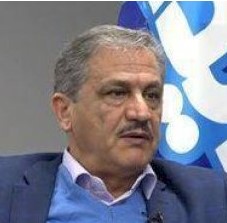
Editor’s note: Dr Afshar Soleymani is a former Iranian ambassador to Azerbaijan, as well as an analyst and researcher in political and international relations. The views expressed in this article are those of the author and do not necessarily reflect the position of News.Az.
The global perception of Donald Trump is largely critical. He is often viewed as a political figure characterised by inconsistency, unpredictability, and a lack of reliability. He frequently makes contradictory statements and adopts a harsh tone, yet these are not always supported by a coherent or sustainable strategic approach.
His tendency to apply business-style, transactional thinking to politics is also notable. This reflects a deal-oriented mindset, resulting in situational decision-making that raises concerns about credibility in international affairs.
Observations suggest that he often disregards advice from experts and professional circles, relying instead on personal instincts when making decisions. Some perspectives also point to the possible influence of various interest groups behind his actions. More broadly, this governing style has been widely criticised by analysts, former government officials, and members of Congress. The inconsistency of his rhetoric and its frequent shifts undermine the predictability of US foreign policy.
There are also indications of concern within security and military institutions regarding this approach. Reports suggest that some former military personnel, intelligence officials, and security experts are wary of potential escalation scenarios involving Iran. This reflects the absence of a unified position within decision-making circles. While some oppose any form of military intervention, others continue to keep the possibility of harsher measures, including ground operations, on the table as a theoretical option.
In the current context, Trump’s behaviour appears largely aimed at exerting psychological pressure. On the one hand, he projects readiness to take decisive action against Iran; on the other, he creates the impression that he is reluctant to follow through. This resembles a classic strategy of deterrence through threat without execution, intended to intimidate the opposing side and force concessions under pressure.
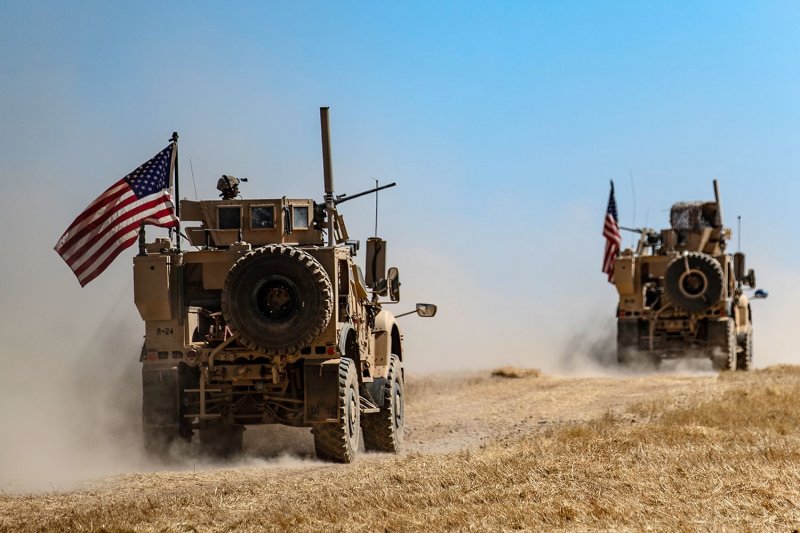
Source: Reuters
At the same time, allegations of targeting non-military infrastructure in Iran, along with threats against energy facilities, suggest that this strategy relies primarily on coercive pressure mechanisms. The objective is to create internal instability, disrupt economic and social conditions, and ultimately push Iran towards compromise. However, this approach appears to be producing the opposite effect. Rather than weakening internal cohesion, such pressure tends to strengthen public resistance and unity within Iran.
Even among segments of the Iranian diaspora that were previously critical of the government, attitudes appear to be shifting. Many now recognise that external military intervention does not lead to the anticipated political change. On the contrary, it often reinforces national solidarity and strengthens the existing political structure. This pattern has been observed repeatedly in similar historical contexts.
There are also differing interpretations regarding the broader objectives of US policy. Some analysts argue that the issue extends beyond security concerns to include control over energy resources and the reshaping of regional power dynamics. In this sense, Iran is not merely a target but part of a broader geopolitical framework, adding further complexity to the situation.
The legal dimension is equally significant. A number of international law experts argue that such military actions would violate established norms of international law. Warfare, even when it occurs, is governed by certain rules, and the targeting of civilian infrastructure contradicts these principles. As a result, the rhetoric and potential actions under discussion raise serious legal concerns.
Trump’s frequent use of strong expressions, including statements about “returning Iran to the Stone Age”, is widely seen as emotional and populist rhetoric rather than a reflection of a structured strategic approach. Such language appears to be directed more at domestic political audiences than at realistic policy implementation. Iran, with its long-standing statehood traditions spanning millennia, is unlikely to be weakened or coerced by such statements.
At present, the continuation of diplomatic talks alongside increasing military pressure further complicates the situation. In particular, tensions surrounding the Strait of Hormuz highlight the strategic sensitivity of the issue. This waterway is one of the world’s most critical energy transit routes, and any escalation in this area could have severe global economic consequences.

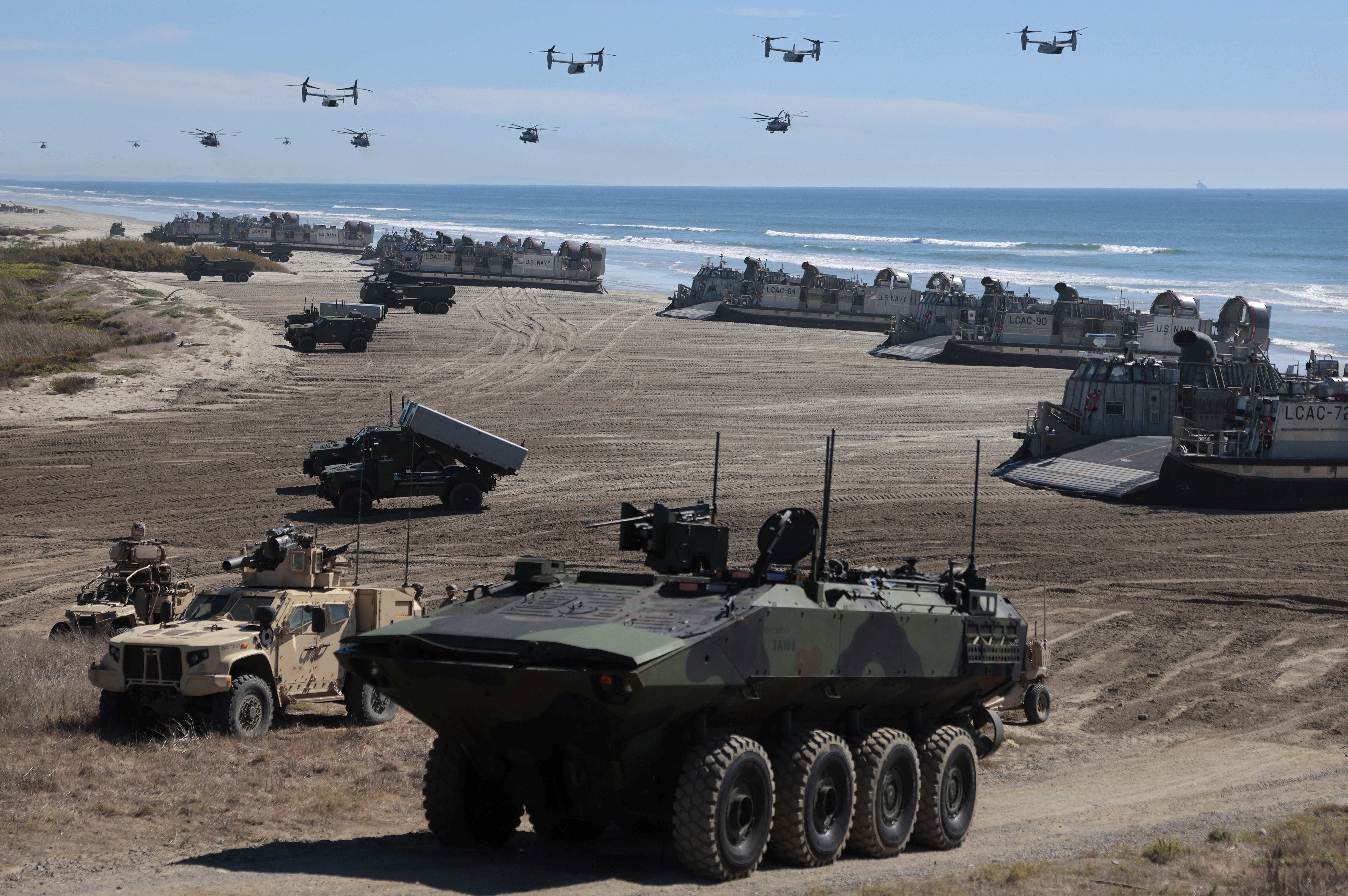
Source: Reuters
Additionally, some scenarios involve potential control over strategic islands in the Persian Gulf. Abu Musa Island, Greater Tunb, and Lesser Tunb are frequently mentioned in this context. However, any attempt to seize control of these territories could trigger a broader regional conflict, escalating the situation beyond a localised confrontation.
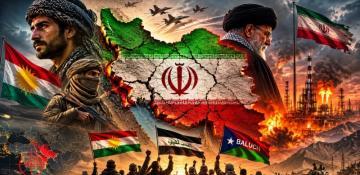
As for the possibility of a ground operation, it remains one of the riskiest scenarios. Given Iran’s geography, population, and military capabilities, such an intervention would likely result in significant casualties and a prolonged conflict. Despite the use of airstrikes, sanctions, and other forms of pressure, the United States has not fully achieved its strategic objectives so far. A ground invasion under these conditions would likely intensify the situation and make it more difficult to manage.
Furthermore, such an operation would have serious domestic implications within the United States. Public fatigue with prolonged wars is already evident, and a new large-scale conflict could heighten internal political tensions. This represents an additional constraint for decision-makers.
Taking all these factors into account, it can be concluded that the current situation is primarily driven by political pressure and demonstrations of force. Although a ground operation is discussed as a possibility, its actual implementation appears highly unlikely due to the significant military, political, and economic risks involved. As such, it functions more as a tool of pressure than a realistic course of action.
(If you possess specialized knowledge and wish to contribute, please reach out to us at opinions@news.az).


Similar news