Potential US ground operation in Iran: scenarios, risks, and timelines


.png)
Editor’s note: Faig Mahmudov is a journalist based in Azerbaijan covering regional security, foreign policy, and geopolitical developments. The views expressed in this article are his own and do not necessarily reflect the official position or editorial stance of News.Az.
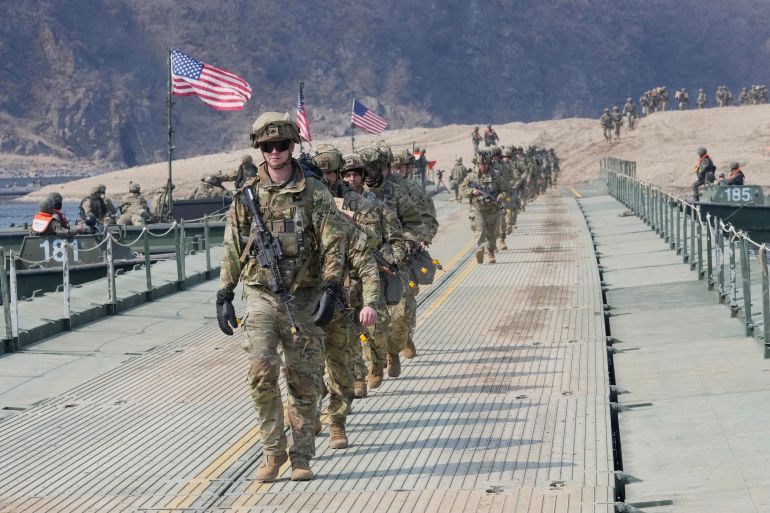
The prospect of the United States conducting ground operations in Iran has re-emerged as a serious question in contemporary security debates. While such a scenario remains unlikely in its full-scale form, it is not beyond the realm of possibility when examined through the lenses of military capability, regional dynamics, and escalation risks. The more relevant question is not whether the United States can launch ground operations, but under what circumstances it would choose to do so, and what form those operations would take.
From a purely military standpoint, the United States retains unmatched global power projection capabilities. It can deploy forces rapidly, sustain them over long distances, and integrate air, land, sea, cyber, and space assets into a unified operational framework. However, feasibility is not determined by capability alone. Iran presents a uniquely challenging operational environment that significantly increases the cost and complexity of any such undertaking.
Iran’s geography is a major obstacle. With a land area exceeding 1.6 million square kilometers and a population of more than 85 million, it is one of the largest and most populous countries in the Middle East. Unlike Iraq in 2003, where US forces advanced relatively quickly toward Baghdad, Iran’s terrain is dominated by mountain ranges such as the Zagros and Alborz, as well as vast desert regions. These features complicate maneuver warfare, slow logistics, and provide natural defensive advantages. Any large-scale invasion would require not only significant troop levels but also sustained supply lines across difficult terrain.
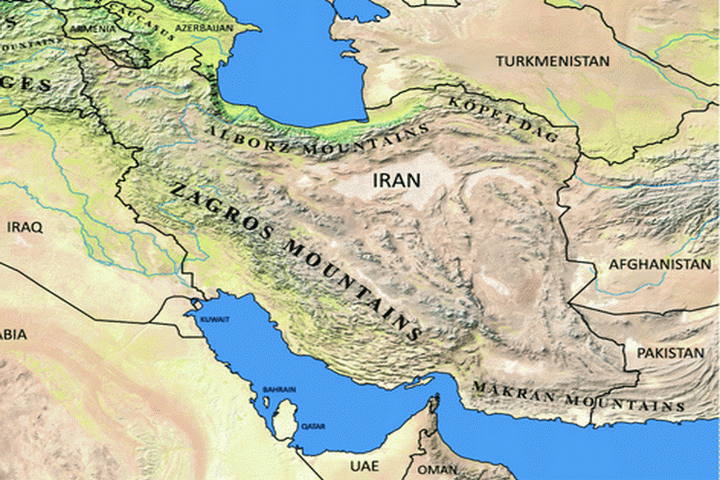
Source: CNN
Historical comparisons are instructive. During the 2003 Iraq War, the United States deployed more than 170,000 troops at the peak of combat operations. Even that force proved insufficient to stabilize the country in the years that followed. In Iran’s case, military planners estimate that a full-scale invasion could require several hundred thousand troops, potentially exceeding the commitments seen in Iraq. This alone makes such a scenario politically and logistically daunting.
Equally important is Iran’s military doctrine, which is designed to counter a technologically superior adversary. The Islamic Revolutionary Guard Corps (IRGC) has spent decades developing asymmetric warfare capabilities, including a large arsenal of ballistic and cruise missiles, extensive drone programs, naval tactics aimed at disrupting shipping in the Persian Gulf, and a network of allied non-state actors across the region. This strategy is not intended to defeat the United States in a conventional sense, but to raise the cost of conflict to an unacceptable level.
In practical terms, even a limited US ground presence inside Iran could trigger broader regional escalation. American bases in Iraq, the Gulf states, and elsewhere could become targets for missile strikes or proxy attacks. Energy infrastructure and maritime routes could also be threatened, creating global economic repercussions. The battlefield would therefore extend well beyond Iranian territory.
Domestic political considerations in the United States further constrain the likelihood of a large-scale ground operation. The legacy of prolonged conflicts in Iraq and Afghanistan continues to shape public opinion and policymaking. The war in Afghanistan, which lasted two decades, underscored the difficulty of achieving lasting political outcomes through military intervention alone. As a result, there is limited appetite among both the public and political elites for another open-ended ground war in the region.
This does not mean that all forms of ground engagement are off the table. US military strategy over the past two decades has shifted toward limited, targeted operations rather than full-scale invasions. Special operations forces, rapid deployment units, and amphibious capabilities enable precise interventions aimed at specific objectives. These missions are designed to minimize exposure, reduce long-term commitments, and maintain strategic flexibility.
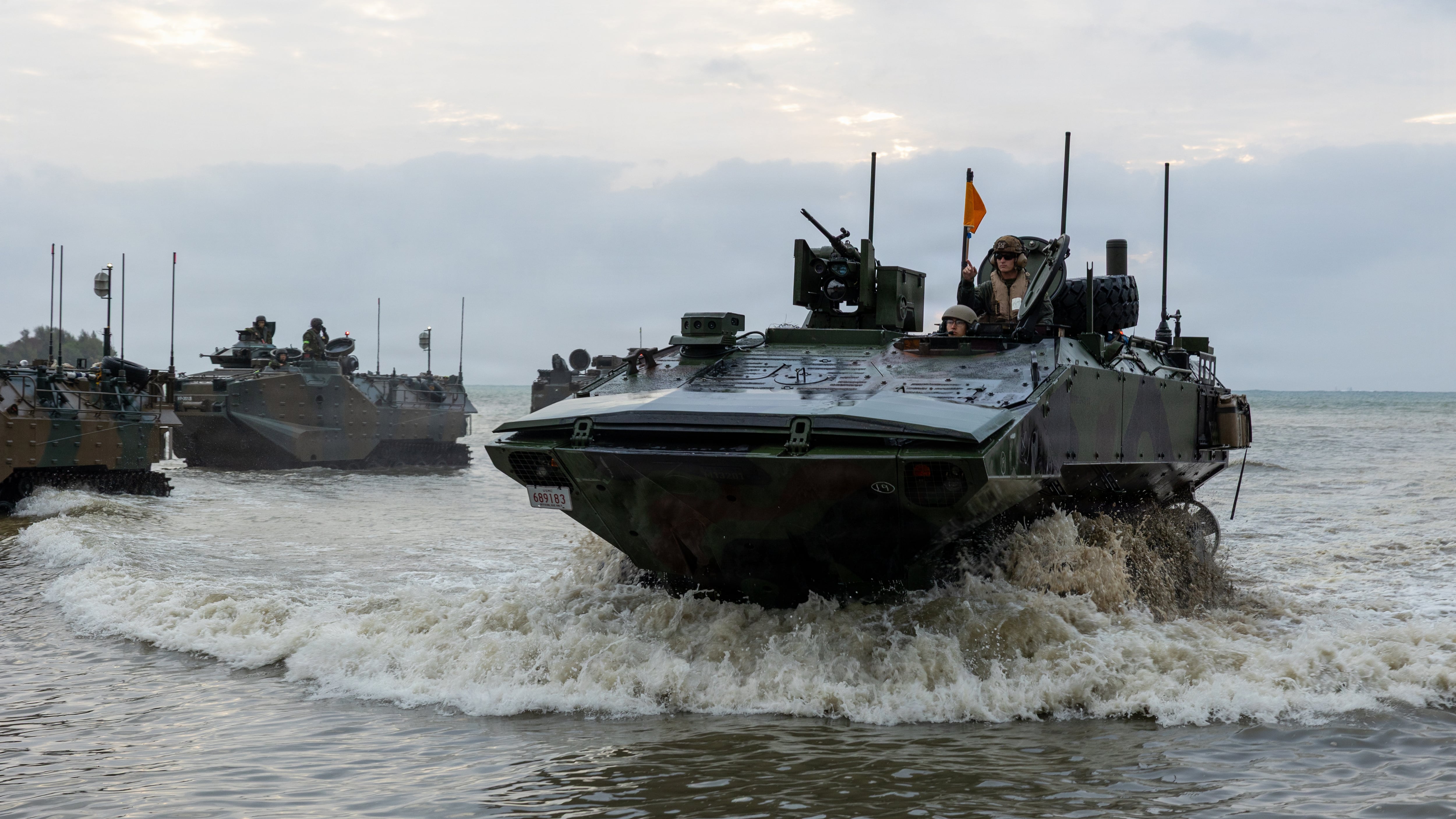
Source: BBC
If the United States were to conduct ground operations in Iran, they would most likely fall into this category. One plausible scenario involves targeted raids on critical infrastructure, such as nuclear or missile facilities. Some of Iran’s nuclear sites are heavily fortified and located deep underground. While airstrikes may damage these facilities, fully neutralizing them could require temporary physical access.
Another scenario involves securing strategic sites along the Persian Gulf. Iran’s southern coastline hosts key oil export terminals and naval bases. Disrupting or controlling these assets could have immediate economic and military effects. For example, Kharg Island handles a significant portion of Iran’s oil exports. A limited operation targeting this site could aim to exert economic pressure rather than achieve territorial control.
The Strait of Hormuz represents an even more critical chokepoint. Roughly one-fifth of the world’s oil supply passes through this narrow corridor. Any attempt by Iran to disrupt shipping could trigger a rapid international response. In such a scenario, US ground or amphibious forces might be deployed to secure key positions or neutralize coastal missile systems. These operations would likely be short in duration but strategically significant.
Western Iran, near the Iraqi border, is another area where limited operations could theoretically occur. The presence of US forces in Iraq provides a logistical base for potential cross-border missions. However, this option carries significant risks, including destabilizing Iraq, provoking political backlash, and exposing US personnel to retaliation.
A large-scale advance toward central Iran or major urban centers such as Tehran remains highly unlikely under current conditions. Urban warfare in densely populated areas would entail substantial casualties and likely lead to a prolonged occupation, contradicting the current US preference for limited engagement and facing strong political resistance at home.
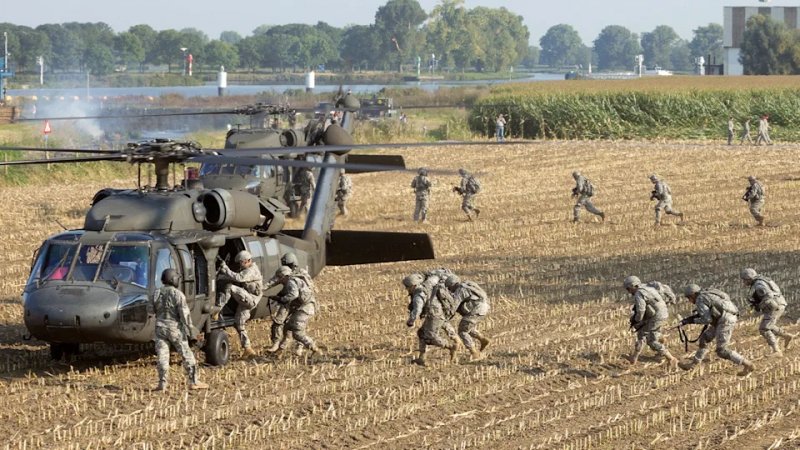
Source: aljazeera
Timing is another critical factor. Ground operations would likely be triggered by specific developments, such as a major escalation in hostilities, direct attacks on US forces, or significant disruptions to global energy flows. In such cases, Washington might conclude that limited ground action is necessary to achieve immediate objectives or restore deterrence.
However, even limited operations carry the risk of unintended escalation. Iran’s strategy relies on asymmetric responses, meaning a localized mission could quickly expand into a broader conflict. This creates a strategic dilemma: while limited ground operations may achieve specific objectives, they also introduce variables that can be difficult to control as conflict dynamics evolve.
Ultimately, the likelihood of US ground operations in Iran must be assessed in terms of both probability and impact. A full-scale invasion aimed at regime change is highly unlikely due to the immense costs, risks, and political constraints involved. However, limited and targeted ground actions remain a credible component of US military planning.
The greater risk lies not in the initial deployment of ground forces, but in the potential for escalation. History shows that conflicts often evolve in unpredictable ways. What begins as a limited operation can, under certain conditions, expand into a broader and more prolonged engagement.
(If you possess specialized knowledge and wish to contribute, please reach out to us at opinions@news.az).


Similar news