Why an Armenian woman was appointed as Minister of State for Palestine? – OPINION


Editor's note: Tural Heybatov is a special commentator on political issues for News.Az. The article expresses the personal opinion of the author and may not coincide with the view of News.Az.
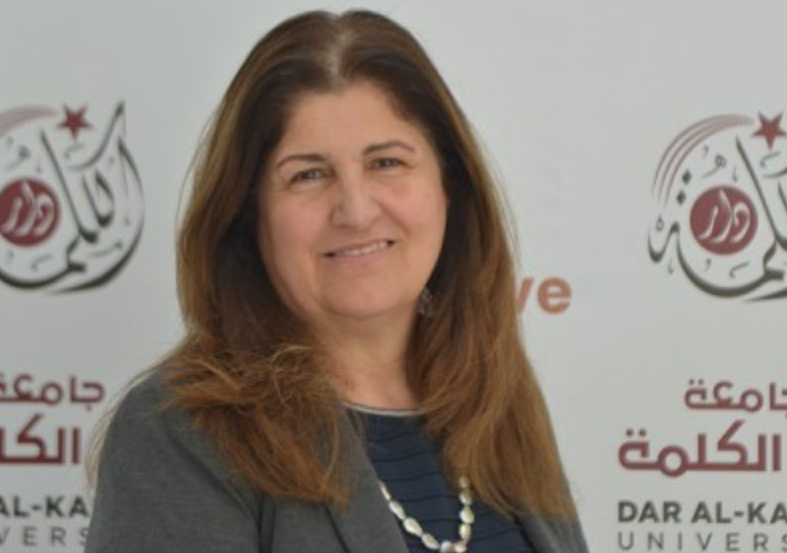
Varsen Aghabekian, a representative of the Armenian community, has been appointed as the State Minister of Foreign Affairs and Diaspora of Palestine. This position is similar to that of a Deputy Minister of Foreign Affairs. Mohammad Mustafa has been named as the Foreign Minister. It is worth noting that in some countries, including Palestine, the position of State Minister is equivalent to ministerial status, making Aghabekian the second-highest-ranking official in the Palestinian foreign affairs department.
Every country has the sovereign right to appoint members of its government and independently determine who occupies which positions. However, the presence of representatives of Armenian nationality in the government, especially in complex regions such as Palestine, inevitably attracts attention due to the distinctiveness of their surnames. This becomes particularly noticeable against the backdrop of past events, such as Yasser Arafat's friendly meetings with the Catholicos and the strong statements in support of the Armenians by the current President Mahmoud Abbas.
The celebration among the Armenian side knows no bounds. Armenian media proudly report that Varsen Aghabekian, a member of the local Armenian community, has "assumed the role of State Minister" in the Ministry of Foreign Affairs, which is nominally under the control of Prime Minister Mustafa. She is the first Palestinian Armenian to hold a ministerial post since the establishment of the Palestinian Authority. The phrase "assumed the role" surprisingly suggests that Aghabekian received the position not solely based on her significant merits to Palestine.
Nevertheless, the Armenian diaspora around the world is known for its members often reaching high positions through corruption and patronage. This fact no longer causes surprise or questions. As soon as a person with an Armenian surname starts climbing the career ladder, there is no doubt that his support comes from corrupt officials in state and government structures. This practice seems to have a long history. Even before the Armenians formed an organized diaspora or state, they occupied significant positions in various countries, using bribes to influence high-ranking officials.
The interest of the Armenians in Palestine is linked to the fact that the Holy Land plays a significant role in their fabricated history and future plans. It is enough to recall the disgraceful scandals and scuffles that adherents of the Armenian Church annually stage at Easter in the Church of the Holy Sepulchre.
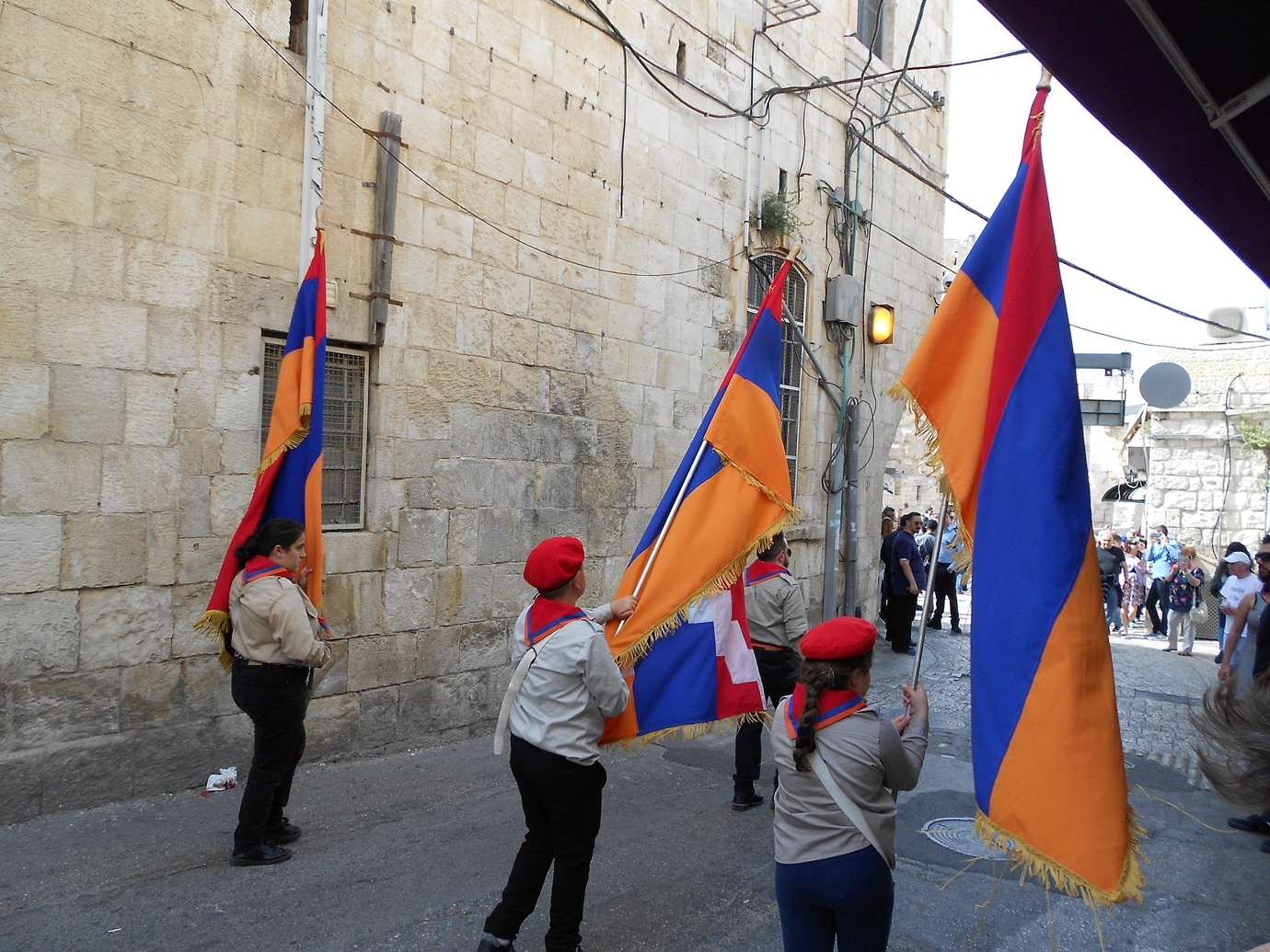
The Armenian diaspora in the Middle East is a special conversation. It was there that the ideological foundation of Armenian nationalism was formed, and it is there that the origins of Armenian terrorist organizations are found.
Armenians had close ties with Palestine starting from the 1960s. Karen Brutents, an Armenian from Baku, began overseeing the Middle East direction in the international department of the Central Committee of the Communist Party of the Soviet Union (CPSU) starting from 1961. In Soviet diplomacy, many Armenians held high positions, often thanks to similar paths of promotion. Brutents maintained close ties with Yasser Arafat, the leader of the Palestine Liberation Organization (PLO), and his circle. In 1998, he published a book "Thirty Years at the Old Square", where he openly discussed these relationships. Funds allocated by the CPSU for the PLO, with Brutents' participation, were also used to finance and train Armenian terrorist groups in Lebanon and other countries.
From available online sources, it is known that the Palestine Liberation Organization (PLO) militants were trained in camps near Moscow, where Arafat often visited. Some Palestinians, along with militants from Armenian terrorist organizations such as ASALA, were trained in camps in Lebanon. With Brutents' involvement, Yasser Arafat, returning from Moscow, visited Armenia in 1969 and 1980. This "friendship" continued into the new century. In August 2000, Palestinian media published a statement by Yasser Arafat in which he categorically denied the ownership of the Armenian Quarter in Jerusalem to Israel. He stated: "The Armenian Quarter belongs to us, we and the Armenians are one people." The Armenians reciprocated by declaring that "Armenians consider themselves partners of the Arabs in the struggle for a free Palestine". In the same year, during a visit to Israel with Yasser Arafat in Bethlehem, Robert Kocharyan met.
The current leader of the Palestinian Authority, Mahmoud Abbas, has continued to support the Armenians, inheriting this practice. But with some nuances. In 2011, speaking at a session of the Parliamentary Assembly of the Council of Europe (PACE), he addressed the status of the Armenian Quarter of Jerusalem. A question came from a member of the Armenian delegation, Naira Zohrabyan, who reminded him about Yasser Arafat's "clear position" on this issue. Notably, Arafat once humorously requested to be called "Arafatian". However, Mahmoud Abbas did not provide a definite answer to the Armenian representative, stating: "What belongs to Arabs should remain with Arabs, what belongs to Jews should remain with Jews."
In 2017, during the celebration of Christmas according to the Armenian calendar in Bethlehem, Palestinian President Mahmoud Abbas "redeemed" himself in the eyes of the Armenians. As reported by the Palestinian agency WAFA during the celebration, he stated that Armenians and Palestinian Christians are "the salt of this earth" and will never leave it. To those trying to rid the area of Christians, particularly Armenians, Abbas advised them to "eat their hearts out". "Armenians will always live in Jerusalem, Ramallah, and Bethlehem. Those who want them gone should leave themselves," he declared.
These statements are recalled against the backdrop of today's clashes in Jerusalem. Armenians, inspired by the support of the Palestinian side and global pressure on Israel, hope to strengthen their positions in Jerusalem and expand their living area. Israeli authorities, of course, are not inclined to assist them in this. The Armenian side describes the actions of Israeli law enforcement to maintain order as an "attack on the Armenian Quarter." They expect to benefit after Israel is condemned by the international community. Armenians count on the Palestinians remembering their support in the fight against Zionists and, in gratitude, expanding their rights in the Holy Land. The Armenian Quarter is located in East Jerusalem, which Palestine considers its capital. So, in any case, the local Armenians already have their own state minister...


Similar news