Why does Kazakhstan need a referendum now?


.png)
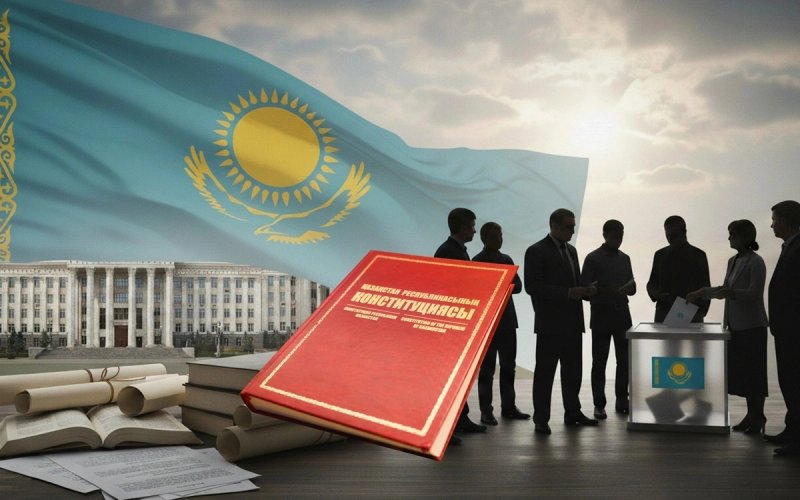
Kazakhstan has announced that a nationwide referendum on a new constitution will take place on March 15, marking what officials describe as a decisive stage in the country’s political modernization process.
The move has generated significant domestic and international attention because constitutional reform is not merely a technical legal adjustment. It defines the architecture of power, the relationship between citizens and the state, and the rules governing political competition for decades to come, News.Az reports.
RECOMMENDED STORIES
Below is a comprehensive faq explainer examining what is being proposed, why Kazakhstan considers a referendum necessary at this stage, and what the potential implications may be for governance, society, the economy and regional politics.
What exactly has Kazakhstan announced
The authorities have formally scheduled a nationwide referendum for March 15. Citizens will be asked to vote either in favor of or against a package of constitutional amendments. These amendments are designed to revise the distribution of powers between the presidency, parliament and other state institutions.
Instead of relying exclusively on parliamentary procedures to amend the constitution, the leadership has chosen to submit the reform directly to voters. This means that the final decision will rest with the electorate, giving the constitutional changes a direct democratic mandate if approved.
Why does Kazakhstan need a referendum now
The necessity of the referendum is rooted in a combination of structural, political and strategic factors. Kazakhstan has experienced social tension, economic pressure and institutional challenges in recent years. While the country has maintained overall political stability since independence, the existing constitutional framework has been widely characterized as strongly presidential in nature.
Supporters of reform argue that such a model was suitable during early state-building and economic transition, when centralized authority provided coherence and policy consistency. However, as Kazakhstan’s society and economy have become more complex, the concentration of authority in the executive branch has raised concerns about accountability, transparency and institutional balance.
The referendum is therefore presented as a corrective mechanism. It is intended to recalibrate the system, redistribute certain powers and create a more balanced political structure. Officials argue that constitutional change at this scale requires a popular mandate, not only legislative approval.
How has Kazakhstan’s constitutional system evolved since independence
Kazakhstan adopted its first post-independence constitution in the early 1990s, followed by revisions and amendments over the years. Many of these changes strengthened presidential authority, consolidating executive power to ensure political cohesion and economic reform during a period of transition.
Over time, amendments modified electoral systems, party regulations and judicial arrangements. However, the overarching framework remained centered on a strong presidency.
The current referendum signals a departure from that trajectory. Instead of expanding executive authority, the proposed changes are described as redistributing power and reinforcing institutional checks and balances.
What are the key changes expected in the new constitution
While the final text will define precise legal formulations, reform packages typically include several core themes.
First, there is an anticipated redistribution of authority from the presidency to parliament. This may involve expanding the legislative branch’s role in forming the government or confirming key appointments.
Second, judicial reforms are expected to strengthen the independence and authority of constitutional oversight mechanisms. This could include enhancing the role of the constitutional court or refining procedures for legal review.
Third, political party regulations and electoral structures may be adjusted to encourage broader participation and more competitive political dynamics.
Fourth, local governance mechanisms could be revised to decentralize certain administrative powers and improve responsiveness at the regional level.
Why not amend the constitution through parliament instead of a referendum
From a strictly legal standpoint, parliamentary procedures could be used to amend constitutional provisions. However, the leadership has chosen a referendum for several reasons.
A referendum provides direct public legitimacy. Constitutional changes adopted through popular vote carry stronger normative authority and are less vulnerable to accusations of elite-driven reform.
Additionally, a referendum reinforces the narrative of participatory modernization. By inviting citizens to vote on foundational legal changes, the authorities aim to demonstrate openness and accountability.
In constitutional theory, referendums on foundational documents increase long-term stability because they embed the reform in public consent rather than political negotiation alone.
How does this referendum address public trust
Public trust in institutions is a critical factor in political stability. In recent years, Kazakhstan has experienced episodes of social unrest and public dissatisfaction linked to economic inequality, inflation and governance transparency.
Even when macroeconomic indicators remain relatively stable, perceptions of fairness and representation matter. A referendum allows citizens to participate directly in shaping institutional rules, which can strengthen the social contract.
The social contract refers to the implicit agreement between the state and society regarding authority, rights and obligations. By placing constitutional reform before voters, the government signals a willingness to renegotiate aspects of this contract within a legal framework.
What structural problems is the referendum designed to solve
The reform initiative addresses several structural challenges.
One is the concentration of executive authority. While centralized decision-making can enhance efficiency, it may reduce accountability if oversight mechanisms are weak.
Another issue is parliamentary capacity. Expanding legislative authority could improve scrutiny of government policy and budgetary decisions.
Judicial independence is also a recurring theme. Clear constitutional safeguards are necessary to ensure that courts can review executive and legislative actions without political interference.
Local governance is another area of focus. Decentralizing certain powers can enhance service delivery and allow regional authorities to respond more effectively to local needs.
How might the balance of power change
If the amendments are approved, Kazakhstan could transition toward a more balanced presidential parliamentary model. This would not eliminate the presidency’s central role, but it could introduce additional institutional counterweights.
Parliament may gain stronger oversight authority and increased influence over executive appointments. Political parties may operate under revised regulations encouraging broader participation.
Judicial institutions may receive clearer constitutional mandates for independence and review authority.
The practical impact will depend on implementing legislation and political culture. Constitutional text alone cannot guarantee transformation, but it establishes the legal foundation for institutional evolution.
How does economic strategy relate to constitutional reform
Kazakhstan is a significant energy producer and a transit hub linking Europe and Asia. It seeks to diversify its economy beyond hydrocarbons and strengthen integration into global markets.
Investors evaluate not only macroeconomic indicators but also governance quality, regulatory transparency and rule of law. Institutional predictability reduces risk premiums and enhances long-term investment planning.
A referendum-backed constitutional reform signals commitment to modernization and institutional clarity. If perceived as credible, it could strengthen investor confidence and reinforce Kazakhstan’s economic positioning.
What are the regional implications
Kazakhstan occupies a central position in Central Asia and pursues a multi-vector foreign policy. It balances relations with major powers while maintaining regional cooperation.
A credible constitutional reform process enhances diplomatic credibility. It presents Kazakhstan as institutionally adaptive and reform-oriented.
In a region where governance models are closely observed, constitutional modernization may influence perceptions and potentially encourage policy dialogue among neighboring states.
Why is March 15 significant
Setting a clear date provides momentum and structure to the reform process. It establishes a timeline for public discussion, campaigning and civic engagement.
Holding the referendum early in the year also positions the country to implement reforms within the same political cycle, reducing prolonged uncertainty.
How will the vote be conducted
The referendum will follow national electoral procedures. Eligible citizens will cast ballots approving or rejecting the proposed amendments.
Turnout rates will be closely monitored as indicators of public engagement. Transparent vote counting and clear communication will be essential to ensure legitimacy.
What happens if the referendum passes
If a majority of voters approve the amendments, the new constitutional provisions will enter into force according to the transition schedule specified in the legal framework.
Secondary legislation will be required to operationalize reforms. This may involve revising electoral laws, parliamentary procedures, judicial statutes and administrative regulations.
Institutional restructuring may take months or years. The referendum marks the beginning of transformation rather than its conclusion.
What if the referendum fails
A rejection would create political uncertainty. Authorities would need to reassess the reform package, possibly revise proposals or pursue alternative legislative paths.
A failed referendum could signal communication gaps or deeper societal divisions. It would also raise questions about the pace and direction of modernization.
How will this affect ordinary citizens
For citizens, constitutional reform can have practical implications.
Expanded parliamentary authority may improve representation. Stronger judicial guarantees can enhance protection of rights. Decentralized governance can improve public service delivery.
However, these outcomes depend on implementation. Institutional culture, political competition and civic engagement play decisive roles.
What risks exist if reform is delayed
Delaying reform risks institutional stagnation. As societies evolve, governance structures must adapt. Failure to adjust may generate public frustration, reduce policy flexibility and weaken investor confidence.
In a dynamic geopolitical environment, constitutional clarity enhances resilience.
How should observers evaluate the process
Key indicators include voter turnout, margin of approval, campaign environment, media pluralism and transparency of vote counting.
Equally important is post referendum implementation. Constitutional text must be translated into functional institutional change.
What is the broader significance
Constitutions define the long term distribution of authority and the boundaries of political power. They structure relations between state and citizen, executive and legislature, center and region.
Kazakhstan’s March 15 referendum represents an inflection point. It reflects recognition that centralized governance models must evolve in response to societal complexity and global integration.
If implemented substantively, the reform could recalibrate institutional balance, enhance accountability and strengthen economic competitiveness. If implementation is limited, it may be viewed as incremental adjustment.
Why is popular legitimacy crucial
Foundational legal documents require durable legitimacy. A referendum provides direct endorsement from the electorate, reinforcing normative authority.
This legitimacy can reduce future political contestation over constitutional interpretation and strengthen institutional stability.
Final assessment
Kazakhstan’s decision to hold a March 15 referendum on a new constitution is a strategic move shaped by domestic pressures, economic objectives and long term modernization goals.
The country seeks to rebalance executive authority, strengthen parliamentary oversight, enhance judicial independence and modernize governance structures. The referendum format provides direct public legitimacy and signals responsiveness to evolving societal expectations.
Whether the outcome results in transformative institutional change will depend not only on the text of the amendments but on sustained political will, transparent implementation and active civic participation.
March 15 is therefore more than a procedural vote. It is a test of institutional adaptability, public trust and Kazakhstan’s capacity to evolve its constitutional architecture in line with contemporary governance standards.
By Faig Mahmudov


Similar news