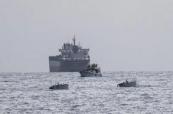
Why Red Sea insecurity has become a structural risk for global logistics


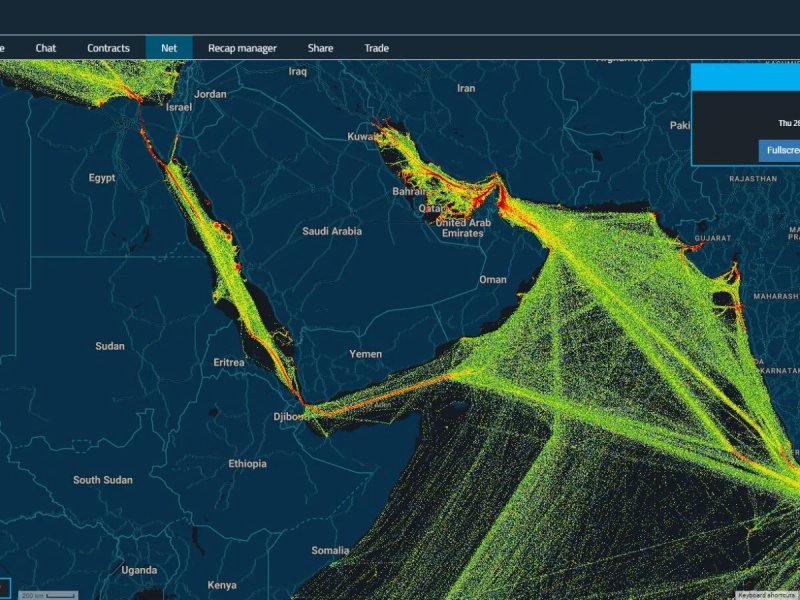
The Red Sea has quietly become one of the most critical pressure points in the global economy, News.Az reports.
What was once viewed primarily as a transit corridor linking Asia, the Middle East, and Europe is now a focal zone where security risks, insurance costs, and geopolitical tensions converge. Over the past week, renewed incidents and official warnings have driven a sharp rise in search activity and industry discussion about Red Sea shipping disruptions, exposing how vulnerable global trade remains to regional instability.
At the center of this disruption are attacks and threats attributed to the Houthi movement, whose actions have forced shipping companies, insurers, and governments to reassess long-established maritime assumptions. The consequences are no longer theoretical. They are being felt in freight rates, delivery times, energy prices, and corporate balance sheets worldwide.
Why the Red Sea matters to global trade
The Red Sea is not simply a regional waterway. It is one of the world’s most strategic maritime arteries. Through the Bab el-Mandeb Strait and the Suez Canal, roughly 12 percent of global trade and a significant share of global energy shipments pass every year. Containerized goods, liquefied natural gas, crude oil, refined fuels, and industrial inputs all depend on the uninterrupted flow through this corridor.
For decades, the efficiency of this route underpinned modern supply chains. Manufacturers designed “just-in-time” systems assuming predictable transit schedules between Asian factories and European markets. Any sustained disruption therefore carries systemic consequences, far beyond the immediate geography of the Red Sea.
How security threats changed shipping behavior
The escalation of attacks on commercial vessels altered shipping behavior almost overnight. Major container lines and tanker operators began diverting ships away from the Red Sea, opting instead for the far longer route around the Cape of Good Hope. This decision adds thousands of nautical miles to each voyage, increasing fuel consumption, crew costs, and delivery times.
These rerouting decisions were not taken lightly. They reflect a calculation that the financial and operational cost of longer voyages is now lower than the combined risk of physical damage, cargo loss, and skyrocketing insurance premiums associated with Red Sea transit.
As more companies rerouted, congestion increased on alternative routes, reinforcing a self-perpetuating cycle of delay and cost inflation.
The insurance shock and war-risk premiums
One of the most immediate and measurable impacts of Red Sea insecurity has been the surge in maritime insurance costs. War-risk premiums, which were once a marginal expense, have risen sharply for vessels entering designated high-risk zones. In some cases, insurance costs for a single Red Sea transit now exceed the profit margin of the cargo being carried.
Insurance markets operate on risk probability, not political rhetoric. Each confirmed incident, warning notice, or near-miss feeds directly into premium calculations. As a result, even companies willing to transit the Red Sea face financial disincentives that make the route commercially unattractive.
This insurance dynamic explains why shipping disruptions persist even during periods without active attacks. Risk perception alone is sufficient to reshape trade flows.
Energy markets under pressure
Energy shipments are particularly exposed. Crude oil and petroleum products moving from the Middle East to Europe rely heavily on Red Sea routes. When tankers divert, delivery schedules lengthen, and spot markets react accordingly. Even modest delays can trigger price volatility, especially during periods of seasonal demand or geopolitical uncertainty.
European energy planners have taken note. While strategic reserves cushion immediate shocks, prolonged shipping disruptions increase the cost of replenishment and complicate long-term supply planning. For importing countries, the Red Sea crisis is not merely a security issue but a structural energy risk.
Supply chains and inflation transmission
Beyond energy, the impact on consumer goods and industrial supply chains is increasingly visible. Longer transit times disrupt inventory planning, particularly for sectors dependent on predictable shipping schedules such as automotive manufacturing, electronics, and retail.
These disruptions carry inflationary implications. Higher shipping costs are ultimately passed down the supply chain, embedding themselves in wholesale prices and, eventually, consumer prices. While individual cost increases may appear modest, their cumulative effect across global trade is significant.
This mechanism explains why central banks and economic policymakers are closely monitoring maritime security developments alongside traditional inflation indicators.
Why rerouting is not a long-term solution
Routing ships around the Cape of Good Hope is an effective short-term risk mitigation strategy, but it is not a sustainable long-term alternative. The route adds up to two weeks of transit time and significantly increases carbon emissions. Fuel consumption rises sharply, undermining environmental targets and increasing operating costs.
Port infrastructure along alternative routes is also under strain. Increased traffic raises the risk of congestion, delays, and secondary bottlenecks. Over time, these pressures could replicate the same vulnerabilities seen during previous global supply chain crises.
For the shipping industry, the Red Sea disruption underscores the limits of flexibility in a system optimized for efficiency rather than resilience.
Geopolitics and freedom of navigation
At a strategic level, Red Sea instability raises fundamental questions about freedom of navigation and the enforcement of maritime norms. Naval patrols and international security initiatives aim to deter attacks and reassure commercial operators, but their effectiveness depends on coordination, political will, and rules of engagement.
The situation illustrates a broader trend in which non-state actors can exert disproportionate influence over global trade by targeting chokepoints rather than territory. This asymmetry complicates traditional security responses and forces governments to balance deterrence with escalation risk.
Why this is not a temporary crisis
What distinguishes the Red Sea disruption from previous incidents is its duration and predictability. Markets are adjusting not to a one-off shock, but to a persistent risk environment. Shipping contracts, insurance frameworks, and logistics planning are being rewritten to reflect a new baseline of insecurity.
Once such adjustments take hold, reversal becomes difficult. Even if attacks subside, insurers and shipping lines are unlikely to immediately restore previous risk assumptions. This creates a lag effect, in which economic consequences outlast the triggering events.
Corporate strategy and adaptation
Large multinational companies are responding by diversifying suppliers, increasing inventory buffers, and renegotiating delivery schedules. While these measures enhance resilience, they also increase costs and reduce efficiency. Smaller firms, lacking bargaining power and financial flexibility, face greater exposure.
For corporate strategists, the Red Sea crisis reinforces a broader lesson of the post-pandemic era: supply chain optimization must account for geopolitical risk as a core variable, not an external shock.
Global lessons from a narrow waterway
The Red Sea disruption highlights how a geographically limited area can exert global influence. It demonstrates that globalization, while expansive, remains dependent on a handful of physical corridors. When those corridors are threatened, the effects ripple across continents and sectors.
This reality has prompted renewed discussion about trade diversification, overland corridors, and regional manufacturing hubs. While such shifts take years to materialize, the Red Sea crisis has accelerated strategic conversations that were once confined to policy circles.
Conclusion
The surge in discussion and search interest around Red Sea shipping disruptions reflects more than short-term concern. It signals recognition that global trade has entered a phase where security, insurance, and geopolitics are inseparable from logistics.
The Red Sea is no longer just a route on a map. It is a test case for how the global economy absorbs risk, adapts to instability, and balances efficiency with resilience. How governments, insurers, and corporations respond will shape trade patterns long after the headlines fade, making this crisis an enduring reference point in the evolution of global commerce.


Similar news