Why Russia and Iran presidents spoke by phone at a critical moment


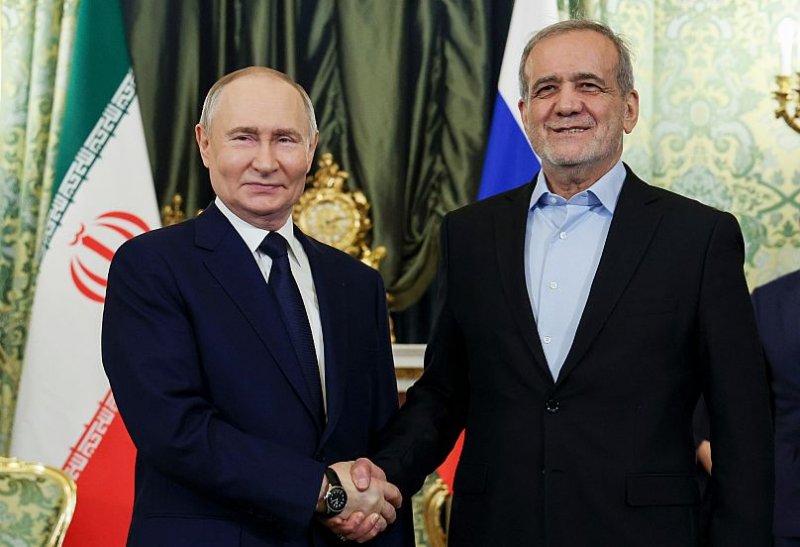
The presidents of Russia and Iran have held a phone conversation that underscores the continuity and depth of relations between Moscow and Tehran at a time of heightened geopolitical uncertainty, News.Az reports.
The discussion between Vladimir Putin and Masoud Pezeshkian focused on bilateral cooperation, regional developments, and international affairs that continue to reshape Eurasian politics.
While official readouts of such calls are often concise, the broader context surrounding this exchange provides important insight into why both sides place value on sustained high level communication. Russia and Iran are navigating overlapping challenges that include sanctions pressure, regional security risks, and the need to manage relations with a wide range of global and regional actors.
Context of Russia Iran relations
Relations between Russia and Iran have evolved significantly over the past two decades. Once marked by cautious engagement, the partnership has expanded into political coordination, economic cooperation, and security dialogue.
Both countries view their relationship as a way to balance Western influence and protect national sovereignty in international forums. Shared positions on issues such as non interference, multipolarity, and resistance to unilateral sanctions have helped shape a pragmatic alignment.
The phone talk between the two presidents fits into this broader pattern of regular consultations that aim to synchronize positions and manage expectations.
Why phone diplomacy matters now
High level phone conversations are not merely symbolic. They often serve as rapid response tools during periods of uncertainty. For Russia and Iran, direct communication allows leaders to exchange assessments without the delays associated with formal visits.
At present, both countries face complex external environments. Russia continues to adjust its foreign policy amid ongoing tensions with Western states. Iran is managing regional pressures while seeking to stabilize its economy and recalibrate its diplomatic posture.
A phone talk allows both sides to reaffirm commitments, clarify intentions, and prevent misunderstandings at critical moments.
Key themes likely discussed
Although official statements may not disclose full details, several themes are commonly addressed in conversations between Russian and Iranian leaders.
One central topic is regional security. Developments in the Middle East, the South Caucasus, and Central Asia have direct implications for both countries. Coordination on conflict prevention and crisis management remains a priority.
Economic cooperation is another recurring theme. With both countries under various sanctions regimes, discussions often focus on trade facilitation, financial mechanisms, and infrastructure projects that can bypass external constraints.
International diplomacy also features prominently. Russia and Iran frequently align their positions in multilateral organizations and consult on negotiations affecting global energy markets and security frameworks.
Energy cooperation as a strategic pillar
Energy remains one of the most significant areas of cooperation between Moscow and Tehran. Both are major producers of oil and natural gas and share an interest in market stability.
Dialogue at the presidential level often addresses coordination in production policies, technology exchange, and investment opportunities. While competition exists, both sides recognize the benefits of communication to avoid actions that could harm mutual interests.
The phone talk likely reinforced the importance of dialogue on energy issues amid fluctuating global demand and price volatility.
Security coordination and regional stability
Security cooperation between Russia and Iran has drawn attention in recent years. Both countries emphasize the importance of regional solutions to regional problems.
Consultations often cover counterterrorism efforts, border security, and the prevention of spillover from neighboring conflicts. Maintaining stability in adjacent regions is seen as essential for domestic security and economic development.
The leaders phone conversation signals continued attention to these shared concerns and a desire to coordinate approaches where interests overlap.
Diplomatic signaling to external actors
Beyond bilateral content, such calls also carry a signaling function. By publicizing high level contacts, Moscow and Tehran demonstrate that their channels of communication remain open and active.
This messaging can be directed at multiple audiences including domestic constituencies, regional partners, and global powers. It underscores resilience in the face of pressure and conveys an image of strategic patience.
For Russia, engagement with Iran reinforces its role as a key player in Middle Eastern affairs. For Iran, dialogue with Russia highlights diversified partnerships and diplomatic reach.
Impact on regional geopolitics
The Russia Iran relationship influences broader regional dynamics. Neighboring countries often monitor such interactions closely, assessing how coordination between Moscow and Tehran may affect balance of power considerations.
In some regions, cooperation can contribute to stability by promoting dialogue and de escalation. In others, it may raise concerns among states that view the partnership through a competitive lens.
The phone talk itself does not alter these dynamics overnight, but it contributes to the steady management of relationships that shape regional outcomes.
Economic realities shaping the dialogue
Economic considerations weigh heavily on both governments. Sanctions have constrained access to markets and finance, prompting efforts to develop alternative trade routes and payment systems.
Presidential level discussions help set priorities for ministries and state companies tasked with implementing agreements. They can also address bottlenecks and signal political backing for long term projects.
By maintaining regular contact, leaders ensure that economic cooperation remains aligned with broader strategic objectives.
Domestic political considerations
Domestic audiences also matter. Publicizing a phone call between presidents can reassure citizens that leadership is actively engaged on the international stage.
For Iran, such communication supports narratives of diplomatic balance and independence. For Russia, it demonstrates sustained engagement with non Western partners.
These domestic dimensions add another layer of importance to what might otherwise appear as routine diplomacy.
Continuity amid leadership change
The call is particularly notable given leadership transitions and evolving political contexts. Maintaining continuity in foreign relations helps reduce uncertainty and preserve institutional memory.
By engaging directly, leaders reaffirm existing frameworks while leaving room for adaptation. This balance between continuity and flexibility is central to long term partnerships.
The phone talk thus reflects not only immediate concerns but also an investment in relationship management.
Long term strategic alignment
Russia and Iran do not describe their relationship as an alliance in formal terms, but both emphasize strategic partnership. This distinction allows for cooperation without rigid obligations.
Regular communication at the highest level supports this model. It enables coordination where interests converge and dialogue where perspectives differ.
Over time, such engagement builds trust and predictability, which are essential in a volatile international environment.
Conclusion
The phone conversation between the presidents of Russia and Iran illustrates the enduring importance of direct leader to leader communication in contemporary geopolitics. Amid sanctions pressure, regional instability, and global uncertainty, Moscow and Tehran continue to prioritize dialogue as a tool for managing their partnership.
While the immediate outcomes of the call may remain behind closed doors, the broader message is clear. Both countries view sustained engagement as essential to protecting their interests and navigating a complex international landscape.
As global dynamics continue to shift, such high level contacts are likely to remain a regular feature of Russia Iran relations.


Similar news