Why Saudi Arabia is betting on high-tech over oil


Editor's note: Editor’s note: Vladimir Bekish is a Russian military-political analyst and an expert in strategic security, with a focus on the Middle East and Africa. The article reflects the author’s personal views and may not represent the position of News.Az.
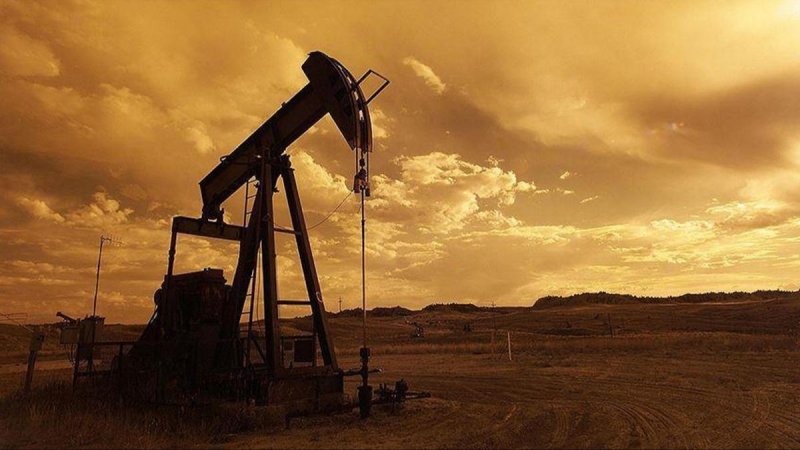
Different countries generate income in different ways — income on which their very existence depends. And the first thing that usually comes to mind is revenue from natural resources, primarily oil and gas.
When the words “oil and gas” are mentioned, Russia, Venezuela, and of course the Middle East immediately come to mind. What is especially interesting is that although it is called the “Middle” East, it is still part of the broader East—a region that remains extremely complex and deeply fascinating.
Naturally, when discussing Middle Eastern states whose main source of income is oil and gas, Saudi Arabia and the UAE are remembered first. Of course, Iran, Iraq, Kuwait, and Oman are also major producers, but it is difficult to dispute that the UAE and Saudi Arabia are the countries that most effectively acquire and use revenues from oil production.

Source: Irandoostan
Today one could say and show a great deal about the Emirates: their magnificent hotels and beaches; airlines and airports that rank among global leaders in passenger traffic and service; dozens of free economic zones hosting hundreds of high-tech foreign companies; the world’s first ultra-high-speed underground railway now under construction; Emirati astronauts in space; and an Emirati Mars probe already studying the Red Planet.
Saudi Arabia, too, is not standing still. The unique NEOM city is currently under construction, a project with no global analogue in terms of infrastructure, fully green electricity supply, and the operation of nearly all services and systems based on advanced technologies and robotics. And overall, the Gulf countries are actively seeking new technological opportunities and the latest scientific and technical breakthroughs to advance even further.
Just recently, the USA–Saudi Arabia Investment Forum took place. As part of this forum, Saudi Arabia’s Crown Prince Mohammed bin Salman paid a visit to the United States. His meetings and negotiations, first and foremost with President Trump, along with the agreements signed between the two countries, make one seriously consider the strategic path Saudi Arabia has chosen. They strongly highlight the quality of the relationship now being built between the United States and Saudi Arabia. Judge for yourself.
During this visit, an official luncheon between Prince Mohammed bin Salman and President Trump was held in Washington. Notably, this was Trump’s first official luncheon of his second presidential term. The event was exceptionally luxurious and exclusive. According to available information, Melania Trump played a special role in organizing it. This is noteworthy as well, since media reports and White House information indicate that First Lady Melania Trump does not spend much time at the White House and is not heavily involved in her husband’s official events.
Source: Reuters
During the visit, Saudi Arabia, represented by the Crown Prince, also signed a package of agreements with the United States on joint projects, as well as on investing additional billions of dollars into the U.S. economy. “Additional” because during President Trump’s visit to Saudi Arabia in May this year, an agreement had already been signed for Saudi Arabia to invest $600 billion in the United States. Now, Prince Mohammed bin Salman has signed further agreements with dozens of American companies for investments totaling $270 billion. According to Trump, the key agreements include the Civil Nuclear Cooperation Agreement, cooperation on critical minerals, and a memorandum on cooperation in artificial intelligence.
The AI cooperation agreement is perhaps the most striking. Saudi Arabia has already declared its ambition to become one of the key global leaders in the development and promotion of artificial intelligence. A company called Humain, funded by the Saudi sovereign wealth fund, is already active in the field. During the visit, Humain signed several cooperation agreements with U.S. technology giants Cisco, AMD, Qualcomm, as well as with xAI, owned by Elon Musk.
According to Musk, xAI will build one of the world’s most powerful data centers in Saudi Arabia, operating jointly with Humain. This 500-megawatt data center will be the company’s first such facility outside the United States, and of enormous capacity. Musk’s cooperation with Saudi Arabia also includes launching the Grok chatbot for use inside the kingdom.
Moreover, during the same events, Saudi Arabia’s Minister of Communications and Information Technology Abdullah Alswaha announced that another major data center will be established in the country, this time for Amazon Web Services. Amazon has stated it will deploy and launch 150,000 AI accelerators in Riyadh.
Thus it becomes clear that Saudi Arabia truly intends to become one of the main, if not the main, countries advancing artificial intelligence and supporting its global operation. And this trend clearly positions Saudi Arabia in competition with China in this field, a competition significant both for the United States and for Saudi Arabia itself.
Regarding competition with China, there are additional points to consider. As noted above, Saudi Arabia signed a cooperation agreement with the United States on peaceful nuclear energy. Notably, it did not sign such an agreement with Russia, which is very active and successful in this area and maintains fairly good relations with Saudi Arabia, nor with South Korea, which is highly effective in nuclear energy and has a strong presence in the region, having built a nuclear power plant in the UAE.
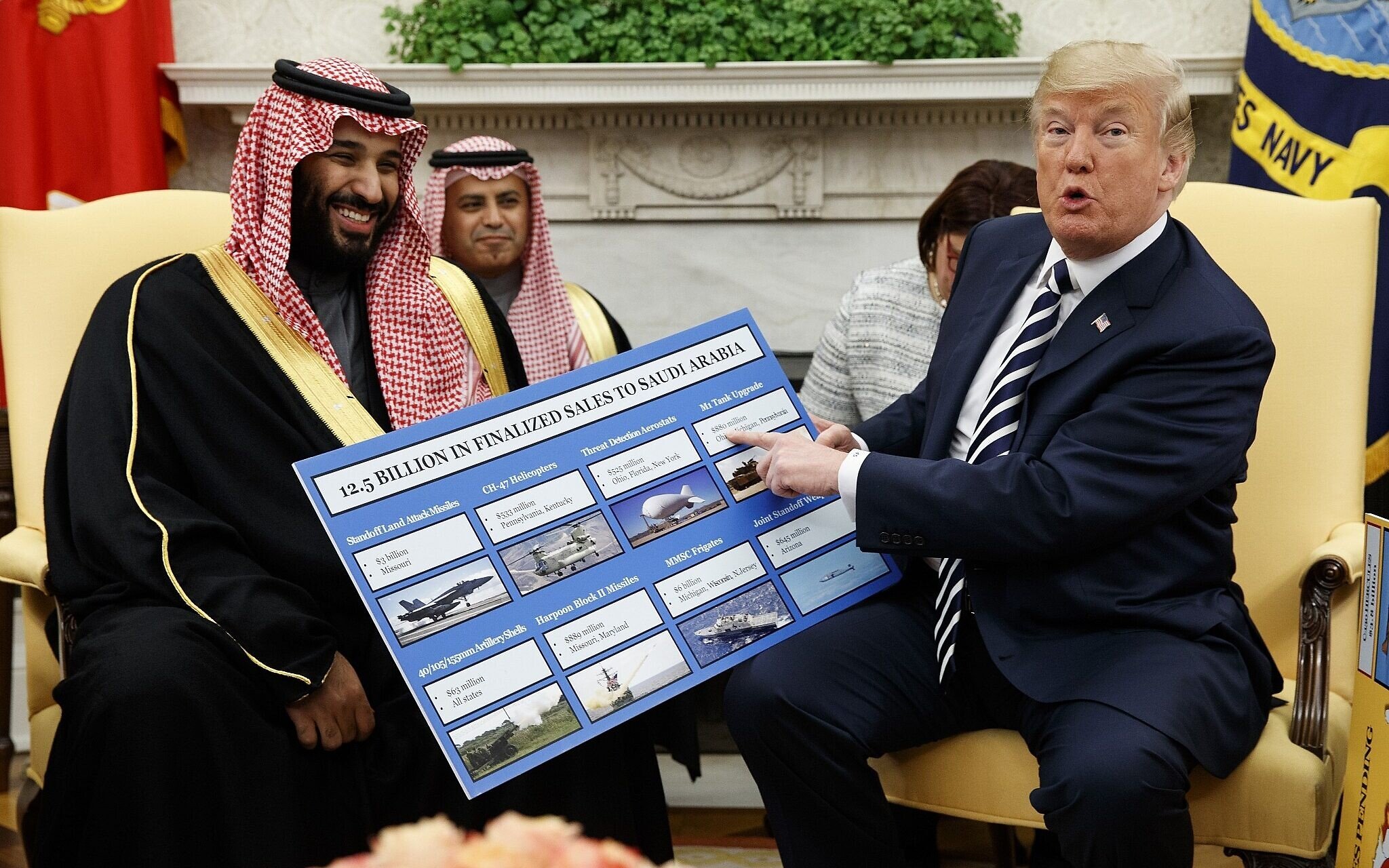
It is also worth recalling that during Trump’s May visit to Riyadh, when the $600 billion investment package was signed, the documents included an agreement on military cooperation between the U.S. and Saudi Arabia. This agreement provides for the supply of U.S. weapons and military equipment to Saudi Arabia worth nearly $200 billion. Again, note that Saudi Arabia chose to sign this deal not with Russia, which claims that its weapons “outshine and surpass the entire world.”
What does all this mean? It appears clear that the United States — its technologies, equipment, and political weight — will become dominant in one of the Middle East’s key countries, compared to the positions and capabilities of other states that also compete with America.
And moreover, Saudi Arabia has clearly taken a firm and irreversible course toward becoming not a “gas-station country,” but a high-tech nation with which others will want to cooperate and build partnerships — not only because it has a lot of oil.
(If you possess specialized knowledge and wish to contribute, please reach out to us at opinions@news.az).


Similar news