Why the Turkic World is rethinking security after Gabala


Editor's note: Aysel Mammadzada is an Azerbaijan-based journalist. The views expressed in this article are the author’s own and do not necessarily reflect those of News.Az.
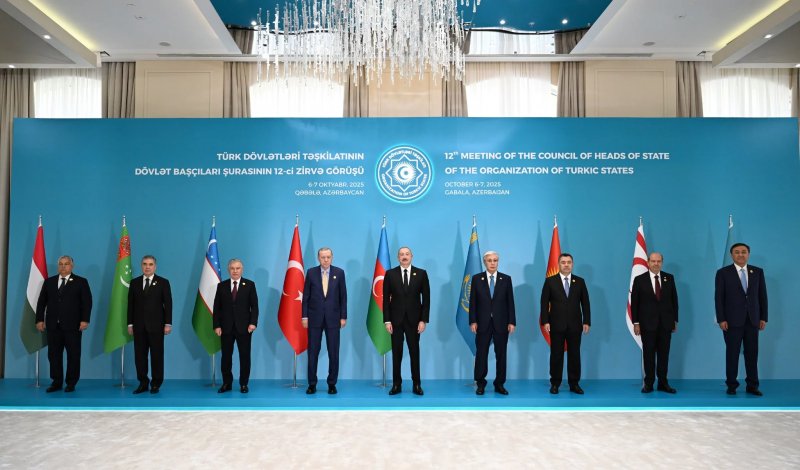
The 12th Summit of the Organization of Turkic States (OTS), held in the scenic Azerbaijani city of Gabala on October 7, 2025, may be remembered as more than just another high-level diplomatic meeting. It could mark a turning point in how the Turkic world organizes its security, connectivity, and shared development goals. Central to this moment was President Ilham Aliyev’s proposal to deepen military cooperation through joint exercises in 2026 — a suggestion that, while practical in strategic terms, also carries broader implications for unity, peace, and regional resilience.
This proposal deserves attention because it reflects a maturing regional organization seeking not only cultural or economic cooperation but comprehensive partnerships across sectors, including defense. In an international environment shaped by unpredictability, evolving power dynamics, and renewed emphasis on sovereignty, security and military capacity have naturally become essential pillars of statecraft.
Azerbaijan’s approach in Gabala suggests that these concerns need not be framed as zero-sum or confrontational but rather as constructive tools to ensure stability, prevent conflict, and support long-term prosperity.
Historical roots, modern realities
President Ilham Aliyev opened the Summit by invoking Gabala’s heritage as the historic capital of Caucasian Albania between the 8th and 4th centuries BCE. This framing was more than ceremonial. By reminding his guests of shared historical roots and cultural ties, the President emphasized a message that resonates across the Turkic world: cooperation is not an artificial creation but a continuation of centuries of interconnectedness.
This context matters. Organizations are stronger when grounded in shared identity, as identity fosters trust — and trust is the most valuable currency in defense cooperation.
Throughout his address, President Aliyev intentionally linked tradition with modernity. He stressed that the Organization of Turkic States is not merely a symbolic association; it is an institutional framework capable of delivering tangible outcomes in transportation, energy, culture, and now, potentially, defense. That progression reflects not only Azerbaijan’s aspirations but also the broader evolution of Turkic cooperation.
Security as a precondition for development
President Aliyev articulated a principle widely recognized in contemporary geopolitics: peace, prosperity, and openness require security. However, rather than presenting security as an end in itself, he argued that it serves the broader interests of economic growth, infrastructure development, and cultural exchange. This is a notable departure from outdated notions that view defense solely through militaristic or confrontational lenses.
The idea that sovereignty and territorial integrity remain central to national development was reinforced by Azerbaijan’s own recent experience. Victories in the 2020 “44-Day Patriotic War” and subsequent counter-terrorism measures in 2023 restored control over territory that had been outside Baku’s administration for three decades. While these events were celebrated domestically, the framing at Gabala focused less on triumphalism and more on the lessons they provide: military capability, legal legitimacy, and diplomatic responsibility are mutually reinforcing.
From an analytical standpoint, this narrative aligns with broader global trends. No major development strategy — whether in Europe, East Asia, or Central Asia — functions without credible defense mechanisms and strategic coordination. President Aliyev’s speech simply brings that logic into the institutional framework of the OTS.
A proposal with regional significance
The most concrete initiative presented at the Summit was Azerbaijan’s proposal to host joint military exercises for member states in 2026. While such exercises are routine for many alliances and strategic partnerships, for the Turkic world they would represent a new level of operational cooperation.
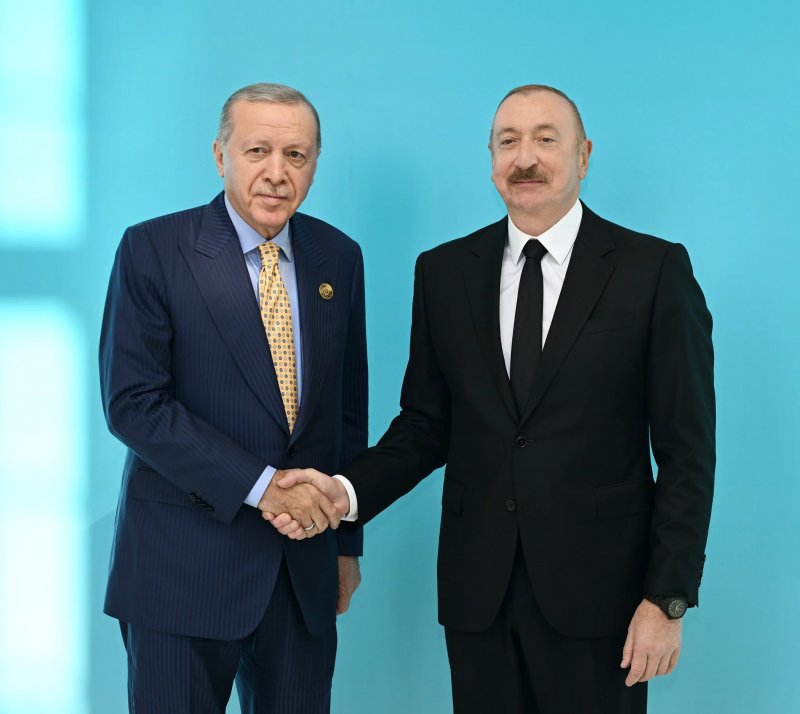
Azerbaijan and Türkiye already conduct extensive military collaboration, including more than 25 joint exercises in the past year alone. Broadening participation to other OTS members — such as Kazakhstan, Uzbekistan, Kyrgyzstan, and Hungary (as an observer) — could create shared standards, mutual familiarity, and common security practices.
These are not symbolic gains. In defense, interoperability and communication can make the difference between effective crisis response and failure. When states train together, they tend to trust each other more and misunderstand each other less.
Importantly, President Aliyev framed the initiative not as preparation for conflict but as a stabilizing measure designed to prevent escalation and build confidence. This aligns with contemporary international norms, where militaries increasingly emphasize crisis management, strategic deterrence, and cooperative security rather than classical power projection.
The geography of connectivity
Security is only one layer of Azerbaijan’s regional vision. The President also outlined the country’s strategic role in transportation and logistics, where military cooperation intersects naturally with economic initiatives. The revival of the Zangezur Corridor, alongside active participation in East-West and North-South trade corridors, positions Azerbaijan as both a bridge and a hub in Eurasia.
When transportation lines are secure and borders stable, trade flows more freely, investment increases, and regional integration becomes a practical reality rather than a diplomatic aspiration. Joint military exercises, in this sense, are not isolated maneuvers but part of a broader architecture designed to protect and reinforce economic interdependence.
Energy, stability, and shared interests
Energy security featured prominently in the discussion, reflecting Azerbaijan’s established role as a reliable provider of natural gas to 14 countries. Yet the speech also looked beyond hydrocarbons, highlighting investments in renewable energy and green infrastructure. These developments point to a future in which the Turkic world could become a significant contributor to Europe’s diversified energy map.
Energy infrastructure is uniquely vulnerable to sabotage, terrorism, and geopolitical pressure. Strengthened military coordination and shared security protocols could therefore serve as protective measures for pipelines, grids, and offshore facilities — all essential to long-term growth.
Human-centered cooperation
One of the most constructive aspects of President Aliyev’s address was its emphasis on people-oriented cooperation. Defense collaboration was framed not as militarization but as part of a holistic model that includes education, culture, and social development. Examples such as school construction in liberated regions, educational exchanges, and youth initiatives illustrate that the strategic vision extends beyond state elites to communities and families.
This human dimension may ultimately be the most persuasive argument for broader cooperation. When citizens see tangible benefits — improved infrastructure, better schools, enhanced safety — regional initiatives gain legitimacy and durability.
Toward a mature form of regional statecraft
The Gabala Summit suggests that the Turkic world is moving toward a more comprehensive model of cooperation that blends identity, economics, and security without overemphasizing any single pillar. President Aliyev’s proposal for joint exercises can therefore be understood not as a militaristic pivot but as a logical step toward institutional maturity.
The 12th OTS Summit in Gabala will be remembered not only for the historic proposals and strategic initiatives it generated but also for the spirit of cooperation and shared purpose that President Ilham Aliyev championed. His speech articulates a vision in which military readiness, economic development, and cultural bonds coexist as mutually reinforcing pillars, ensuring that the Turkic world remains resilient, prosperous, and united in the face of contemporary challenges. Under this leadership, the Organization of Turkic States is positioned as a dynamic and influential actor in regional and global affairs.
(If you possess specialized knowledge and wish to contribute, please reach out to us at opinions@news.az).


Similar news