What next for Iran? Possible scenarios as protests reshape state–society relations


.png)
Editor's note: Faig Mahmudov is a journalist based in Azerbaijan. The views expressed in this article are his own and do not necessarily reflect those of News.Az.
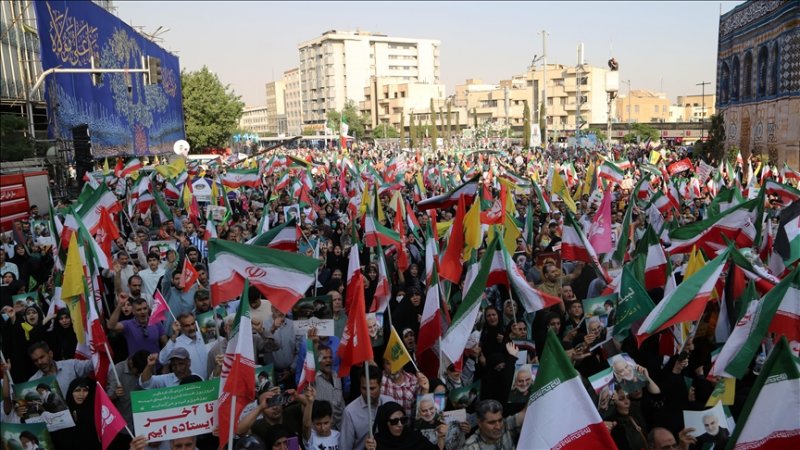
The large-scale protests observed in Iran since the end of December are being assessed as one of the most serious socio-political developments of recent years. This process, which covers various cities and provinces, is not merely a spontaneous reaction to economic difficulties, but rather a sharpened form of the long-accumulated tension in state–society relations. The broad scope of discontent, the participation of different social groups in the protests, and the sustained nature of the demonstrations show that the problem is not local, but systemic.
Against the backdrop of rising public dissatisfaction, increasing inflation, the depreciation of the national currency, the decline in living standards, as well as corruption and governance-related grievances are being openly voiced. At the same time, declining trust in political institutions, the inefficiency of decision-making mechanisms, and weakening social welfare further deepen the existing tension.
The prolonged recession in Iran’s economy has significantly weakened the population’s purchasing power. Annual inflation exceeding 40 percent and the continuous increase in the prices of many essential goods put serious pressure on household budgets. The sharp devaluation of the national currency leads to a rapid erosion of the real incomes of ordinary citizens. As a result, people struggle even to meet their daily expenses, while the weakness of the social security system makes the situation even more complicated. Delayed salaries and pensions, the closure of workplaces in certain sectors, and the growth of informal employment are among the main factors fueling economic tension.
Source: Global News
Under such circumstances, the sense of social injustice intensifies. The growing income gap between different segments of society, unequal levels of development across regions, and disruptions in basic services such as water and electricity turn public dissatisfaction into a structural phenomenon. A significant part of the population believes that the state is failing to fulfil its social responsibilities. This perception gradually spreads and creates a psychological environment that stimulates protest behaviour.
At the same time, the existence of corruption and governance problems gives additional impetus to social tension. Limited transparency, weak accountability, low public participation in decision-making processes, and the failure of reform pledges to yield real results generate a deep crisis of confidence in society. People conclude that the measures taken to eliminate economic problems are insufficient, and this situation gradually transforms economic dissatisfaction into political distrust.
Thus, economic tension is no longer seen merely as a social welfare issue, but also leads to increasing questions about the legitimacy of state institutions.
The processes taking place in Iran also reveal tensions within the political elite. The ideological confrontation that has existed for many years between conservative and reform-oriented forces has become more visible in recent times. Reformists argue that structural changes are inevitable to resolve socio-economic problems, while the conservative wing insists that preserving the existing system remains a priority. These contradictions result in delays, and at times uncertainty, in political decision-making.

Source: hrw.org
The instability of the balance of power between state institutions is also evident. Parliament’s harsh criticisms of the government, the difficulties faced by the Presidential Administration in implementing certain decisions, and the significant role of the security structures show that the internal mechanisms of the political system are operating under high tension. In such a situation, public trust weakens even further, and state–society relations rest on a fragile balance.
The social dynamics of the protests show that the process is not limited to specific groups. Teachers, pensioners, people from different professional categories, as well as some public associations, support the demonstrations in various forms and express their grievances. The closure of commercial establishments in many cities and the partial suspension of public activity demonstrate that the process is also affecting economic life itself.
At the same time, the more intense nature of protests in certain provinces indirectly confirms the existence of socio-economic disparities within the country.
The government’s response to the protests is multifaceted. On the one hand, state structures use legal mechanisms to maintain public order; on the other, some officials emphasise the importance of listening to the protesters’ demands and call for dialogue. However, due to the absence of practical platforms for dialogue and the lack of mutual trust, real communication between the sides does not emerge. Personnel reshuffles and certain economic steps are not yet viewed as a serious turning point, as society expects deeper and more conceptual changes.

Source: The New Yorker
From a historical perspective, it is possible to see that similar waves of protest have taken place in Iran before. There are numerous parallels between the events of 2017–2018 and the current developments. At that time, high inflation, income inequality, distrust in the social security system, and corruption also generated discontent across wide segments of society. However, most of the reform pledges were either not implemented or failed to deliver the expected results. This led to the accumulation of unresolved problems over time and their gradual transformation into a structural crisis.
International and geopolitical factors also have a significant impact on Iran’s economic situation. The limited inflow of foreign investment, the additional costs arising from regional policies, and restrictions on economic relations make economic recovery within the country extremely difficult. Under these conditions, resources allocated to social spending decrease, making it even harder to meet public expectations. Thus, the combined effect of internal and external factors further deepens the existing crisis environment.
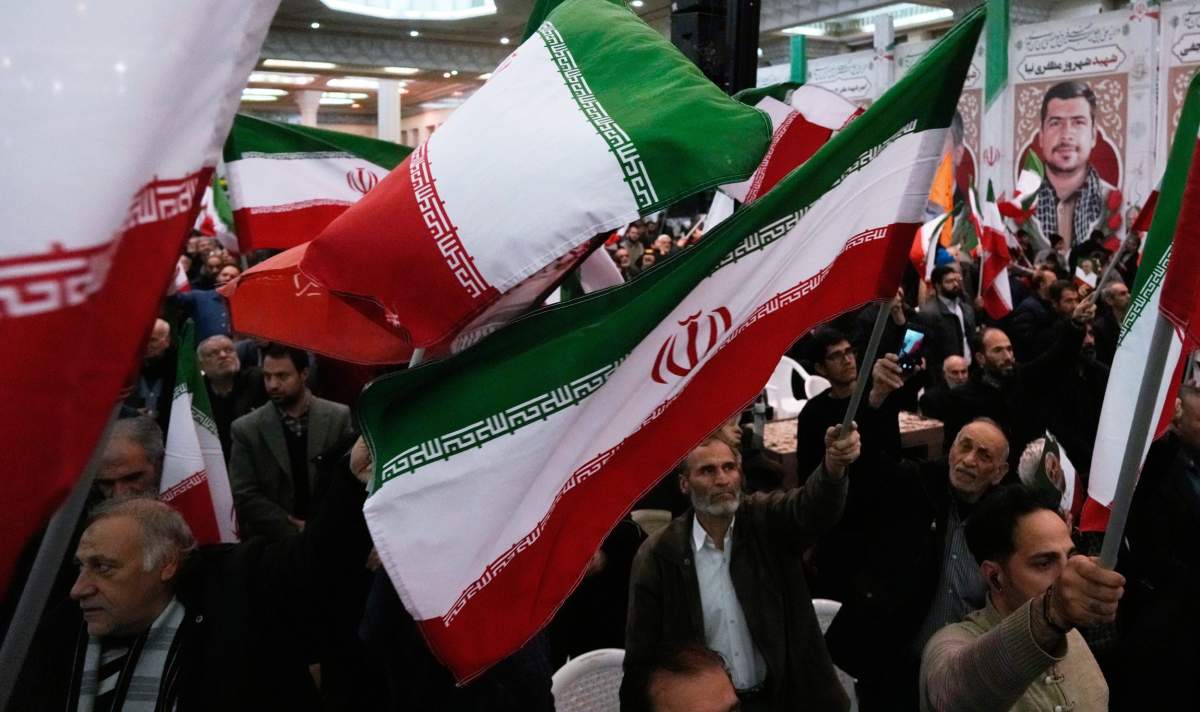
The current situation shows that the mechanisms of the social contract between the state and citizens in Iran have, to some extent, eroded. People are not only voicing economic demands, but are also calling for justice, transparency, and effective governance in a broader sense. This indicates that dissatisfaction has gone beyond the socio-economic framework and entered the political domain. This new phase of state–society relations is an important factor that may directly influence the country’s future development trajectory.
Source: Mehr News
When assessing the future course of developments, several possible scenarios can be considered. The first scenario is that the government initiates broader socio-economic reforms, establishes channels of public dialogue, and seeks to restore trust through certain concessions. In this case, a gradual reduction of tension may be possible. However, the success of this approach requires real political will and a consistent strategy.
A second scenario is the strengthening of strict control and restrictive measures. Although this may create relative stability in the short term, in the long run it increases the risk of deeper social tension and recurring waves of protest.
The third scenario is that the current situation continues in a fluctuating manner, with tension periodically rising and falling, while fundamental problems remain unresolved. In this case, uncertainty in state–society relations may persist for a long time.
In conclusion, the protests taking place in Iran are not a collection of random events, but a clear manifestation of socio-economic and governance problems that have accumulated over many years. High inflation, the depreciation of the national currency, the strengthening sense of social injustice, and declining trust in state institutions are putting the existing political system under serious strain. These developments show that deep and comprehensive reforms in the country are no longer merely a political option, but have turned into a historical necessity.
If structural changes are further delayed, the likelihood of the crisis deepening and the gap in state–society relations widening will remain high. Therefore, the future course of events will largely depend on how the authorities respond to public expectations and what balance is established between this response and public trust.
(If you possess specialized knowledge and wish to contribute, please reach out to us at opinions@news.az).


Similar news