Argentina eyes LNG dominance, сhallenging U.S. and Qatar


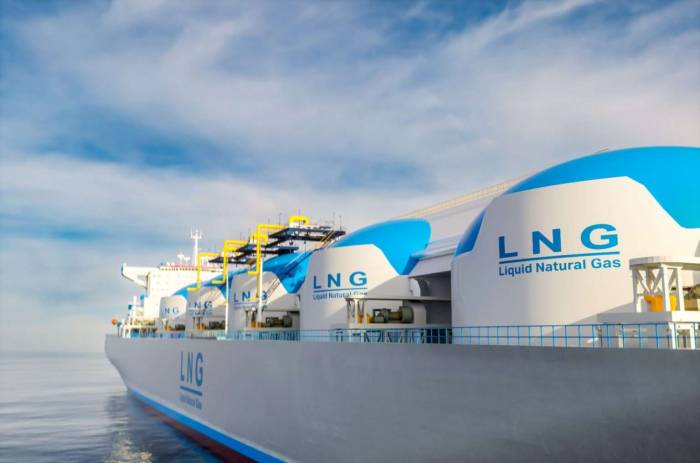
Photo: Shutterstock
By Asif Aydinli
Argentina is steadily advancing towards securing a pivotal role in the global liquefied natural gas (LNG) market. The decision by the country’s largest oil and gas company, YPF, to join forces with competitor Pan American Energy and Golar LNG, a company specializing in LNG transportation, marks a significant step. This new alliance aims to boost gas production and exports from the Vaca Muerta field, already recognized as the second-largest shale gas reserve in the world.
If this ambitious project succeeds, Argentina has a real chance to emerge as a significant player in the energy arena, currently dominated by the United States and Qatar. In 2024, the U.S. displaced Qatar as the largest LNG exporter , delivering over 90 billion cubic meters of gas to global markets. Despite this, Qatar remains a formidable competitor due to its vast reserves and well-established infrastructure. Against this backdrop, Argentina’s substantial resource potential positions it to challenge these energy giants.However, Argentina’s success in the global LNG market will largely depend on several factors, with infrastructure modernization and access to financing playing critical roles. The country currently faces a severe shortage of facilities required for gas processing, storage, and transportation. Without significant investment in the construction of liquefaction terminals and the expansion of transport networks, its export ambitions may remain unrealized. Financing these projects also poses a challenge. High inflation, an unstable national currency, and a significant debt burden make the Argentine market unpredictable, potentially deterring investors.
In this context, international cooperation is essential for Argentina's energy sector development. Notable are the ongoing negotiations with Chile and Brazil. These countries are actively involved in projects at the Vaca Muerta field, paving the way for deeper engagement in gas production and transportation. Brazil, for instance, has already announced plans to import up to 30 million cubic meters of gas per day from Argentina by 2030. This cooperation could receive further impetus through a memorandum of understanding signed by Brazil's Ministry of Energy.
Moreover, Argentina continues to rely on the support of major international partners. British BP, holding a 50% stake in Pan American Energy, and Golar LNG, with extensive LNG transport expertise, play pivotal roles. The potential involvement of Malaysia’s Petronas, which previously partnered with YPF in developing the Vaca Muerta field, remains uncertain. Nonetheless, partnerships with such major players strengthen Argentina’s position on the international energy stage.
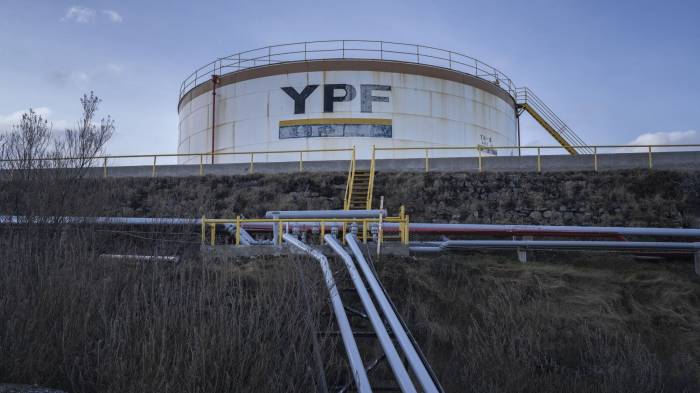
A YPF SA storage terminal in Ushuaia, Tierra del Fuego, Argentina, on Saturday, Sept. 7, 2024. The island province of Tierra del Fuego is Argentina's electronics base thanks to a quirk of history. Islanders natural resilience is being severely tested by the president's economic policies. Photo: Lujan Agusti/Bloomberg
Vaca Muerta is a strategic asset capable of transforming Argentina’s standing in the global energy landscape. The field’s reserves are estimated at 8.7 trillion cubic meters of gas and 16.2 billion barrels of oil, making it one of the world’s richest resources. Its advantageous location in Neuquén Province, Patagonia, offers favorable logistics for serving markets in both the Americas and Europe.
Argentina’s President Javier Milei, who took office in 2023, has been a vocal supporter of energy sector projects. One of his initial initiatives was a program of tax and currency incentives specifically designed to attract investment in the industry. Approved by Congress, this measure aims to create a favorable business climate for foreign partners. However, economic instability remains a significant challenge for energy project implementation. High inflation, currency volatility, and structural economic issues continue to hinder capital inflows.
Despite these challenges, Argentina's potential remains undeniable. The accelerated development of Vaca Muerta opens unique opportunities for the country. Extensive efforts are already underway to improve infrastructure. Argentina is actively increasing gas and oil production while expanding transportation capacity. Projections indicate significant growth in gas production and processing in the coming years, making the country increasingly competitive in the global market.
On the global stage, Argentina's ambitions may raise concerns among dominant players. The U.S. and Qatar are closely monitoring the situation, aware of the prospects of a strong new competitor. Argentina must demonstrate its ability to not only attract investors but also create conditions for stable and long-term energy project operations.
The collaboration between YPF, Pan American Energy, and Golar LNG represents a crucial step towards realizing the country's ambitions. However, achieving global success requires Argentina to address several challenges simultaneously: modernizing infrastructure, fostering international cooperation, ensuring stable financing, and overcoming domestic economic hurdles.
If Argentina overcomes these challenges, it could join the ranks of key LNG market players and significantly enhance its geopolitical influence. The Vaca Muerta field has the potential to become not only an economic driver but also a symbol of Argentina’s new role in global energy markets.


Similar news