Azerbaijan, Uzbekistan, Kazakhstan merging energy systems with associated risks


By Asif Aydinli
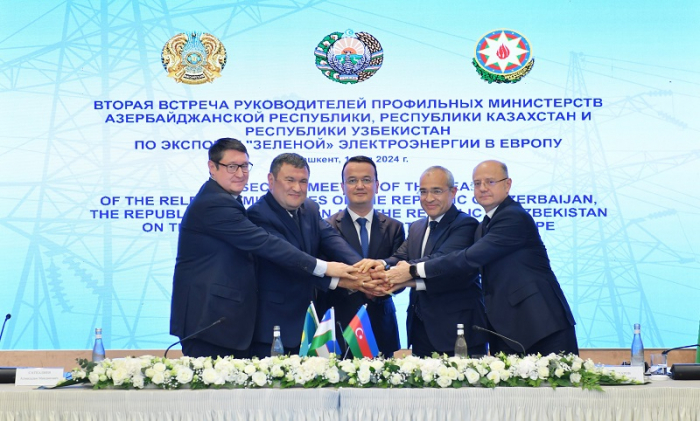
A major project aimed at integrating the energy systems of Uzbekistan, Kazakhstan and Azerbaijan was launched in the Uzbek capital, Tashkent, on 1 May. The project called "The Integration of the Energy Systems of Uzbekistan, Kazakhstan, and Azerbaijan (Green Corridor)" will enable the three countries to export green energy to Europe by integrating their energy sectors.
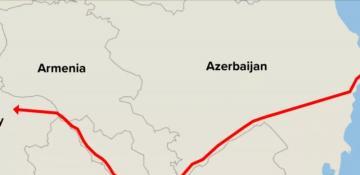
According to the document, the participants will explore the possibility of connecting the energy systems by laying high-voltage cables along the bottom of the Caspian Sea and through other countries in order to establish the most optimal conditions from both technical and economic perspectives for exporting green energy from Azerbaijan, Kazakhstan, and Uzbekistan.
According to a report by the International Energy Agency (IEA) , nearly 3,700 GW of new renewable capacity will be added globally in the next five years. The rapid growth of renewable energy generation is driven by broad political support for this sector in more than 130 countries.
Judging by the steps being taken in Azerbaijan, Kazakhstan, and Uzbekistan, the governments of these countries are seriously committed to developing alternative energy. For instance, the government of Azerbaijan plans to implement a project to build a power plant in Yashma and transform Nakhchivan into a green energy zone alongside Karabakh and Eastern Zangazur (considering the construction of a 500 MW solar power plant); launch a 240 MW solar power plant in Jabrayil, with the British company BP as a direct foreign investor; implement a SOCAR project to lay electric cables to offshore platforms in the country to reduce natural gas consumption at various facilities, as well as a project to build an underwater cable along the bottom of the Black Sea to transport green energy from Azerbaijan to Europe.
According to Azerbaijan's Ministry of Energy, the country's technical potential for renewable energy sources is 135 GW on land and 157 GW at sea. The economic potential of renewable energy sources is estimated at 27 GW, including wind energy at 3 GW, solar energy at 23 GW, and bioenergy potential at 380 MW. The potential of mountain rivers is estimated at 520 MW.
Experts predict that by 2030, the share of renewable energy sources in Azerbaijan's installed electricity generation capacity will reach 30 percent.
Economist Natiq Jafarli notes that the signing of the Strategic Partnership Agreement on the development and transmission of green energy between the governments of Azerbaijan, Georgia, Romania, and Hungary in Bucharest on 17 December 2022 paves the way for realizing Azerbaijan's potential in this area and further expanding its significant role in the global energy market. This pertains to the Black Sea Energy project with a capacity of 1,000 MW and a length of 1,195 km.
"After the signing of this agreement, Azerbaijan, Georgia, and the European Union began exploring opportunities for neighbouring countries to join this process. For example, Bulgaria joined the project in June 2023. The European Union intends to invest around 10 billion euros in Central Asian countries in the coming years. Some of this money will go towards developing the renewable energy sector. Given Azerbaijan's leading role in this project and its central position in terms of infrastructure, as well as the implementation of joint energy projects with Central Asian countries, the integration of the energy systems of Uzbekistan, Kazakhstan, and Azerbaijan is very important," he emphasized.
Jafarli noted that renewable energy from Kazakhstan and Uzbekistan, through Azerbaijan and Georgia and further along the Black Sea coast, will reach Romania and other European countries.
"This is a serious and substantial project, in which Azerbaijan occupies a central place as a hub. Moreover, this project can contribute to peace and stability in the South Caucasus. We all hope that a peace treaty will be signed between Azerbaijan and Armenia soon, allowing the Armenian side to join the project to export renewable energy to Europe. This factor is very significant in terms of establishing peace and stability in the region. In other words, this project is not only economically valuable but also significant in terms of establishing regional security. It is very encouraging that Azerbaijan is the main moderator in this project, which strengthens the country's geopolitical role," he noted.
In turn, Associate Professor of the Department of Oil and Gas Economics at the branch of the Russian Gubkin State University of Oil and Gas (Tashkent) Shuhrat Bobokhujayev recalls that on 15 November of last year, Azerbaijan, Kazakhstan, and Uzbekistan signed a joint communiqué on preparing technical specifications and subsequently establishing a joint venture for exporting green energy to Europe.
"So, by the time the Memorandum of Cooperation on the integration of the energy systems of the three countries was signed on 1 May of this year, preliminary meticulous work had already been done for exporting 'green' energy to the EU, and there was a solid foundation for their joint activities," he said.
The expert noted that significant reforms in the development of renewable energy sources are currently underway in Uzbekistan.
"The government aims to increase the share of renewable energy to 25% of total electricity generation by 2030, which currently stands at 10%. Over the next 10 years, it is planned to build solar power plants (SPPs) with a total capacity of 5,000 MW and wind farms with a total capacity of 3,000 MW. The largest investors, as in Azerbaijan, are companies such as Masdar from the UAE, ACWA Power from Saudi Arabia, and others," he said.
Regarding Kazakhstan, Bobokhujayev noted that the country occupies one of the leading positions in the development of renewable energy sources in the CIS with an installed renewable energy capacity exceeding 2.7 GW. Overall, Kazakhstan aims to achieve a 15% share of renewable energy by 2030. To achieve this goal, several large renewable energy projects with a capacity of 1 GW each are planned.
According to him, based on the analysis of the potential of Azerbaijan, Kazakhstan, and Uzbekistan, it can be asserted that all countries have a sufficient basis for the intensive growth of renewable energy volumes in the coming years and for supplying the required capacities to Europe. However, there are also risks that could hinder the successful implementation of this project.
"Like any project, there are also risks that may cause difficulties in achieving the goals that have been set and in implementing the project. This primarily concerns the Central Asian countries - Kazakhstan and Uzbekistan, as Azerbaijan is geographically closer to European countries. The fact is that the largest costs in the project will be associated with the laying of the route for transmitting energy from Central Asian countries – the laying of electric cables along the bottom of the Caspian Sea, the significant distance, and the high cost of creating the corresponding energy transmission infrastructure.
Currently, it cannot be unequivocally stated that these countries have the appropriate developed infrastructure and surplus for the supply of generated energy. For example, Uzbekistan still experiences a shortage of energy produced for use by both the population and enterprises. Therefore, for export, it is necessary to intensively introduce new capacities, primarily to meet domestic demand, and then to secure export," he noted.
As we can see, the Caspian region and Central Asia have very significant opportunities to become a global centre for renewable energy production. The construction of new infrastructure, significant potential, experience - all these factors play an important role in attracting major energy companies to invest in renewable energy sources.
It is expected that the increasing number of projects in the field of renewable energy and state support will stimulate the renewable energy market in Azerbaijan in the coming years. Moreover, based on its advantageous location, Azerbaijan, through close integration with the energy systems of neighbouring countries and Europe, will contribute to peace, stability, and security in the region.
A major project aimed at integrating the energy systems of Uzbekistan, Kazakhstan and Azerbaijan was launched in the Uzbek capital, Tashkent, on 1 May. The project called "The Integration of the Energy Systems of Uzbekistan, Kazakhstan, and Azerbaijan (Green Corridor)" will enable the three countries to export green energy to Europe by integrating their energy sectors.
According to the document, the participants will explore the possibility of connecting the energy systems by laying high-voltage cables along the bottom of the Caspian Sea and through other countries in order to establish the most optimal conditions from both technical and economic perspectives for exporting green energy from Azerbaijan, Kazakhstan, and Uzbekistan.
According to a report by the International Energy Agency (IEA) , nearly 3,700 GW of new renewable capacity will be added globally in the next five years. The rapid growth of renewable energy generation is driven by broad political support for this sector in more than 130 countries.
Judging by the steps being taken in Azerbaijan, Kazakhstan, and Uzbekistan, the governments of these countries are seriously committed to developing alternative energy. For instance, the government of Azerbaijan plans to implement a project to build a power plant in Yashma and transform Nakhchivan into a green energy zone alongside Karabakh and Eastern Zangazur (considering the construction of a 500 MW solar power plant); launch a 240 MW solar power plant in Jabrayil, with the British company BP as a direct foreign investor; implement a SOCAR project to lay electric cables to offshore platforms in the country to reduce natural gas consumption at various facilities, as well as a project to build an underwater cable along the bottom of the Black Sea to transport green energy from Azerbaijan to Europe.
According to Azerbaijan's Ministry of Energy, the country's technical potential for renewable energy sources is 135 GW on land and 157 GW at sea. The economic potential of renewable energy sources is estimated at 27 GW, including wind energy at 3 GW, solar energy at 23 GW, and bioenergy potential at 380 MW. The potential of mountain rivers is estimated at 520 MW.
Experts predict that by 2030, the share of renewable energy sources in Azerbaijan's installed electricity generation capacity will reach 30 percent.
Economist Natiq Jafarli notes that the signing of the Strategic Partnership Agreement on the development and transmission of green energy between the governments of Azerbaijan, Georgia, Romania, and Hungary in Bucharest on 17 December 2022 paves the way for realizing Azerbaijan's potential in this area and further expanding its significant role in the global energy market. This pertains to the Black Sea Energy project with a capacity of 1,000 MW and a length of 1,195 km.
"After the signing of this agreement, Azerbaijan, Georgia, and the European Union began exploring opportunities for neighbouring countries to join this process. For example, Bulgaria joined the project in June 2023. The European Union intends to invest around 10 billion euros in Central Asian countries in the coming years. Some of this money will go towards developing the renewable energy sector. Given Azerbaijan's leading role in this project and its central position in terms of infrastructure, as well as the implementation of joint energy projects with Central Asian countries, the integration of the energy systems of Uzbekistan, Kazakhstan, and Azerbaijan is very important," he emphasized.
Jafarli noted that renewable energy from Kazakhstan and Uzbekistan, through Azerbaijan and Georgia and further along the Black Sea coast, will reach Romania and other European countries.
"This is a serious and substantial project, in which Azerbaijan occupies a central place as a hub. Moreover, this project can contribute to peace and stability in the South Caucasus. We all hope that a peace treaty will be signed between Azerbaijan and Armenia soon, allowing the Armenian side to join the project to export renewable energy to Europe. This factor is very significant in terms of establishing peace and stability in the region. In other words, this project is not only economically valuable but also significant in terms of establishing regional security. It is very encouraging that Azerbaijan is the main moderator in this project, which strengthens the country's geopolitical role," he noted.
In turn, Associate Professor of the Department of Oil and Gas Economics at the branch of the Russian Gubkin State University of Oil and Gas (Tashkent) Shuhrat Bobokhujayev recalls that on 15 November of last year, Azerbaijan, Kazakhstan, and Uzbekistan signed a joint communiqué on preparing technical specifications and subsequently establishing a joint venture for exporting green energy to Europe.
"So, by the time the Memorandum of Cooperation on the integration of the energy systems of the three countries was signed on 1 May of this year, preliminary meticulous work had already been done for exporting 'green' energy to the EU, and there was a solid foundation for their joint activities," he said.
The expert noted that significant reforms in the development of renewable energy sources are currently underway in Uzbekistan.
"The government aims to increase the share of renewable energy to 25% of total electricity generation by 2030, which currently stands at 10%. Over the next 10 years, it is planned to build solar power plants (SPPs) with a total capacity of 5,000 MW and wind farms with a total capacity of 3,000 MW. The largest investors, as in Azerbaijan, are companies such as Masdar from the UAE, ACWA Power from Saudi Arabia, and others," he said.
Regarding Kazakhstan, Bobokhujayev noted that the country occupies one of the leading positions in the development of renewable energy sources in the CIS with an installed renewable energy capacity exceeding 2.7 GW. Overall, Kazakhstan aims to achieve a 15% share of renewable energy by 2030. To achieve this goal, several large renewable energy projects with a capacity of 1 GW each are planned.
According to him, based on the analysis of the potential of Azerbaijan, Kazakhstan, and Uzbekistan, it can be asserted that all countries have a sufficient basis for the intensive growth of renewable energy volumes in the coming years and for supplying the required capacities to Europe. However, there are also risks that could hinder the successful implementation of this project.
"Like any project, there are also risks that may cause difficulties in achieving the goals that have been set and in implementing the project. This primarily concerns the Central Asian countries - Kazakhstan and Uzbekistan, as Azerbaijan is geographically closer to European countries. The fact is that the largest costs in the project will be associated with the laying of the route for transmitting energy from Central Asian countries – the laying of electric cables along the bottom of the Caspian Sea, the significant distance, and the high cost of creating the corresponding energy transmission infrastructure.
Currently, it cannot be unequivocally stated that these countries have the appropriate developed infrastructure and surplus for the supply of generated energy. For example, Uzbekistan still experiences a shortage of energy produced for use by both the population and enterprises. Therefore, for export, it is necessary to intensively introduce new capacities, primarily to meet domestic demand, and then to secure export," he noted.
As we can see, the Caspian region and Central Asia have very significant opportunities to become a global centre for renewable energy production. The construction of new infrastructure, significant potential, experience - all these factors play an important role in attracting major energy companies to invest in renewable energy sources.
It is expected that the increasing number of projects in the field of renewable energy and state support will stimulate the renewable energy market in Azerbaijan in the coming years. Moreover, based on its advantageous location, Azerbaijan, through close integration with the energy systems of neighbouring countries and Europe, will contribute to peace, stability, and security in the region.


Similar news