Azerbaijan, Israel, and the U.S. to jointly extract gas in the Mediterranean


By Tural Heybatov
As is well known, politics is driven by economics. The ongoing global upheavals once again confirm this truth. Markets and resources are being redistributed, and while political undertones may seem evident on the surface, they are merely a façade. At its core, the issue revolves around strengthening economic influence.
Oil and gas have always been instruments of political leverage through economic means and of economic strengthening through the development of political relationships. Azerbaijan has mastered this principle since the early 1990s.
Oil and gas have become strategic political resources for the country, enabling it to solidify ties with friends and partners. One of Azerbaijan’s longstanding friends and partners is Israel. Azerbaijan ensures Israel’s energy security, while Tel Aviv reciprocates by providing robust military security support to Baku.
Source: AzerTAG
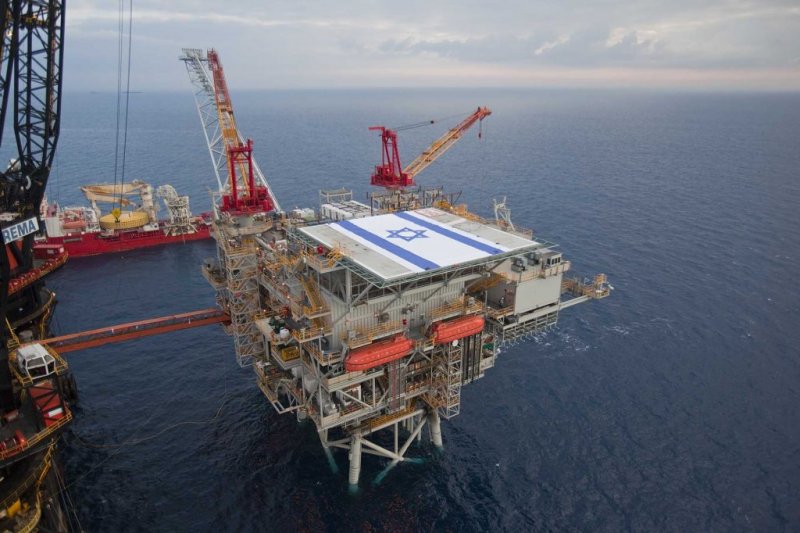
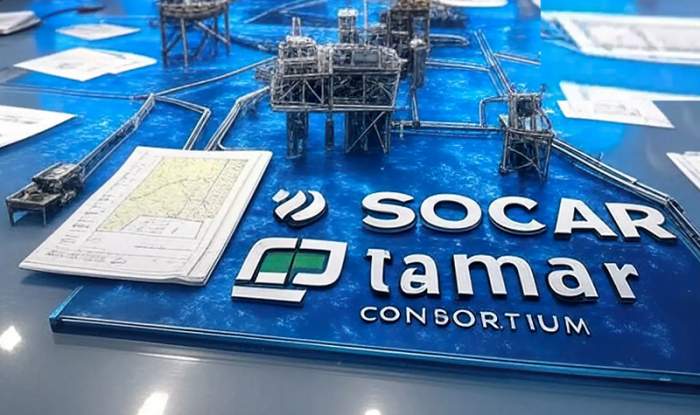
Recently, the two countries have taken their partnership to a new level—jointly developing and extracting hydrocarbons in Israel’s national waters. This cooperation will be a natural extension of the successful collaboration between the two nations in other sectors. According to Western media reports, on March 17, an official delegation from SOCAR, led by Minister of Economy Mikayil Jabbarov, will visit Israel for the formal signing of a deal to acquire a 10% stake in the Tamar gas field.
Additionally, two new energy projects will be announced, both of which will be implemented in Israeli waters near the Lebanese border. While details of these projects remain undisclosed, sources cited by Forbes indicate that BP is also likely to be involved in the energy deal. The Tamar gas field, located 90 kilometers west of Haifa, holds approximately 389 billion cubic meters of natural gas. Chevron owns a 25% stake in the field and has reportedly approved SOCAR’s inclusion in the consortium.
According to the Israeli newspaper Globes, the Azerbaijani company will explore for gas in Block 1, located in the northwest of Israel’s exclusive economic zone, in partnership with BP and Yitzhak Tshuva’s company, NewMed Energy. The signing of a work plan with Israel’s Ministry of Energy and Infrastructure is expected within two weeks. In early February, The Times of Israel reported that Israeli businessman Aaron Frenkel, owner of the energy company Union Energy, had sold a 10% stake in the Tamar field to Azerbaijan’s SOCAR. About three years ago, Frenkel acquired an 11% share in the field from the Emirati company Mubadala Petroleum. The Tamar field has been supplying gas to Israel for 12 years, while the gas from the Leviathan field is primarily exported to Egypt and Jordan.
Source: Tamar
The Israeli publication notes that for Azerbaijan’s state oil company, this will be its first drilling operation outside the Caspian Sea. Globes emphasizes that SOCAR’s entry into the project is of geopolitical significance. Israeli media have reported that Iran has already expressed its dissatisfaction—albeit indirectly—with the growing energy partnership between Baku and Tel Aviv. In early March, Iran Daily published an article titled "Israel’s Growing Presence in Azerbaijan Raises Concerns," calling for opposition to this trend.
At the same time, media outlets have highlighted an interesting fact: despite the trade embargo imposed by Türkiye, Ankara has never obstructed the transportation of Azerbaijani oil to Haifa via Turkish territory. It is worth recalling that in October 2023, SOCAR received a license to explore gas in the northern part of Leviathan, Israel’s largest hydrocarbon field. The three-year license grants Azerbaijan’s state oil company exploration rights for two offshore blocks under the fourth licensing round. Previously, SOCAR, along with BP and NewMed Energy, had obtained a license to explore the northern section of Leviathan and has already begun operations there.

Source: Reuters
Notably, within the consortium, SOCAR holds the largest share and has the status of the operator. Before the latest escalation of the Palestinian conflict, Israel and Türkiye were discussing the construction of a pipeline to the Leviathan field as an alternative to Russian gas supplies for southern Europe. The Leviathan field already supplies gas to Israel, Jordan, and Egypt. As Report news agency wrote, negotiations on the project have been taking place "behind the scenes," with sources stating that "complex maneuvering would be required to reach any deal." For now, the project has been postponed for understandable reasons.
For now, the project has been postponed for understandable reasons.


Similar news