Azerbaijan to export wind energy to Europe - Expert opinions


By Sabina Alizade
Azerbaijan's Deputy Minister of Energy Samir Valiyev has said that Azerbaijan faces ambitious goals and tasks in the field of energy transition.
The deputy minister also mentioned that projects related to 1,870 MW of green energy sources are currently being considered for implementation and integration into the energy system by 2027.
"Additionally, we have significant offshore wind energy potential, and we plan to export the obtained energy to European countries. In the near future, ACWA Power plans to implement a 240 MW wind power plant project [Khizi-Absheron with an estimated cost of $300 million]. Masdar has already built a 230 MW solar power plant, which has been operational since October 2023, and in the near future, the implementation of three renewable energy projects with a total capacity of 1,000 MW (or 1 GW) is also planned," he added.
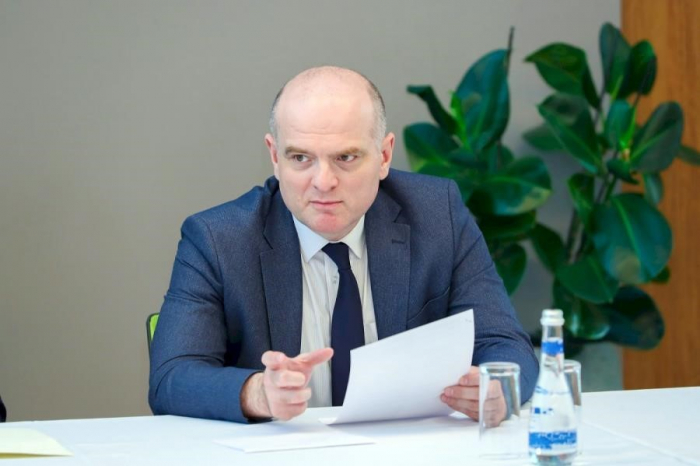
In an interview with News.Az, Elshad Mammadov, doctor of economics and economic expert , stated that Azerbaijan takes a pragmatic and cautious approach to the use of alternative sources for energy generation and the development of green energy generation, and this approach is justified. According to international experience, the rapid transition to green energy and the adoption of scientifically unfounded decisions in several countries, including Europe, have led to major problems.
"We must increase the share of green energy, but this should not, under any circumstances, weaken traditional electricity generation and the competitive advantages in the traditional energy sector. The main part of the work related to green energy generation in Azerbaijan undoubtedly falls on our state. The state directs appropriate investment flows in these directions. However, it should be taken into account that from a technological perspective, we need to import technologies. In this regard, we cooperate with leading transnational international companies specializing in green energy generation," the expert said.
He believes that the role of the international community is significant here. Since the transition to green energy on a global scale has become a trend, large investments are made in this area, a major propaganda campaign is conducted, and all this suggests that international public opinion plays a significant role in the development of green energy generation in Azerbaijan and many other countries.
"I think that energy transition dictates the continuity, sustainability of energy supply, and energy accessibility based on long-term programmes. That's to say this is not a 1-2-3-year process but a longer-term and, I would say, permanent process of ensuring access to energy resources, and the sustainability in this direction is very important. Therefore, the transition to green energy should not be against traditional energy generation and, in any case, access to energy and its availability should be continuous. This is one of the key factors for the sustainability and positive development of the economy," he said.
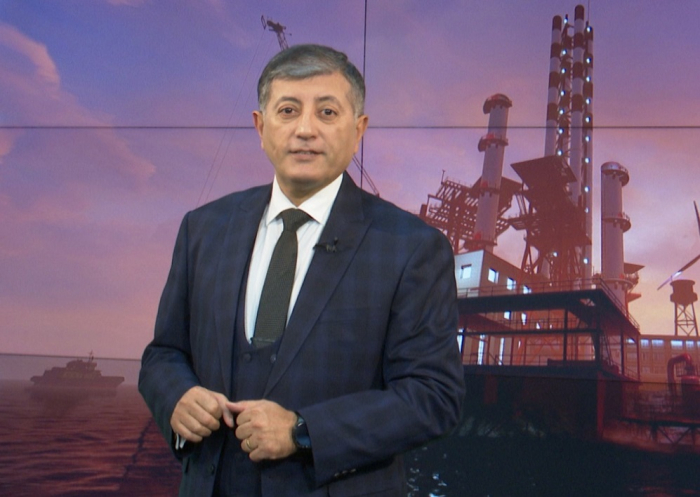
Ilham Shaban, an expert and head of the Oil Research Centre , explained the reason for the transition to green energy, stating that it is not a trend. "We are not doing this by looking at someone else. We have oil and gas. So why are we transforming to green energy?" he noted.
"President Ilham Aliyev instructed the government to accelerate the development of alternative energy sources in parallel with traditional energy in Azerbaijan. In 2009, the State Agency for Renewable and Alternative Energy Sources was established in Azerbaijan. In 2015, an agreement was signed in Paris under the auspices of the UN to eliminate the consequences of climate change. The alarm was sounded in Paris that the planet's temperature is rising, and if we do not prevent it, the planet will not survive for another 10,000 years. This is because millions of industrial emissions are released into the atmosphere due to the development of industry worldwide. This is a waste resulting from the burning of traditional energy. In addition, there are approximately 1.2-1.3 billion cars in the world. Can you imagine? All these cars emit carbon dioxide into the air every day. Therefore, the time has come to develop certain regulations, certain ecological frameworks, and limits. In 2020, during the COVID-19 pandemic, people were shown how clean the air could be when the streets were empty, and industry was not operating. I remember a Russian photographer and an Azerbaijani photographer capturing the view from Baku to Babadag, which is more than 200 km away, and then the question arose, if this can be done in a short time, why not take this path?" the expert added.
Shaban also clarified the issue of the Ministry of Energy of Azerbaijan accelerating alternative energy generation and attracting capital in 2018. He noted that the Masdar company's solar power plant in Garadagh was launched between 2020 and 2023. For the first time in our history, we launched a power plant from an alternative energy source as a result of five years of hard work.
"The beginning is to create a path. Then to tread it into a road, and the road into a highway. As a result, the foundation of one wind power plant and four solar power plants will be laid. Two of these solar power plants will be in Jabrayil, one in Bilasuvar, another in Neftchala, and a wind power plant in Garadagh. In about a year, Azerbaijan will already produce 2 billion kWh of electricity from green sources," he said.
The expert noted Azerbaijan's serious interest in the production and export of green energy to Europe. In 2022, a high-voltage cable project, Black Sea Energy, was signed between Georgia, Romania, Hungary, and Azerbaijan in Bucharest, marking the first step in transmitting electricity produced from green sources in Azerbaijan to the European market.
"Why are we turning to the European market? Because the demand for energy in the countries around us fluctuates sharply. In mild weather, there is practically no demand for energy. In 2022, Azerbaijan exported 3 billion kWh of electricity for the first time in its history. This volume decreased in 2023 and fell even more sharply in 2024," he said.
"Why did this happen? Because if the weather is mild here, it is also mild there, and there is no demand for energy. Who are we selling energy to? Only to our four neighbours, except Armenia. We need a stable market so that we can sell the energy we produce just like we sell oil and gas. All the surrounding countries are energy-producing countries. Therefore, the main market is Europe. Europe's slogan is a zero-emission life. After 2040, Europe will significantly reduce traditional energy forms. By 2050, they intend to completely abandon traditional energy. So, we have at best 25 years ahead of us. Azerbaijan differs completely from those countries in that it brings energy to the market when it is time to capitalize and tries to make the most of it. Our country's achievements are related to this. All the Caspian countries produce oil and gas. Azerbaijan tries to use this rationally. It aims to create processing facilities for gas, transition to gas chemistry, and export renewable and green energy to neighbouring countries and Europe, which will no longer accept traditional energy. On 1 May, Azerbaijan signed its first document with Kazakhstan and Uzbekistan. We want to connect their green energy to our infrastructure. This is both politics and economic policy, as well as keeping up with the world," the expert pointed out.
Commenting on problems in energy transition, the expert noted that Azerbaijan's electricity is not enough, but a noticeable amount will be obtained from green energy, and this electricity is cheap. More precisely, the selling price in our domestic market is low, but it is locked energy.
"We can raise the price of green energy by periodically increasing prices, adopting various normative documents, and enhancing the competitive environment in the market. Last year, we adopted the Law on Electric Power. At the same time, the Law on Energy Efficiency was adopted in Azerbaijan. According to this law, by 1 July 2028, the electric power market will transition from a state-regulated market, i.e., regulated by the Tariff Council, to a system formed by market participants in a competitive environment. That's to say we will have a system transitioning to a market economy, a market system," he said.
"Therefore, I think that the country's retail energy market should be directly in contact with the user. This market should not be in the hands of the state. If the state wants to be there, for example, SOCAR Petroleum should be a participant with equal rights as everyone else. The Law on Electric Power shows that Azerenerji and Azerişıq will no longer dominate the market in five years because there will be various companies. For example, you have an Azercell phone number. If you are not satisfied, you can use numbers from other phone networks," the expert noted.
The expert stated that people were scared of the market economy. Since 2015, the price of gasoline has increased by 60%, but taxi fares have halved.
"Why? Because there is competition. But when there is no competition, the Tariff Council raises prices without justification. I see the path our state is taking, its vision. The steps it takes gradually transition to a market economy and market sector, and this is commendable," he concluded.


Similar news