Azerbaijani gas once flowed to Armenia. Do Armenians know about this?


By Tural Heybatov
Recently, there have been increasing hints from the Armenian side about a desire to receive gas from Azerbaijan. However, these hints come with conditions and appear as though Armenia is doing Azerbaijan a favor." The issue of purchasing Azerbaijani gas can be discussed if Baku is interested ," said Babken Tunyan, a deputy from the ruling party, in a recent statement. Before him, Prime Minister Nikol Pashinyan also tried to make an overture to Azerbaijan: " Armenia is ready to buy gas from Azerbaijan if the transit pipeline passes through Armenian territory," the prime minister stated, adding that the pipeline would go either to Nakhchivan or Turkey.
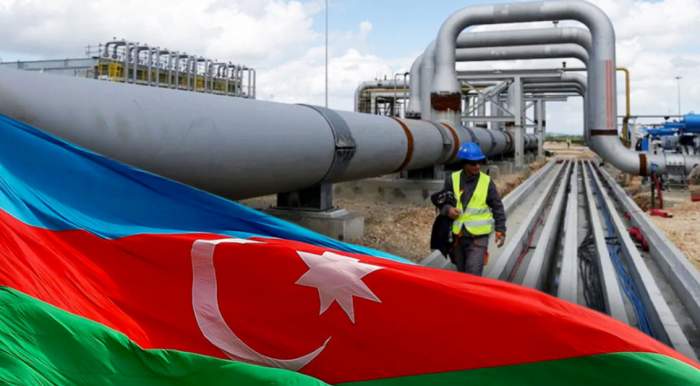
These "ifs" are somewhat surprising, considering that Baku has not shown any significant interest in cooperating with Armenia in this regard. Speaking on April 23 at the international forum titled "COP29 and Green Vision for Azerbaijan " at ADA University, President Ilham Aliyev remarked that, in principle, Armenia could become a recipient of Azerbaijani gas, much like Georgia. This would be advantageous for Armenia, given the preferential gas prices supplied to Georgia, he noted.
However, this was merely an illustration of one more prospect that peace with its neighbors could offer Armenia. It was not a proposal. Armenia’s market is small, the country is insolvent and unreliable as a partner—at least for now—and Baku is aware of these risks, especially when it comes to issues like transit pipelines. Laying a gas pipeline is far more complex than building a road. Currently, Azerbaijani gas is successfully delivered to Turkey via the Southern Gas Corridor, and there is no need for alternative transit routes. As for the Nakhchivan Autonomous Republic, Turkey is rapidly constructing the Igdir-Nakhchivan gas pipeline, and it is expected that gas will start flowing to Nakhchivan this winter. Thus, there is no need for Armenian transit.
This topic has not surfaced in Armenia by accident. At one time, the republic relied on Azerbaijani gas. Supply was cut off 33 years ago, and the pipeline infrastructure, left over from Soviet times and idle for years, is most likely in poor condition. After the Second Karabakh War, in 2021, gas flowed through Azerbaijani territory to Armenia for the first time in many years. However, this was not Azerbaijani gas, but Russian gas, necessitated by an accident on the Russian pipeline somewhere in Georgia. Before the 2020 war, such a scenario would have been unthinkable.
According to experts, the most advantageous solution for Armenia's gas supply is through deliveries from Azerbaijan. Armenia's energy security rests in the hands of its closest neighbor. It is unlikely that Yerevan takes seriously the speculative proposals from the European Union to provide energy in exchange for giving up Russian gas. That is simply unrealistic. No one is going to build a pipeline from Europe to Armenia, and connecting to the Southern Gas Corridor is out of the question.
Last year, during a forum in Tbilisi, Deputy Minister of Territorial Administration Hakob Vardanyan expressed hopes for the restoration of Azerbaijani gas imports and for turning Armenia into a transit hub for Azerbaijani gas. He mentioned that in Soviet times, gas was supplied to Armenia through three major pipelines, and he assured that Armenia would be able to restore them.
However, it is too early to talk about this. First, peace must be established, and the issues of opening borders and communications need to be resolved.
It is worth recalling that in the 1990s, Armenia had a chance to become a transit country for Azerbaijani hydrocarbons. When the route of the Main Export Pipeline, through which Azerbaijani oil was to be transported to Europe, was being determined, Baku hinted that the pipeline could pass through Armenian territory if Armenia abandoned its occupation. However, Armenia made its choice.
It is curious whether Armenians remember that they once heated their homes and cooked using Azerbaijani gas. It is possible that ordinary citizens are unaware of this. The website of Gazprom-Armenia, in its section on the history of the republic's gasification, does not mention Azerbaijan. The site features a historic photo from the ceremony marking the arrival of the first gas in Soviet Armenia, but without any explanation. Yet, the first gas to Armenia came from Azerbaijani fields on February 12, 1960. To mark the occasion, a huge symbolic torch was lit in central Yerevan, at the Theater Square.
Azerbaijani gas continued to flow to Armenia until the latter part of 1991 through the Hajiqabul-Gazakh-Ijevan-Yerevan main pipeline. In 1976, the construction of a new pipeline began: Yevlakh-Barda-Agdam-Askeran-Khankendi-Shusha-Lachin-Gorus-Shahbuz (Nakhchivan Autonomous Republic). This pipeline was completed in two years. In the 1980s, an additional 70-kilometer pipeline was built from the border of the Nakhchivan Autonomous Republic to Yerevan, creating a kind of gas ring that ensured the supply of gas to Armenian consumers even in case of an emergency.
Of course, Armenia cannot expect such preferential treatment now—times have changed. However, reliable gas supply is still something it can count on. This is yet another benefit that peace with Azerbaijan could bring to Armenia. How well the neighboring country will assess these opportunities remains to be seen.


Similar news