Challenges for European countries in transitioning to green energy - ANALYSIS from the former director of Moldovatransgaz


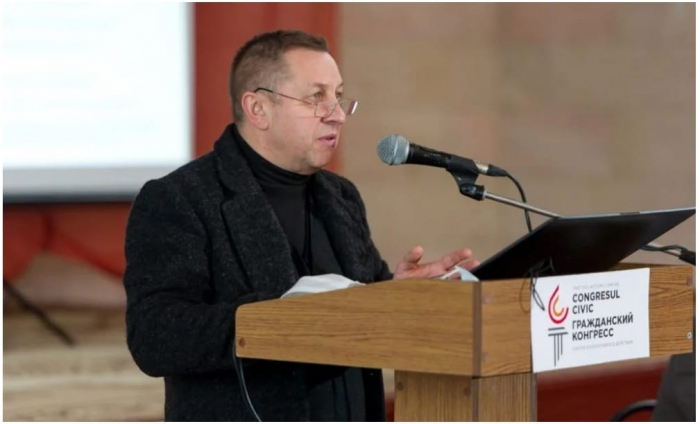
Editor’s note: Andrei Damascan, energy expert, former director of Moldovatransgaz, director of Energy Market Group LTD. The article is written especially for News.Az
This article broadly examines the prospects for the development of "green" energy in Europe, including based on renewable energy sources (RES). It briefly describes the goals, tasks, timelines, implementation methods, and an assessment of the feasibility of achieving European programmes for "green" energy, including hidden and overt economic and political challenges for the EU.
The primary goals and objectives for the development of "green" energy set by the European Union (EU) for the coming decades
Energy is a fundamental element of the EU's green economy. In the future, green energy is expected to meet the EU's growing energy demand in more efficient ways and with minimal impact on the environment.
In 2021, a commission led by Ursula von der Leyen presented the European Green Deal — a roadmap for Europe to become the first climate-neutral continent by 2050 and to implement the Sustainable Development Agenda up to 2030.
Since then, the EU has accelerated its efforts to reduce greenhouse gas emissions, invest in green technologies, and protect the environment. However, if critically examined, the task of environmental protection and climate salvation is widely publicized and undisputed, but it is not the main goal for the EU or global capital. The intertwining of other tasks serves as the foundation for achieving the true single goal — new sources of profit.
Large-scale infrastructure projects that stimulate the EU's economy
Geopolitical reset with countries possessing minerals and supplying them to Europe, creating obstacles to their plundering, pursuing their national interests, and shaping the supply of traditional energy resources. Addressing domestic political tasks in EU countries and attracting voters by offering a better life perspective.
Addressing these tasks, together with the theory of transitioning to a single energy source — electricity, sets the tone for the development of green energy, reducing dependence on third countries and levelling the playing field among EU countries, thanks to the gradual phasing out of fossil fuels for electricity production.
Natural gas will be able to maintain its long-term position up to 2050. Nuclear energy, based on current technologies, will be limited in the EU by 2030-2040 due to the need to participate in technical network balancing over long intervals and electricity generation in places with special requirements for its quality and power. Specifically, "EU countries have agreed to increase the share of renewable sources in total energy consumption to 42.5% by the end of the decade. The current goal is to increase the share of 'green' energy to 22% by 2030."
Renewable energy technologies considered promising in Europe and leading countries in their development and implementation
Investments in global green energy have exceeded $1 trillion, creating an additional 10 million jobs. The cost of energy from renewable sources (RES) continues to fall and is now competitive with traditional energy sources. A notable example is the evolution of the price of electricity from photovoltaic panels, wind turbines, and other RES worldwide.
In 2017, the average cost was $0.10 per kWh, according to IRENA. By 2020, the cost had dropped to approximately $0.05 per kWh, making RES competitive with fossil fuels. Today, this figure in the UAE, Saudi Arabia, Peru, Chile, and Mexico has reached $0.03 per kWh. In Europe, based on large wind energy projects, the cost was already down to "no more than €0.04/kWh by 2020, whereas globally it was $0.06 per kWh." Given that the cost of electricity from fossil fuels in Europe ranges from $0.05 to $0.15 per kWh, the development of RES, based on photovoltaic panels in Southern Europe and wind turbines along the coast, is very promising due to technological improvements and ease of maintenance. The market share of RES in electricity cannot exceed 45-50%, but even in this case, nuclear power plants or hydroelectric power stations will become a reliable energy source for balancing.
Combining solar energy production with water hydrolysis and hydrogen production, both as an energy storage medium and a renewable form of gaseous fuel, expands the horizons for RES applications. For example, a large hydrogen production complex is being built in Spain using German technologies, where electricity will be generated from photovoltaic panels and the cost of hydrogen will not exceed €2.8 per kg of pure hydrogen. This is about €25 per MWh, which is a competitive price for the European market. For reference, the Japanese have achieved the best results in the cost-effectiveness of producing green hydrogen, approaching a price of $2 per kg of hydrogen.
The situation with photovoltaic panels is somewhat overshadowed by two factors: cheaper panels than in the EU are produced in China and the USA. The problem of mass disposal of panels after their service life is causing concern among environmentalists and already requires additional costs. Moreover, the development of large-scale efficient electricity storage batteries is also being delayed, and their application is limited by price and, consequently, the impact on the rising cost of electricity. However, the trend of obtaining electricity from the sun and wind combined with hydrogen hydrolysis, in my opinion, is the most promising for the next decade.
A relatively new trend in Europe is the production of biogas based on the processing of agricultural waste, household waste, and waste from food and processing industries. In the fight for ecological goals, the problem of organic waste disposal is one of the pressing tasks facing agricultural and processing industry workers.
A novelty in the trend is the goal of creating closed-cycle enterprises for biomass processing. Sorting and recycling waste is another way to obtain fuel, the cost of which is subsidized by consumers' waste disposal fees. This dependency on waste disposal fees and high investment costs will partly be restraining factors for basing this type of RES as a reliable energy source. But from an ecological point of view, the solution is very promising, and it is no surprise that affluent northern European countries, including Germany, are leaders in developing such technologies.
Given Europeans' attitudes towards water resources, growing climate changes, and foreseeable development limits, hydroelectric power on large rivers in the EU will remain at the current level over the next decade. Only the generating installations of hydroelectric power stations may undergo improvements. Hydroelectric power on small rivers, in mountainous conditions, or other cases of elevation differences providing the kinetic energy of water, such as pipelines or sewage outflows, is being developed only in applications to pipelines or mountain rivers with diversion channels. Developers from Germany, Italy, the Czech Republic, and others offer such technologies. However, the high environmental standards of the EU, the weakening strength of Europe's water resources, and the presence of alternatives in the form of other renewable energy sources will not allow widespread development of hydroelectric and mini-hydroelectric power plants in open spaces in Europe.
Economic and political challenges facing European countries in connection with the transition to "green" energy
The competition for investments and the increase in their own energy security between the EU, the USA, China, and "third world" countries such as Egypt or the Maghreb countries are the main economic and, along with them, political challenges facing the countries of Europe in connection with the transition to green energy. The priorities, according to the capabilities of each and the established deadlines, force the governments of leading countries to find ways to implement in the interests, exclusively, of their own countries, regardless of the vulnerability of the very idea of achieving complete independence from some non-renewable energy sources in the future. Thus, "In August 2022, the USA passed the Inflation Reduction Act (IRA), which includes, among other provisions, the development of clean energy and which Fatih Birol called 'the most important step in combating climate change since the 2015 Paris Agreement.' The law provides for investments, federal support, and incentives (mainly in the form of tax breaks) for investments in the green energy sector and clean technologies. The IRA has already made the USA one of the most attractive countries in the world for investments," writes The Wall Street Journal, citing top managers and industry experts.
According to Wood Mackenzie, the IRA provisions will reduce the production cost of wind turbine blades by 34%, solar panels by 29%, and battery components by 28%. IRA benefits are provided for products manufactured locally or purchased from partners in free trade zones, which has caused dissatisfaction with the law from the EU. Europeans have accused the USA of violating international trade norms that require equal treatment for companies from different countries and of pulling investments towards themselves from Europe. But at the same time, the EU, previously considered the main herald of the green transition, is forced to compete for investments with its ally. And also with China, the world leader in green energy, which it also generously supports with subsidies…
In the context of intensified international competition for investments in green energy, the European Commission presented a plan to enhance the competitiveness of the clean energy sector on 1 February 2023. In the fight to increase ecological resilience and the economic attractiveness of investments in green energy, the European Union aims to become climate-neutral by 2050. To assist this process, the EU has developed a "sustainable investment support" system—'Taxonomy.' The Taxonomy Regulation provides investors with guidance on economic activities that can be considered environmentally sustainable.
It also requires European companies to report on the level of their activities in accordance with the taxonomy. Under the guise of economic interests, the EU conducts a policy of restricting the use of traditional energy sources on its territory, primarily from Russia or coal from Eastern European countries (Poland, Ukraine).
Thus, any type of activity excluded from the list may be eliminated from sustainable financing products and will be in conflict with the EU's long-term policy goals. Although natural gas is recognized as a necessity and part of the full trafgfdnsition to green energy, the EU is simultaneously reducing its overall consumption while increasing the consumption of LNG from the USA and Arab countries for political reasons. "The EU has significantly reduced its dependence on Russian fossil fuels following the Russian-Ukrainian war. The EU has stopped importing coal and has reduced oil imports by 90%. The EU has also reduced gas imports from 155 billion cubic metres in 2021 to about 80 billion cubic metres in 2022. By the end of 2023, according to official data, this figure should decrease to 40-45 billion cubic metres."
There has been a quantum leap in the share of renewable energy sources (RES) in electricity production in the EU, which, amid the overall economic crisis in the EU and a decrease in the number of consumers and the volume of consumption, leads to an oversupply of electricity during daylight hours and its spot offers on exchanges at zero or even negative prices. The current price of gas in the EU spot markets has also decreased and approached the "pre-war" level - averaging from 22 euros in Bulgaria to 30 euros at hubs in the Netherlands and Austria.
"Besides Russian aggression against Ukraine, the increase in the share of energy from RES was facilitated by the most severe drought in Europe in the last 500 years, which reduced hydroelectric generation to the lowest levels at least since 2000. There was also a 16% reduction in nuclear power capacity in the EU due to failures in France and the decommissioning of nuclear capacities in Germany. But all this together with Russian aggression did not override Europe's plans to switch to green energy sources, but on the contrary, accelerated them. We predict that these trends will intensify this year (2023)," said Dave Jones, the head of data analysis at the Ember research centre.
It is evident that, considering green energy as a new direction for the development of the global economy, in the conditions triggered by the post-pandemic economic and energy crisis, instigated by the USA's actions against countries with large fossil fuel reserves, and caught up by EU countries with the onset of military actions in Ukraine, new economic and political challenges have emerged. These challenges not only accelerate the transition to sources of green energy but also create a global struggle between "situational allies" for capital investment and the energy security of their countries. Climate neutrality tasks recede into the background, although politically they will be proclaimed as the main objectives in EU countries.
The forefront is now the struggle of countries and intergovernmental entities for investments in the green energy sector, including RES, its development pace, and technologies that should lead to the growth of the EU's economy. The problems exposed and the opportunities opened up in the energy sector will stimulate governments worldwide, both developed and developing, to triple investments in green energy by 2030 compared to current figures, according to Bloomberg NEF, and to achieve maximum independence from traditional energy supplies along with net-zero emissions by 2050.
The prospects for full decarbonization of the energy sector in Europe and the EU's steps to achieve this goal
The so-called "green square" principle — comprising the four main types of clean future generation: nuclear power, hydroelectric power, wind, and solar energy — is considered by many experts to be the foundation for sustainable human development. This principle is publicly promoted under the umbrella of climate protection policies. The roots of the EU's climate and environmental policy date back to the first "Environmental Action Programme" adopted in 1973. Since then, European institutions have adopted seven such programmes, with the current eighth programme covering the period 2021–2030. Today, "94% of Europeans assert that environmental protection is important to them."
Following its own policy, "in December 2019, the European Commission presented the 'European Green Deal' aimed at decarbonizing the energy sector and transforming Europe into the first 'climate-neutral' continent by 2050. It envisages a complete cessation of greenhouse gas emissions by 2050. To achieve this goal, the EU plans to spend €1 trillion over the next ten years."
Countries in the EU that rely economically on their own energy sources resist this radical transition. For instance, Poland relies on coal, while France demands consideration of its interests in nuclear power. Meanwhile, Europe, particularly Germany and Austria, has relied for many years on cheap energy supplies from Russia, which have provided economic stability for Europe. The economic downturn in the EU, caused by changes in energy supply sources and the flight of investors and businesses overseas, a decrease in business activity due to military actions in Ukraine, and a general rise in prices, significantly slows down the pace of funding for the transition to low-carbon energy and, consequently, reduces carbon dioxide emissions. However, considering the real economic challenges solved through the development of green energy described above, it can be stated that decarbonization may be delayed in the EU but will remain a priority throughout the period of implementing technologies that protect the environment and reduce carbon emissions.
The main obstacle to ensuring decarbonization will indeed be financing, which the EU will seek through new taxes on some types of energy or favourable tax incentives to attract investments, but primarily at the expense of other countries, which, according to the EU, should pay for environmental pollution into the EU's coffers. "The time has come to set a price on carbon emissions; to end subsidies and financing for fossil fuel-based energy; to stop building new coal power plants; to tax carbon emissions instead of incomes, and to shift the tax burden from taxpayers to polluters," stated UN Secretary-General António Guterres.
The report shows that decarbonization is not just a transition to renewable energy sources but a global programme led by developed countries, including the EU, which will have far-reaching geopolitical consequences. The war in Ukraine, military actions in the Middle East, the temporary transformation of the USA from a net importer to an exporter of hydrocarbons, the emergence of new non-traditional hydrocarbon exporters, the reformatting of energy supply sources, mainly natural gas, and the structure of electricity production in the EU, show that one of the goals of decarbonization is such that former fossil fuel exporters lose geopolitical influence, while the positions of former fossil fuel importers and countries rich in renewable energy resources that have sufficiently developed RES, are strengthened.
If it is assumed that the outcome of the war in Ukraine will be the process of beginning the clustering of countries based on territorial, political, and economic characteristics, then the formation, based on Russia, China, Iran, Central Asia, and possibly India and some Middle Eastern countries, of a new cluster may significantly complicate the EU's ability to coerce other countries both to carry out decarbonization on EU-scheduled timelines and to pay developed countries for excessive emissions.
Goals and degree of realism in the thesis about Europe's abandonment of oil, gas and coal by 2050
The strategies for industrial production with zero emissions were originally crafted in a context where oil and gas flowed abundantly, making it easier to plan an energy transition based on stable, guaranteed supplies at predictable prices. The least attractive outcome seemed to be minor delays in timelines. However, historically, things turned out differently. Changes in energy flows, the introduction of price caps, and the embargo on Russian oil and oil products have resulted in a situation where, amidst continuing demand growth, supply has been significantly restricted.
Recent years have accelerated the pace of transition, but on 18 March of this year, Amin Nasser, CEO of Saudi Aramco, declared that the energy transition had failed, and politicians need to accept this fact that is evident to everyone. He argued against the "fantasies" of a phased abandonment of oil and gas, as the demand for fossil fuels is expected to continue growing in the coming years. He suggested that investments should continue in these sectors. Nasser also reminded that over the last 20 years, more than $9.5 trillion has been invested in alternative energy sources, yet they have not been able to replace hydrocarbons. Wind and solar energy account for only 4% of the total volume, and the percentage of electric vehicle usage is around 3%.
Amidst an energy crisis, persisting demand for oil, and a coal renaissance, the EU has firmly understood that nuclear power stations and gas plants will not hinder but help Europe transition from a "dirty" past based on fossil fuels to a green future, aiming to achieve zero greenhouse gas emissions by 2050. However, after two years of debates, the EU, having recognized nuclear energy and gas as part of green energy, is still firmly intent on reducing the use of natural gas and coal annually. The situation with nuclear power, and in the medium term, gas power, is more complex. Not recognizing them as green could seriously complicate obtaining permits for building new nuclear and gas power stations and increase the cost of attracting financing for these projects.
According to the British analytical centre Ember, which focuses on climate and energy issues, in 2022, 22% of all electricity generated in the EU was from solar and wind power stations. This is more than was generated using natural gas, which accounted for 20%, and coal, which accounted for 16%. In 2021, solar and wind power stations accounted for about 19% of all generation, roughly the same as was produced using natural gas.
On the other hand, speaking of the goal and methods of achieving it, the "Green classification" pertains to sectors accounting for 40% of the European economy and 80% of greenhouse gas emissions. The world has unanimously recognized them as a cause of climate change and has committed to reducing emissions to keep global warming within 2°C of pre-industrial levels. This may mean reducing the rate of energy consumption through conscious conservation, ecological innovations, energy-saving technologies, and reducing demand.
Therefore, the realism of the thesis on the EU's abandonment of using oil, gas, and coal for energy production in electricity, industry, agriculture, and transportation entirely depends on the pace of renewable energy integration, and thus, on the volumes of financing for the sector and the competitive sustainability of energy sources compared to traditional ones. It is already clear that the target date (2050) is quite conditional — as changes could occur earlier or later, depending on the emergence of additional energy needs.
This article broadly examines the prospects for the development of "green" energy in Europe, including based on renewable energy sources (RES). It briefly describes the goals, tasks, timelines, implementation methods, and an assessment of the feasibility of achieving European programmes for "green" energy, including hidden and overt economic and political challenges for the EU.
The primary goals and objectives for the development of "green" energy set by the European Union (EU) for the coming decades
Energy is a fundamental element of the EU's green economy. In the future, green energy is expected to meet the EU's growing energy demand in more efficient ways and with minimal impact on the environment.
In 2021, a commission led by Ursula von der Leyen presented the European Green Deal — a roadmap for Europe to become the first climate-neutral continent by 2050 and to implement the Sustainable Development Agenda up to 2030.
Since then, the EU has accelerated its efforts to reduce greenhouse gas emissions, invest in green technologies, and protect the environment. However, if critically examined, the task of environmental protection and climate salvation is widely publicized and undisputed, but it is not the main goal for the EU or global capital. The intertwining of other tasks serves as the foundation for achieving the true single goal — new sources of profit.
Large-scale infrastructure projects that stimulate the EU's economy
Geopolitical reset with countries possessing minerals and supplying them to Europe, creating obstacles to their plundering, pursuing their national interests, and shaping the supply of traditional energy resources. Addressing domestic political tasks in EU countries and attracting voters by offering a better life perspective.
Addressing these tasks, together with the theory of transitioning to a single energy source — electricity, sets the tone for the development of green energy, reducing dependence on third countries and levelling the playing field among EU countries, thanks to the gradual phasing out of fossil fuels for electricity production.
Natural gas will be able to maintain its long-term position up to 2050. Nuclear energy, based on current technologies, will be limited in the EU by 2030-2040 due to the need to participate in technical network balancing over long intervals and electricity generation in places with special requirements for its quality and power. Specifically, "EU countries have agreed to increase the share of renewable sources in total energy consumption to 42.5% by the end of the decade. The current goal is to increase the share of 'green' energy to 22% by 2030."
Renewable energy technologies considered promising in Europe and leading countries in their development and implementation
Investments in global green energy have exceeded $1 trillion, creating an additional 10 million jobs. The cost of energy from renewable sources (RES) continues to fall and is now competitive with traditional energy sources. A notable example is the evolution of the price of electricity from photovoltaic panels, wind turbines, and other RES worldwide.
In 2017, the average cost was $0.10 per kWh, according to IRENA. By 2020, the cost had dropped to approximately $0.05 per kWh, making RES competitive with fossil fuels. Today, this figure in the UAE, Saudi Arabia, Peru, Chile, and Mexico has reached $0.03 per kWh. In Europe, based on large wind energy projects, the cost was already down to "no more than €0.04/kWh by 2020, whereas globally it was $0.06 per kWh." Given that the cost of electricity from fossil fuels in Europe ranges from $0.05 to $0.15 per kWh, the development of RES, based on photovoltaic panels in Southern Europe and wind turbines along the coast, is very promising due to technological improvements and ease of maintenance. The market share of RES in electricity cannot exceed 45-50%, but even in this case, nuclear power plants or hydroelectric power stations will become a reliable energy source for balancing.
Combining solar energy production with water hydrolysis and hydrogen production, both as an energy storage medium and a renewable form of gaseous fuel, expands the horizons for RES applications. For example, a large hydrogen production complex is being built in Spain using German technologies, where electricity will be generated from photovoltaic panels and the cost of hydrogen will not exceed €2.8 per kg of pure hydrogen. This is about €25 per MWh, which is a competitive price for the European market. For reference, the Japanese have achieved the best results in the cost-effectiveness of producing green hydrogen, approaching a price of $2 per kg of hydrogen.
The situation with photovoltaic panels is somewhat overshadowed by two factors: cheaper panels than in the EU are produced in China and the USA. The problem of mass disposal of panels after their service life is causing concern among environmentalists and already requires additional costs. Moreover, the development of large-scale efficient electricity storage batteries is also being delayed, and their application is limited by price and, consequently, the impact on the rising cost of electricity. However, the trend of obtaining electricity from the sun and wind combined with hydrogen hydrolysis, in my opinion, is the most promising for the next decade.
A relatively new trend in Europe is the production of biogas based on the processing of agricultural waste, household waste, and waste from food and processing industries. In the fight for ecological goals, the problem of organic waste disposal is one of the pressing tasks facing agricultural and processing industry workers.
A novelty in the trend is the goal of creating closed-cycle enterprises for biomass processing. Sorting and recycling waste is another way to obtain fuel, the cost of which is subsidized by consumers' waste disposal fees. This dependency on waste disposal fees and high investment costs will partly be restraining factors for basing this type of RES as a reliable energy source. But from an ecological point of view, the solution is very promising, and it is no surprise that affluent northern European countries, including Germany, are leaders in developing such technologies.
Given Europeans' attitudes towards water resources, growing climate changes, and foreseeable development limits, hydroelectric power on large rivers in the EU will remain at the current level over the next decade. Only the generating installations of hydroelectric power stations may undergo improvements. Hydroelectric power on small rivers, in mountainous conditions, or other cases of elevation differences providing the kinetic energy of water, such as pipelines or sewage outflows, is being developed only in applications to pipelines or mountain rivers with diversion channels. Developers from Germany, Italy, the Czech Republic, and others offer such technologies. However, the high environmental standards of the EU, the weakening strength of Europe's water resources, and the presence of alternatives in the form of other renewable energy sources will not allow widespread development of hydroelectric and mini-hydroelectric power plants in open spaces in Europe.
Economic and political challenges facing European countries in connection with the transition to "green" energy
The competition for investments and the increase in their own energy security between the EU, the USA, China, and "third world" countries such as Egypt or the Maghreb countries are the main economic and, along with them, political challenges facing the countries of Europe in connection with the transition to green energy. The priorities, according to the capabilities of each and the established deadlines, force the governments of leading countries to find ways to implement in the interests, exclusively, of their own countries, regardless of the vulnerability of the very idea of achieving complete independence from some non-renewable energy sources in the future. Thus, "In August 2022, the USA passed the Inflation Reduction Act (IRA), which includes, among other provisions, the development of clean energy and which Fatih Birol called 'the most important step in combating climate change since the 2015 Paris Agreement.' The law provides for investments, federal support, and incentives (mainly in the form of tax breaks) for investments in the green energy sector and clean technologies. The IRA has already made the USA one of the most attractive countries in the world for investments," writes The Wall Street Journal, citing top managers and industry experts.
According to Wood Mackenzie, the IRA provisions will reduce the production cost of wind turbine blades by 34%, solar panels by 29%, and battery components by 28%. IRA benefits are provided for products manufactured locally or purchased from partners in free trade zones, which has caused dissatisfaction with the law from the EU. Europeans have accused the USA of violating international trade norms that require equal treatment for companies from different countries and of pulling investments towards themselves from Europe. But at the same time, the EU, previously considered the main herald of the green transition, is forced to compete for investments with its ally. And also with China, the world leader in green energy, which it also generously supports with subsidies…
In the context of intensified international competition for investments in green energy, the European Commission presented a plan to enhance the competitiveness of the clean energy sector on 1 February 2023. In the fight to increase ecological resilience and the economic attractiveness of investments in green energy, the European Union aims to become climate-neutral by 2050. To assist this process, the EU has developed a "sustainable investment support" system—'Taxonomy.' The Taxonomy Regulation provides investors with guidance on economic activities that can be considered environmentally sustainable.
It also requires European companies to report on the level of their activities in accordance with the taxonomy. Under the guise of economic interests, the EU conducts a policy of restricting the use of traditional energy sources on its territory, primarily from Russia or coal from Eastern European countries (Poland, Ukraine).
Thus, any type of activity excluded from the list may be eliminated from sustainable financing products and will be in conflict with the EU's long-term policy goals. Although natural gas is recognized as a necessity and part of the full trafgfdnsition to green energy, the EU is simultaneously reducing its overall consumption while increasing the consumption of LNG from the USA and Arab countries for political reasons. "The EU has significantly reduced its dependence on Russian fossil fuels following the Russian-Ukrainian war. The EU has stopped importing coal and has reduced oil imports by 90%. The EU has also reduced gas imports from 155 billion cubic metres in 2021 to about 80 billion cubic metres in 2022. By the end of 2023, according to official data, this figure should decrease to 40-45 billion cubic metres."
There has been a quantum leap in the share of renewable energy sources (RES) in electricity production in the EU, which, amid the overall economic crisis in the EU and a decrease in the number of consumers and the volume of consumption, leads to an oversupply of electricity during daylight hours and its spot offers on exchanges at zero or even negative prices. The current price of gas in the EU spot markets has also decreased and approached the "pre-war" level - averaging from 22 euros in Bulgaria to 30 euros at hubs in the Netherlands and Austria.
"Besides Russian aggression against Ukraine, the increase in the share of energy from RES was facilitated by the most severe drought in Europe in the last 500 years, which reduced hydroelectric generation to the lowest levels at least since 2000. There was also a 16% reduction in nuclear power capacity in the EU due to failures in France and the decommissioning of nuclear capacities in Germany. But all this together with Russian aggression did not override Europe's plans to switch to green energy sources, but on the contrary, accelerated them. We predict that these trends will intensify this year (2023)," said Dave Jones, the head of data analysis at the Ember research centre.
It is evident that, considering green energy as a new direction for the development of the global economy, in the conditions triggered by the post-pandemic economic and energy crisis, instigated by the USA's actions against countries with large fossil fuel reserves, and caught up by EU countries with the onset of military actions in Ukraine, new economic and political challenges have emerged. These challenges not only accelerate the transition to sources of green energy but also create a global struggle between "situational allies" for capital investment and the energy security of their countries. Climate neutrality tasks recede into the background, although politically they will be proclaimed as the main objectives in EU countries.
The forefront is now the struggle of countries and intergovernmental entities for investments in the green energy sector, including RES, its development pace, and technologies that should lead to the growth of the EU's economy. The problems exposed and the opportunities opened up in the energy sector will stimulate governments worldwide, both developed and developing, to triple investments in green energy by 2030 compared to current figures, according to Bloomberg NEF, and to achieve maximum independence from traditional energy supplies along with net-zero emissions by 2050.
The prospects for full decarbonization of the energy sector in Europe and the EU's steps to achieve this goal
The so-called "green square" principle — comprising the four main types of clean future generation: nuclear power, hydroelectric power, wind, and solar energy — is considered by many experts to be the foundation for sustainable human development. This principle is publicly promoted under the umbrella of climate protection policies. The roots of the EU's climate and environmental policy date back to the first "Environmental Action Programme" adopted in 1973. Since then, European institutions have adopted seven such programmes, with the current eighth programme covering the period 2021–2030. Today, "94% of Europeans assert that environmental protection is important to them."
Following its own policy, "in December 2019, the European Commission presented the 'European Green Deal' aimed at decarbonizing the energy sector and transforming Europe into the first 'climate-neutral' continent by 2050. It envisages a complete cessation of greenhouse gas emissions by 2050. To achieve this goal, the EU plans to spend €1 trillion over the next ten years."
Countries in the EU that rely economically on their own energy sources resist this radical transition. For instance, Poland relies on coal, while France demands consideration of its interests in nuclear power. Meanwhile, Europe, particularly Germany and Austria, has relied for many years on cheap energy supplies from Russia, which have provided economic stability for Europe. The economic downturn in the EU, caused by changes in energy supply sources and the flight of investors and businesses overseas, a decrease in business activity due to military actions in Ukraine, and a general rise in prices, significantly slows down the pace of funding for the transition to low-carbon energy and, consequently, reduces carbon dioxide emissions. However, considering the real economic challenges solved through the development of green energy described above, it can be stated that decarbonization may be delayed in the EU but will remain a priority throughout the period of implementing technologies that protect the environment and reduce carbon emissions.
The main obstacle to ensuring decarbonization will indeed be financing, which the EU will seek through new taxes on some types of energy or favourable tax incentives to attract investments, but primarily at the expense of other countries, which, according to the EU, should pay for environmental pollution into the EU's coffers. "The time has come to set a price on carbon emissions; to end subsidies and financing for fossil fuel-based energy; to stop building new coal power plants; to tax carbon emissions instead of incomes, and to shift the tax burden from taxpayers to polluters," stated UN Secretary-General António Guterres.
The report shows that decarbonization is not just a transition to renewable energy sources but a global programme led by developed countries, including the EU, which will have far-reaching geopolitical consequences. The war in Ukraine, military actions in the Middle East, the temporary transformation of the USA from a net importer to an exporter of hydrocarbons, the emergence of new non-traditional hydrocarbon exporters, the reformatting of energy supply sources, mainly natural gas, and the structure of electricity production in the EU, show that one of the goals of decarbonization is such that former fossil fuel exporters lose geopolitical influence, while the positions of former fossil fuel importers and countries rich in renewable energy resources that have sufficiently developed RES, are strengthened.
If it is assumed that the outcome of the war in Ukraine will be the process of beginning the clustering of countries based on territorial, political, and economic characteristics, then the formation, based on Russia, China, Iran, Central Asia, and possibly India and some Middle Eastern countries, of a new cluster may significantly complicate the EU's ability to coerce other countries both to carry out decarbonization on EU-scheduled timelines and to pay developed countries for excessive emissions.
Goals and degree of realism in the thesis about Europe's abandonment of oil, gas and coal by 2050
The strategies for industrial production with zero emissions were originally crafted in a context where oil and gas flowed abundantly, making it easier to plan an energy transition based on stable, guaranteed supplies at predictable prices. The least attractive outcome seemed to be minor delays in timelines. However, historically, things turned out differently. Changes in energy flows, the introduction of price caps, and the embargo on Russian oil and oil products have resulted in a situation where, amidst continuing demand growth, supply has been significantly restricted.
Recent years have accelerated the pace of transition, but on 18 March of this year, Amin Nasser, CEO of Saudi Aramco, declared that the energy transition had failed, and politicians need to accept this fact that is evident to everyone. He argued against the "fantasies" of a phased abandonment of oil and gas, as the demand for fossil fuels is expected to continue growing in the coming years. He suggested that investments should continue in these sectors. Nasser also reminded that over the last 20 years, more than $9.5 trillion has been invested in alternative energy sources, yet they have not been able to replace hydrocarbons. Wind and solar energy account for only 4% of the total volume, and the percentage of electric vehicle usage is around 3%.
Amidst an energy crisis, persisting demand for oil, and a coal renaissance, the EU has firmly understood that nuclear power stations and gas plants will not hinder but help Europe transition from a "dirty" past based on fossil fuels to a green future, aiming to achieve zero greenhouse gas emissions by 2050. However, after two years of debates, the EU, having recognized nuclear energy and gas as part of green energy, is still firmly intent on reducing the use of natural gas and coal annually. The situation with nuclear power, and in the medium term, gas power, is more complex. Not recognizing them as green could seriously complicate obtaining permits for building new nuclear and gas power stations and increase the cost of attracting financing for these projects.
According to the British analytical centre Ember, which focuses on climate and energy issues, in 2022, 22% of all electricity generated in the EU was from solar and wind power stations. This is more than was generated using natural gas, which accounted for 20%, and coal, which accounted for 16%. In 2021, solar and wind power stations accounted for about 19% of all generation, roughly the same as was produced using natural gas.
On the other hand, speaking of the goal and methods of achieving it, the "Green classification" pertains to sectors accounting for 40% of the European economy and 80% of greenhouse gas emissions. The world has unanimously recognized them as a cause of climate change and has committed to reducing emissions to keep global warming within 2°C of pre-industrial levels. This may mean reducing the rate of energy consumption through conscious conservation, ecological innovations, energy-saving technologies, and reducing demand.
Therefore, the realism of the thesis on the EU's abandonment of using oil, gas, and coal for energy production in electricity, industry, agriculture, and transportation entirely depends on the pace of renewable energy integration, and thus, on the volumes of financing for the sector and the competitive sustainability of energy sources compared to traditional ones. It is already clear that the target date (2050) is quite conditional — as changes could occur earlier or later, depending on the emergence of additional energy needs.


Similar news